Fine watchmaking has an information problem, and the great certification seals exist to solve it. A buyer can check whether a watch keeps time; almost no buyer can judge whether a bridge has been properly bevelled, whether a screw sink is polished, or whether the finishing they are paying thousands of pounds for was executed by hand or merely implied by the brochure. The Geneva Seal and Qualité Fleurier are the industry's 2 great independent answers to that problem, and understanding what each actually tests turns marketing language back into information.
Both certifications sit above basic chronometer testing, both are voluntary, and both are expensive for a brand to pursue, which is precisely why so few do. What follows sets out what each one requires, how the proprietary seals from Patek Philippe, Rolex and Omega compare, and what any of it should mean when you are deciding where your money goes.
What the Geneva Seal and Qualité Fleurier Certify
The Geneva Seal certifies that a mechanical movement was assembled, adjusted and tested in the Canton of Geneva to 12 published criteria of construction and finishing, with functional testing added since 2011. Qualité Fleurier certifies a complete watch: 100% Swiss manufacture, inspected finishing, COSC chronometry, laboratory ageing tests and a 24-hour simulated-wear trial.
The distinction matters. One began as a guarantee of origin and craft applied to the movement; the other was designed from the start to interrogate the whole watch, including how it performs strapped to a moving arm. Neither is a marketing sticker. Both involve independent examiners, published criteria, and the genuine possibility of failure.
How the Geneva Seal Works and Who Can Carry It
The Poinçon de Genève, to give the seal its proper name (poinçon means punch, the tool that strikes a hallmark), was established by the Grand Council of the Canton of Geneva on 6 November 1886 to protect Geneva watchmaking from imitators trading on the city's name. The rules are geographic before they are technical: assembly, casing, adjustment and testing must take place in the Canton of Geneva, which is why superbly finished watches from Neuchâtel or the Vallée de Joux can never carry it, however fine their work.
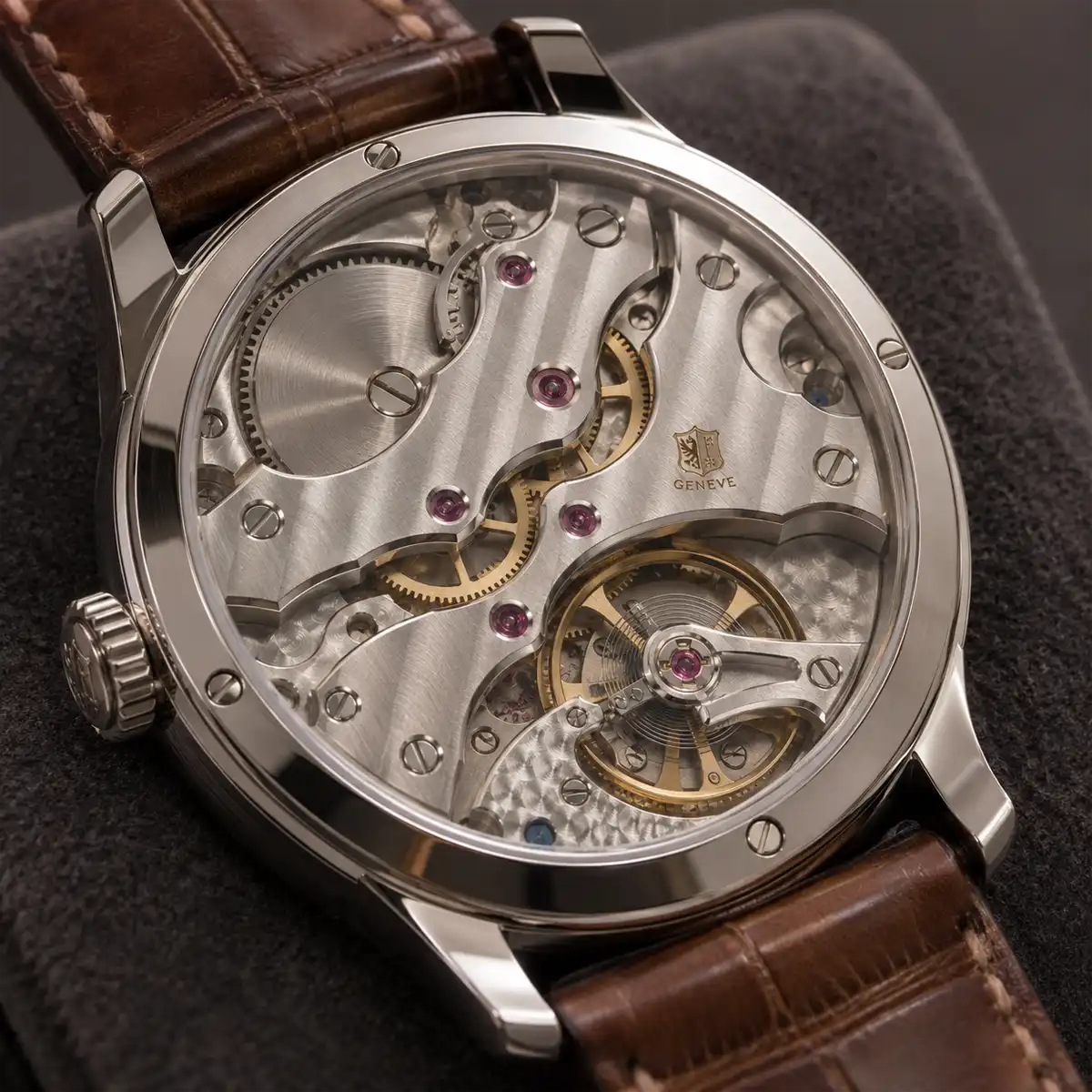
The 12 criteria govern construction and decoration at the component level. Visible burrs must be gone, screw heads flat and polished with bevelled slots, jewel and screw sinks polished, and bridges finished to standards inspected piece by piece. The vocabulary of those inspections deserves a gloss: anglage is the hand-bevelling of edges, perlage the overlapping circular graining on plates, and Côtes de Genève the parallel wave stripes across bridges.
Since 2009 the certification has been administered by Timelab, Geneva's independent watchmaking laboratory, and a 2011 revision pushed it beyond decoration into function. The cased watch is now tested for water resistance, power reserve and rate, with a requirement of 0 to +6 seconds per day. What began as a craft hallmark has quietly become a performance standard as well.
Vacheron Constantin, Cartier, Chopard and Ateliers deMonaco are among the houses that submit movements, and Roger Dubuis stands alone in certifying 100% of its production. Patek Philippe, the seal's most famous historical user, left in 2009 to run its own standard, which says something about both parties.
Fun fact: By the early 2010s more than 1.25 million watches had received the Geneva Seal since the first was hallmarked in 1887, an average of roughly 10,000 per year across its history.
What Qualité Fleurier Adds and Why It Is Harder
Qualité Fleurier was created in 2001 by Chopard, Parmigiani Fleurier and Bovet, later joined by Vaucher Manufacture, with the first certifications issued in 2004. The founding logic was customer-facing: certify the watch as the owner will experience it, not the movement as the workshop presents it. The requirements stack in 4 stages, and a watch must clear all of them.
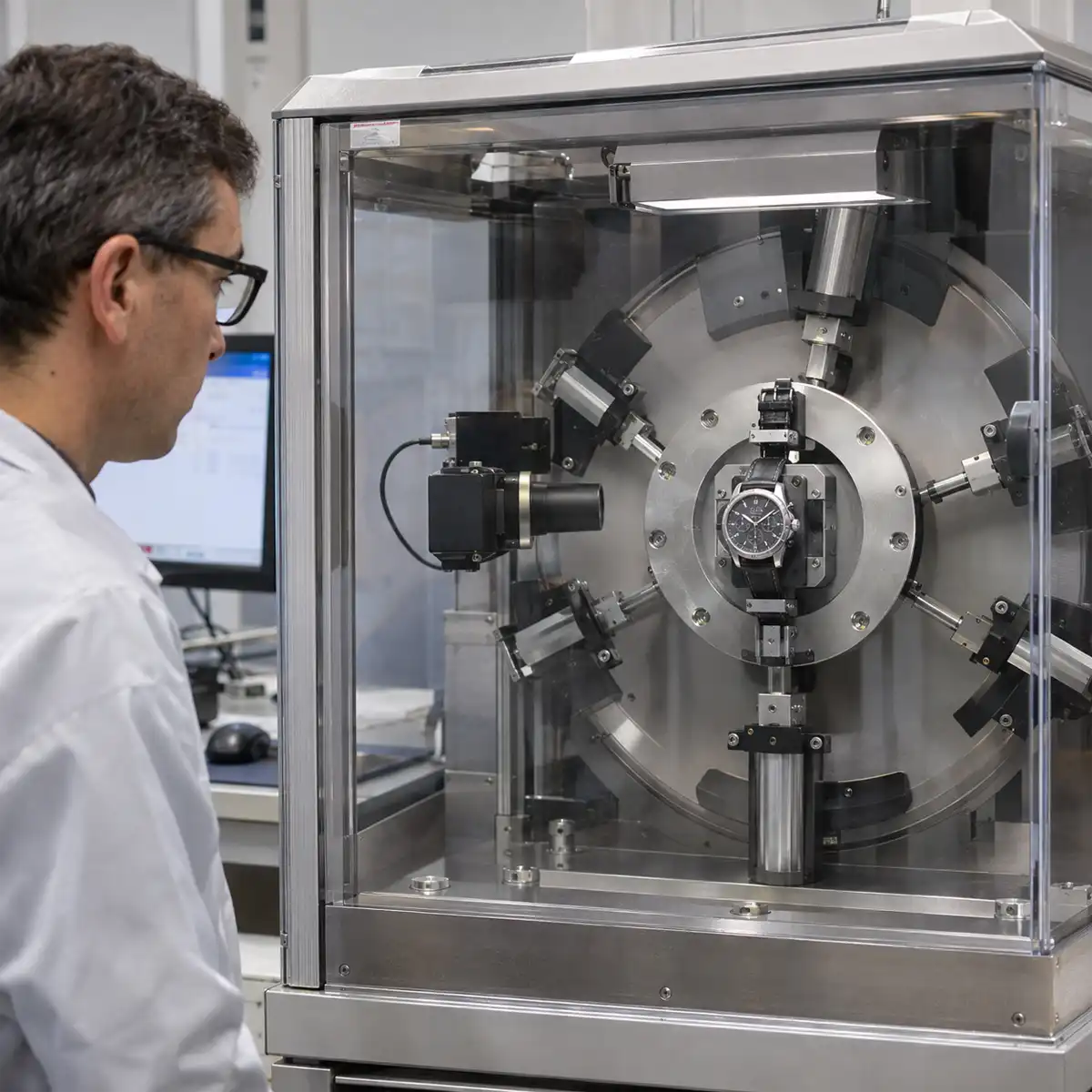
First, the watch head must be 100% manufactured in Switzerland, a far stricter bar than the ordinary Swiss Made label. Second, finishing is validated component by component under magnification, to aesthetic criteria comparable with Geneva's. Third, the design must survive Chronofiable ageing at the independent Laboratoire Dubois, an accelerated regime of shocks, magnetism, water resistance and wear on the winding stem. Fourth, every finished watch passes COSC and then the Fleuritest, a computer-controlled arm that simulates 24 hours of real wear, from calm phases to violent activity, after which the watch must run within 0 to +5 seconds per day.
That final stage is the certification's signature. A movement can be regulated to sing on a static timing machine; the Fleuritest asks how it behaves on a wrist that runs for a bus. Chopard's L.U.C line remains the standard-bearer, and its Qualité Fleurier model in Lucent Steel earned a GPHG nomination in 2025, a reminder that the certification still marks the top of current production rather than a museum standard.
Why Geography Still Draws the Line
The territorial rules are not bureaucratic trivia; they are the seals' identities. Geneva's certification exists because 19th century counterfeiters were stamping the city's name on lesser work, and the 1886 statute answered fraud with law. Fleurier's exists because 3 manufactures in the Val-de-Travers, in the canton of Neuchâtel, made watches to Geneva standards and could never say so with Geneva's mark.
That is why Chopard, unusually, appears on both lists: its Geneva workshops submit to the Poinçon de Genève while its Fleurier manufacture certifies through Qualité Fleurier. The 2 seals are less rivals than neighbouring jurisdictions, each guaranteeing that the words on the dial describe a real place and a checkable standard. Chopard's L.U.C Grand Strike, among the most celebrated releases of 2025, carries both the Geneva Seal and COSC certification on a single watch, which shows how the layers stack in practice.
Where COSC Ends and These Standards Begin
COSC is the floor these seals build on, not a rival. The Contrôle Officiel Suisse des Chronomètres tests bare movements over 15 days, in 5 positions and at 3 temperatures, to a tolerance of minus 4 to plus 6 seconds per day, and it says nothing at all about finishing. A COSC certificate proves the engine is accurate; the Geneva Seal and Qualité Fleurier exist to prove the rest of the watch deserves the engine. Our covers the chronometry side in full.
Read together, the tolerances form a ladder any buyer can hold in their head. COSC allows minus 4 to plus 6. The Geneva Seal's functional test requires 0 to plus 6. Qualité Fleurier demands 0 to plus 5 after simulated wear. Each step narrows the band and moves the test closer to the watch as actually worn.
The Proprietary Seals from Patek Philippe Rolex and Omega
The great houses that certify in-house set their bars higher still, with the caveat that they are marking their own homework. The Patek Philippe Seal, introduced in 2009 and struck as a double P on the movement, requires minus 3 to plus 2 seconds per day after casing and carries a commitment to service any watch the company has ever made, regardless of age.
Rolex's Superlative Chronometer standard certifies the assembled watch to plus or minus 2 seconds per day on top of COSC. Omega's Master Chronometer, established with the Swiss Federal Institute of Metrology in 2014, tests the cased watch to 0 to plus 5 seconds per day and against magnetic fields beyond 15,000 gausses, the antimagnetic benchmark the rest of the industry now chases.
Independent or proprietary is the useful distinction, not strict or lax. The manufacture seals are tighter on paper; the Geneva and Fleurier certifications are examined by outside parties with the power to refuse. A thoughtful buyer values both kinds, for different reasons.
What These Seals Mean When You Buy and Own
At the point of purchase, a certification is a data point and never a verdict. Some of the finest watchmaking in the world, including much of the independent scene, carries no external seal at all, because a workshop making 50 watches a year vouches for itself. What a seal reliably tells you is that finishing claims have been checked by someone with no stake in the sale, and that matters most exactly where you cannot check them yourself.
Ownership consequences follow from the certification. A sealed watch's paperwork supports its value when it is eventually sold, and the documentation should travel with the watch; ask for the certificate at purchase and keep it with the box and papers.
Certified pieces also route back to their manufactures for service, typically on a quote-after-inspection basis and at manufacture prices, so factor the service model, covered in, into the ownership budget alongside the purchase price. Expect intervals measured in years and bills measured in hundreds of pounds at minimum, rising with complications.
Which Certification Deserves Your Attention
Match the seal to what you are actually buying. If you are paying for finishing, the Geneva Seal and Qualité Fleurier are the only independent proofs that the finishing exists as claimed, and Qualité Fleurier's simulated-wear test gives the most complete picture of the watch you will live with. If you are paying for accuracy, the proprietary standards from Patek Philippe, Rolex and Omega are tighter, with the caveat of self-certification.
Before buying, ask the dealer which certification the watch carries, ask to see it stated in the paperwork, and treat its absence on a hand-finished watch as a question worth asking rather than a disqualification. The Geneva Seal has spent 140 years proving that verified craft outlasts asserted craft, and that remains the entire point.