£2,000 is the most interesting number in watchmaking. Below it sit the best automatic watches under £2,000 that a UK buyer can put on for the first time and actually feel the difference a mechanical movement makes: the sweep of a seconds hand, the heft of a properly made bracelet, the clean click of a clasp that was engineered rather than assembled. This selection runs from the Tissot PRX Powermatic 80 at well under half the budget to the Nomos Club at the ceiling.
Every watch here was chosen for how it wears, not how its specification sheet reads. That distinction matters more at this level than any other, because the buyer spending a first £1,000 on a mechanical watch is buying a daily companion, not a safe queen, and the qualities that reward daily wear are exactly the ones a spec table cannot show.
Above £2,000, prices climb faster than the watches improve. Below it, the past few years have been quietly generous to first-time buyers. Movements that once belonged to pricier Swiss watches have migrated down, antimagnetic hairsprings have become normal rather than exotic, and the finishing gap between £700 and £7,000 has narrowed to something you need a loupe, and a certain amount of motivated reasoning, to defend.
No watch here earns its place through a commercial relationship. Each is the piece its natural owner will still be wearing in 10 years.
What Makes the Best Automatic Watches Under £2,000
The best automatic watches under £2,000 pair a proven Swiss or Japanese calibre with a case finished beyond its price and a bracelet or strap you will not want to replace. The Tissot PRX Powermatic 80, Christopher Ward Trident Pro 300, Baltic Aquascaphe Titanium, Seiko Presage GMT and Nomos Club all clear that bar.
The selection criteria favour the wrist over the spreadsheet. Fashion-brand automatics were excluded, as was anything whose water resistance or lume performs only on paper. What remains is judged on the things you notice daily: legibility at a glance in poor light, how the case sits under a shirt cuff, whether the bracelet pinches, and whether the design will survive your own changing taste.
Price discipline was applied to UK availability as bought today, whether at retail through an authorised dealer, direct from the brand, or new on the grey market. Where a watch trades meaningfully below list, that is noted, because at this level a few hundred pounds saved is a strap wardrobe or the first service already paid for.
Why the Tissot PRX Powermatic 80 Leads the Field
On the wrist, the PRX is a lesson in how dimensions matter more than diameter. The case measures 40mm across but only 10.9mm thick, with a 44mm lug to lug span, so it slides under a cuff the way most watches at this price simply do not. Compared with the compact divers that dominate the segment, it sits noticeably lower and spreads its weight through the integrated bracelet rather than concentrating it in the head.
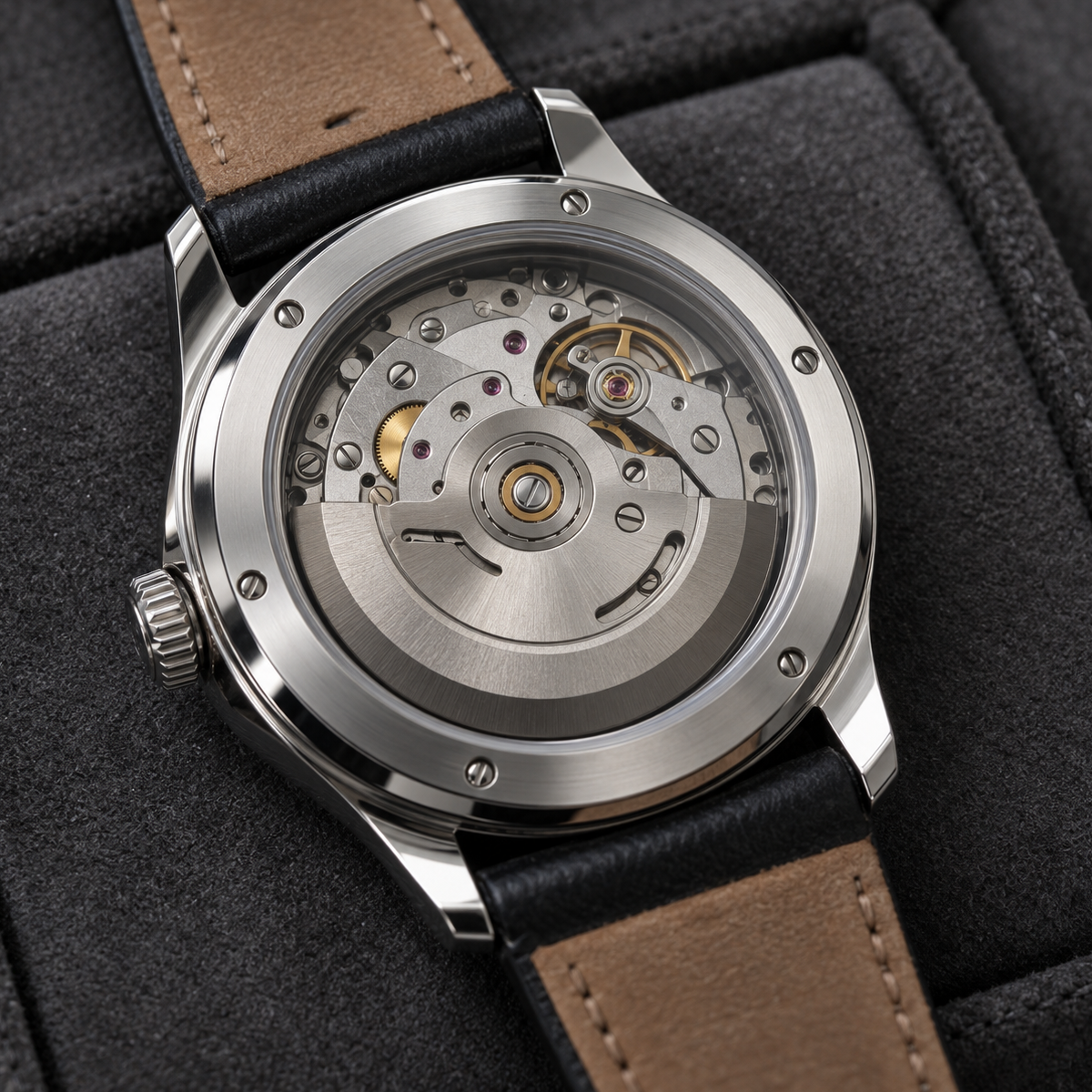
The specification would have been implausible at this money a decade ago. The Powermatic 80 movement, built on an upgraded ETA 2824-2 base, runs an 80-hour power reserve with a Nivachron antimagnetic hairspring, visible through a sapphire display back, in a case rated to 100 metres. The waffle-pattern dial carries applied markers and Super-LumiNova, and legibility stays honest in low light. UK retail sits in the high hundreds of pounds, with the rose gold PVD edition listed at £780 and grey market examples changing hands from around £500.
Fun fact: The Powermatic 80 achieves its 3-day power reserve partly by beating at 21,600 vibrations per hour rather than the 28,800 typical of Swiss automatics, a deliberate trade of beat rate for endurance.
Tissot has expanded the PRX family to roughly 60 references in about 4 years, so there is a dial and size for almost anyone, including a 35mm version that wears beautifully on smaller wrists. The bracelet's triple folding clasp closes with a reassuring, positive snap; the only honest criticism is that the brushed links pick up light scratches in ordinary desk wear.
Where Christopher Ward's Trident Pro 300 Earns Its Place
The Trident Pro 300 is the British entry, and it wins on the amount of watch delivered per pound. At £915 it brings a Sellita movement, 300 metres of water resistance and finishing that routinely surprises people handling one for the first time, with a chronometer-grade COSC version available for those who want certified timekeeping. Christopher Ward sells directly rather than through dealers, which is a large part of how the price stays where it is.
As a wearing proposition it is the most conventional watch here, a proper diver with the presence that implies. The bezel and dial keep their contrast in bright sun and at night, and the lume application is generous for the money. If your image of a first serious watch involves a rotating bezel and a wetsuit-ready case, this is the strongest sub-£1,000 route to it.
The comparison with the PRX is instructive on the wrist. The Trident carries its mass in the head where the Tissot spreads it through the bracelet, so the Christopher Ward announces itself with every gesture in a way the PRX never does. Some buyers want exactly that presence. Others discover within a month that they do not, which is worth knowing before rather than after purchase.
What the Baltic Aquascaphe Titanium Changes on the Wrist
Titanium is the quickest way to understand that weight is a design decision. The Aquascaphe Titanium wears dramatically lighter than the steel watches in this list, to the point that new owners tend to check it is still on the wrist during the first week. Where the PRX distributes its steel mass through the bracelet, the Baltic almost removes mass from the equation, and long days make the argument for it.
Baltic is the microbrand that behaves like an established house. The vintage-leaning design is disciplined rather than nostalgic, the proportions are compact, and the build quality has put the brand in a different category from the crowdfunded field it emerged from. It sneaks in comfortably under the £2,000 ceiling and, for anyone whose deterrent to a diver has always been the slab of steel, it removes the objection entirely.
What the Seiko Presage GMT Offers at This Price
The Presage GMT is here for the dial and the complication. Seiko's patterned dials in this line are among the most beautiful you will see under £5,000, let alone £2,000, and the addition of a genuine second time zone makes it the most functionally useful watch in the selection for anyone who works across regions or travels often. The case lines are sharp, the finishing is confident, and the whole package reads at least a price bracket above its position.
The honest counterpoint is character. A Presage is a watch you admire; it is less anonymous than a tool diver and more formal than the PRX, so it suits the buyer whose single automatic must cover meetings as convincingly as weekends. In poor light the dial's depth costs a little of the at-a-glance legibility the plainer watches here retain, and that trade is the whole decision with this watch.
Where the Sinn 556 I RS Fits for the Tool Watch Purist
Sinn builds watches the way German engineering textbooks read: functional, precise and deeply satisfying to people who value those words. The 556 I RS takes the brand's cleanest everyday case and adds a measured splash of red to an otherwise sterile dial, enough personality to lift it without compromising the utilitarian clarity the 556 exists for. It sits comfortably inside the £2,000 ceiling.
This is the pick for the buyer who finds every other watch here slightly too decorative. Legibility is the entire design brief, the case is compact and unfussy under a cuff, and nothing on the dial exists that does not tell you something. Its natural owner already suspects that restraint is the highest form of confidence, and the 556 will spend a decade quietly agreeing with them.
Why the Nomos Club Justifies the Ceiling
The Club is what happens when in-house watchmaking refuses to charge like it. Nomos builds its own movements in Glashütte across the entire range, and the Club still comes in at close to, but under, the £2,000 line, a figure its Swiss in-house rivals do not approach. Even the strap gets the same seriousness, cut from Horween leather that ages rather than merely wears out.
On the wrist it is the purist's pick. The dial is minimal and ruthlessly legible, the case compact and thin, and the whole watch feels drawn rather than styled. Where the PRX charms and the Trident asserts, the Club recedes, and its owner comes to prize exactly that.
Whether an in-house calibre matters at this price, and when a Sellita serves just as well, is a genuine question with arguments on both sides, and [INTERNAL LINK: in-house watch movements vs ETA and Sellita explained | in-house vs ETA and Sellita movements] takes it on properly. For a longer look at the brand itself, our covers the range in depth.
Owning an Automatic at This Level
Ownership at this price is refreshingly low-drama. Warranties typically run 2 years, as with the Tissot, and servicing a Sellita or ETA-based calibre through a competent independent UK watchmaker generally costs a low 3 figure sum every 5 years or so, rather than the 4 figure bills prestige houses attach to the same job. The 80-hour reserves now common in the segment mean a watch set down on Friday evening is still running on Monday morning.
A winder is unnecessary at this level and mostly marketing. A single watch worn regularly winds itself, and one rested for a week simply needs setting, which takes a minute and does the movement no harm. Spend the money on a second strap instead; nothing changes a watch's character more cheaply.
Two habits protect the investment. Keep the watch away from strong magnets, although Nivachron and silicon hairsprings have made this far less of a worry than it was, and have the seals pressure-tested whenever the case is opened. For a full breakdown of intervals and costs, see
Which of These Automatic Watches Should You Buy?
The best automatic watches under £2,000 sort themselves by owner rather than by rank. The PRX suits the buyer who wants one watch for everything and a bracelet that draws quiet compliments. The Trident Pro 300 fills the diver-shaped gap in a first collection, the Baltic suits anyone who has ever taken a watch off because it was heavy, the Presage GMT suits the traveller, the 556 suits the minimalist, and the Club rewards the design purist who wants in-house watchmaking without the usual tax.
Buy from an authorised dealer or direct from the brand at this level, check the warranty card is stamped and dated on delivery, and spend whatever you saved on having the bracelet properly sized. The right one of these 6 will still be on your wrist in 10 years.