Watch collectors solved a problem 20 years ago that diamond buyers are only now solving. Ask anyone who trades vintage Omega or pre-owned Rolex what matters most, and they will not begin with the movement. They will begin with the paperwork. Box, papers, service history, and whether the serial on the case matches the serial on the certificate.
The watch market learned, expensively, that provenance is not an accessory to value but a component of it. Fine diamonds have always run on the same logic, since diamond certification performs exactly the job that box and papers perform for a watch. Until recently, though, a buyer could not see any of it before walking into a shop.
That has changed. Online catalogues now put the full grading report in front of the buyer at the moment of comparison, and the effect on how people buy is close to what happened to watches when reference numbers and service records went public. The habits the watch trade developed the hard way are worth borrowing wholesale.
What Diamond Certification Actually Certifies
A diamond certificate is an independent laboratory's opinion of a specific stone, recording carat weight, colour, clarity, cut grade, polish, symmetry, fluorescence and precise measurements, tied to a unique report number. It is a description, not a valuation, and it does not guarantee a price.
That distinction matters and is routinely misunderstood. The certificate tells you what the stone is. It does not tell you what it is worth, and two stones with identical grading reports can differ in price by a meaningful margin because of factors the report captures only indirectly, such as how the proportions interact to produce brilliance.
The recognised laboratories are GIA, IGI, HRD and GCAL. GIA grading is generally the strictest benchmark and commands a corresponding premium. IGI has become the dominant laboratory for laboratory-grown stones. The practical point for a buyer is that a grade is only meaningful alongside the name of the body that issued it, which is exactly the reasoning a watch buyer applies to a service stamp.
Why Watch Buyers Already Understand This
Watch collectors have long accepted that documentation carries measurable value, and the market prices it openly. A full set with box and papers typically commands a clear premium over an identical watch sold bare, and the gap is not sentimental. It is a discount for risk.
The same reasoning underpins independent certification in watches. COSC chronometer certification tells a buyer that a movement met a defined accuracy standard under controlled testing, which is a third-party statement rather than a manufacturer's claim. Readers who followed our explainer on what COSC certification actually means will recognise the structure immediately, because a diamond grading report performs the same function for a stone.
Watch buyers also learned to check the issuing authority rather than the document. A service record from an authorised centre carries different weight from an unbranded receipt, in precisely the way a GIA report carries different weight from a grading slip issued by a laboratory nobody in the trade recognises. Our comparison of certified pre-owned against grey market stock covers where that distinction moves real money.
How Online Catalogues Changed the Comparison
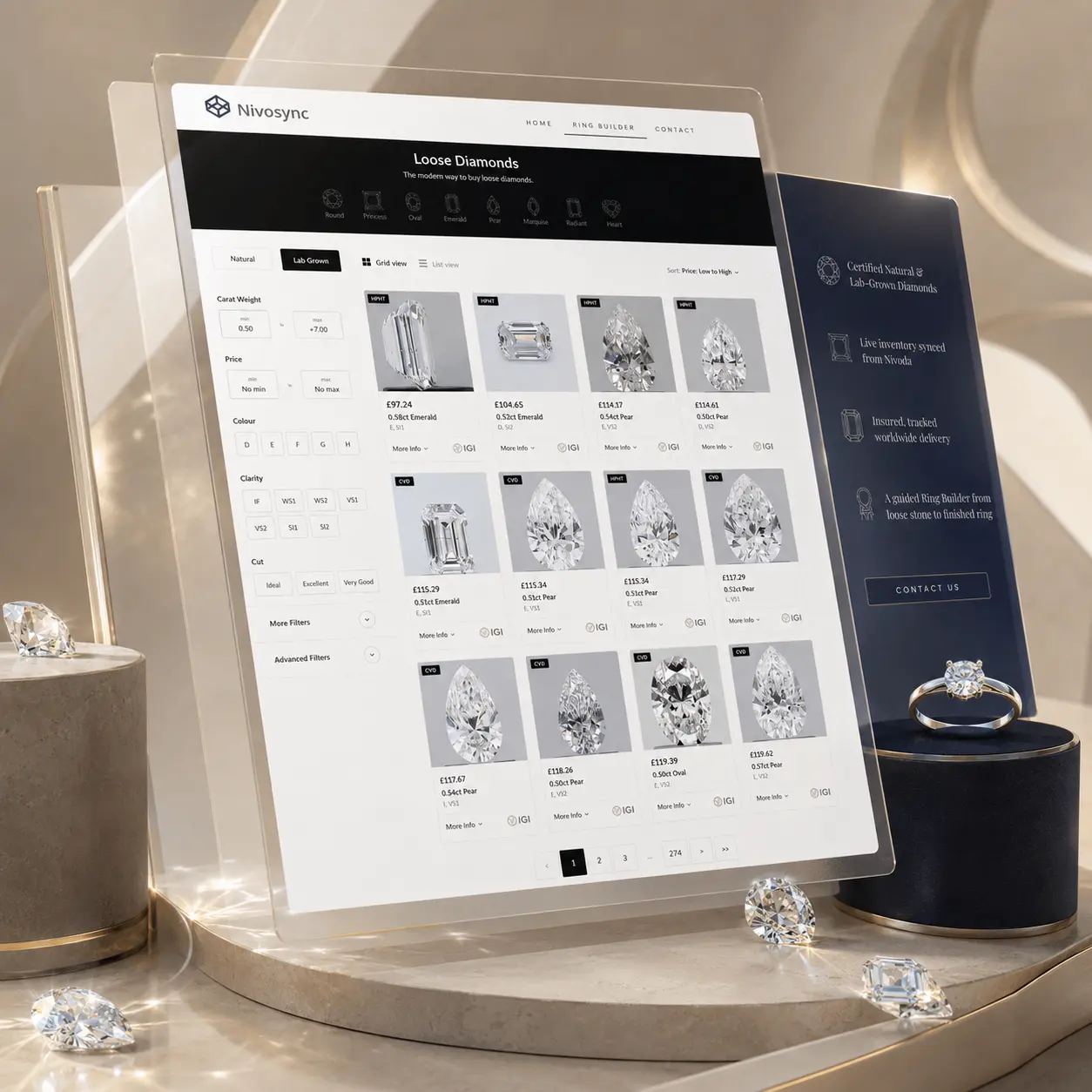
The change is that certification data is now visible before the sales conversation rather than after it. A buyer browsing a jeweller's website sees the laboratory, the report number and the full grading breakdown for every stone, and can verify that number independently on the laboratory's own site.
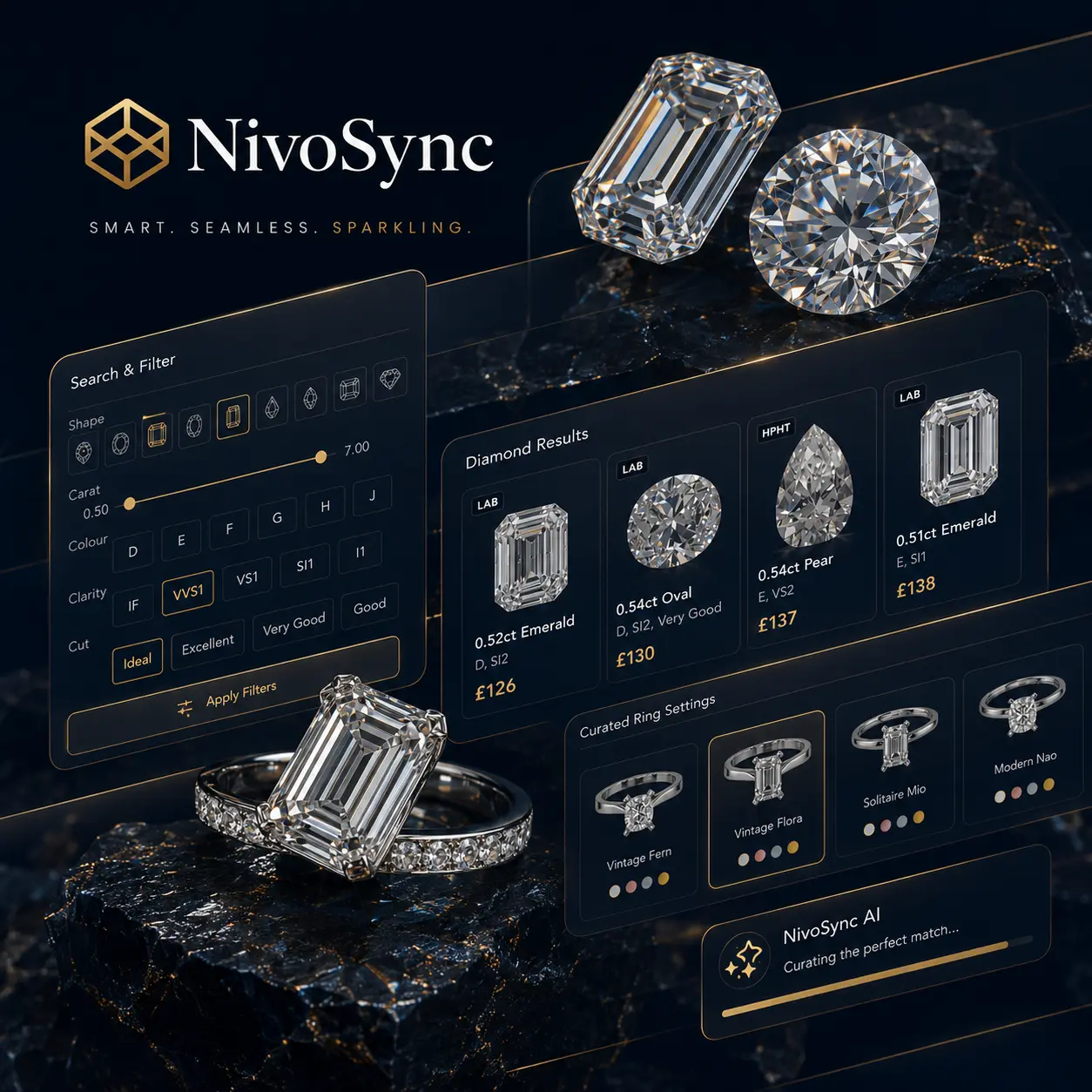
Retailers can display this because the inventory is drawn live from a wholesale marketplace rather than typed up by hand. Packaged software such as NivoSync pulls the certificated stock into the jeweller's own site with the retailer's pricing applied, which is why a shop with 5 staff can now present the same documentation depth as a national brand.
The effect on buyer behaviour mirrors the watch market almost exactly. When documentation became searchable, casual buyers started reasoning like collectors. They compare like for like, they notice which laboratory issued what, and they stop treating an unverified claim as equivalent to a verified one. Filtering by certificate is now a standard feature rather than a specialist one.
Fun fact: The Contrôle Officiel Suisse des Chronomètres tests each movement over 15 days in 5 positions and 3 temperatures, and certifies only those averaging between minus 4 and plus 6 seconds per day.
Where the Two Markets Genuinely Differ
The parallel is useful but it is not complete, and assuming otherwise will cost a buyer money. Watches and diamonds behave differently in 3 important respects.
Uniqueness is the first. A reference 116610LN exists in large numbers, so a buyer who misses one can buy another next week. A specific 1.52ct oval, F colour, VS1, with a particular certificate number, exists once. This is why properly built diamond catalogues place an automatic hold on the exact stone at checkout and release it if the order is cancelled. Without that step the same stone can be sold twice, a failure mode the watch market rarely encounters.
Condition is the second. A watch is graded partly on wear, servicing and originality of parts, all of which change over time. A diamond's grading report describes properties that are essentially permanent, so a 2009 report on an untouched stone remains valid in a way a 2009 service record does not.
Value trajectory is the third and the one buyers most often get wrong. Certain watch references have appreciated, which has encouraged a broader assumption that luxury goods hold value. Most diamonds do not appreciate, and laboratory-grown stones in particular have depreciated substantially as production scaled. Certification protects you from buying something other than what was described. It does not make the purchase an investment, and no honest jeweller will tell you otherwise.
What to Check Before Buying a Certificated Stone Online
Verify the report number on the issuing laboratory's own website before you do anything else. Every major laboratory offers a free lookup, and a report that does not resolve, or that resolves to different specifications, ends the conversation immediately.
Then check that the physical stone matches the paperwork. Most laboratories laser-inscribe the report number on the girdle of the stone, and any competent jeweller will show it to you under magnification on request. This is the diamond equivalent of matching a case serial to its papers, and it is the step most buyers skip.
Look closely at fluorescence, which listings often relegate to a footnote. Strong fluorescence can make a stone appear slightly hazy in direct sunlight and is a common reason an otherwise well-graded diamond carries a lower price. Whether that trade-off suits you is a personal judgement, but it should be a conscious one.
Finally, treat the certificate as necessary rather than sufficient. Two stones graded identically can look different depending on crown angle, pavilion depth and girdle thickness, none of which the headline grades convey. View your final 2 or 3 candidates side by side under consistent lighting before paying in full, exactly as you would insist on handling a watch before buying it. The sourcing side of that process, and what a jeweller does between your payment and your delivery, is set out in our companion piece on how Hatton Garden retailers source stones they do not hold.
The Habit Worth Borrowing
The single most valuable habit the watch market developed is refusing to separate an object from its documentation. Collectors do not ask whether the papers matter. They assume the papers are part of the item, and they price accordingly.
Diamond buyers who adopt that posture immediately become harder to mislead. They verify report numbers rather than accepting photographs of certificates. They ask which laboratory and why. They check the inscription. They compare stones at the same grade from the same body rather than across bodies, because a grade without an issuer is not information.
There is a practical dividend to this as well. A buyer who verifies properly can shop confidently at a small independent jeweller rather than defaulting to a national brand, because the verification no longer depends on trusting the seller. The report number either resolves on the laboratory's website or it does not, and that check is identical whether the shop has 4 staff or 400.
Online catalogues have made every one of those checks possible from a laptop, which is a genuine improvement on a market that operated behind a counter for most of its history. The buyer who treats diamond certification the way a serious collector treats box and papers will not necessarily pay less, but they will know exactly what they bought, and in both markets that has always been the difference between a purchase and a gamble.