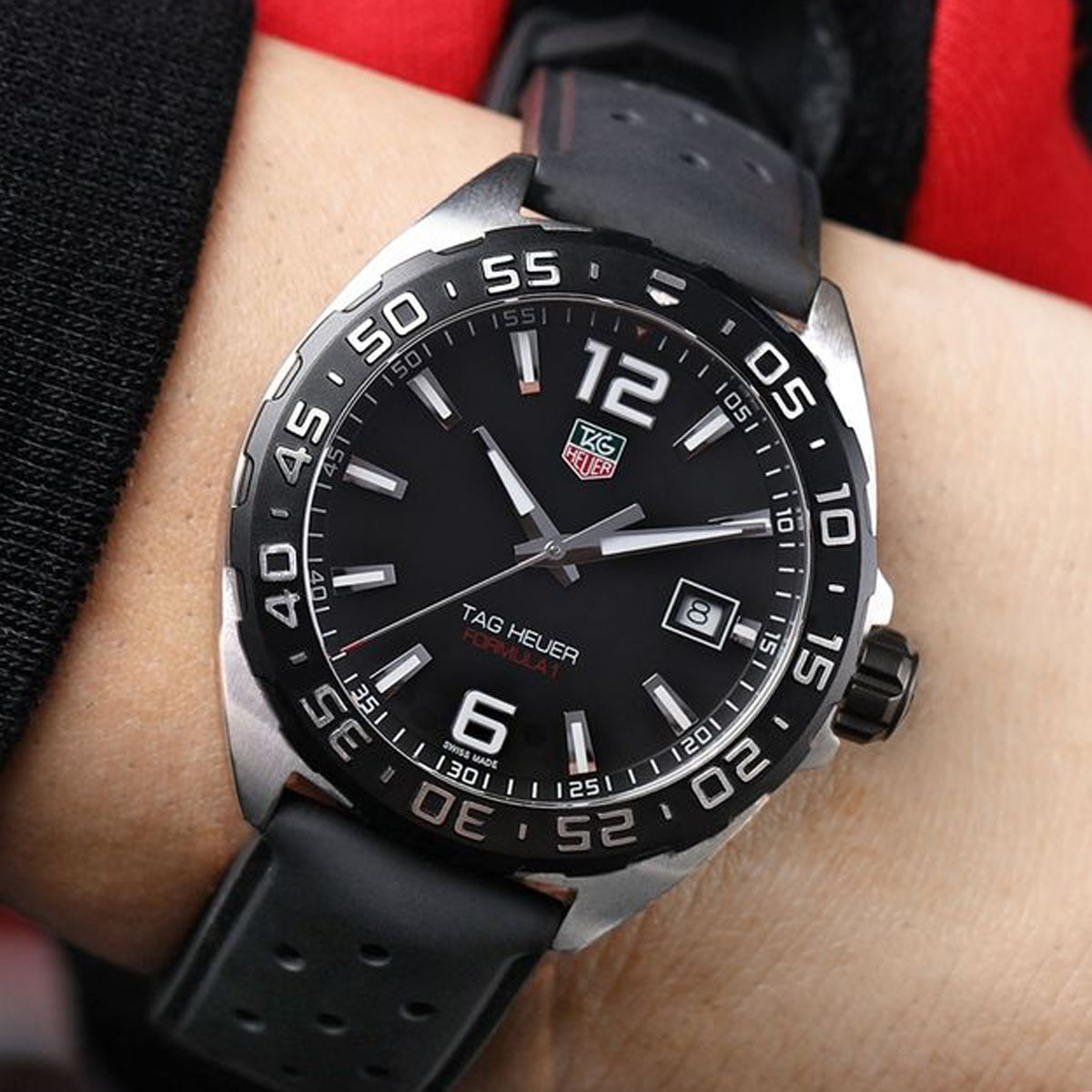
Stand on Regent Street at 09:30 and the traffic starts to hum, cyclists weave between buses, and shop shutters clatter open. Slip into Watches of Switzerland and a splash of red, blue or yellow catches the eye behind the glass: the TAG Heuer Formula 1. In a city where supercars prowl, Knightsbridge and Silverstone sit only seventy miles up the M1, Londoners understand the romance of racing. The Formula 1 distils that excitement into stainless steel, ceramic and titanium, wrapping Swiss timing heritage in colours bright enough to match a pit-lane lollipop. This guide explores how the watch earned cult status, why it still matters to the capital's collectors and where to strap one on without draining the mortgage.
Birth of a Modern Icon
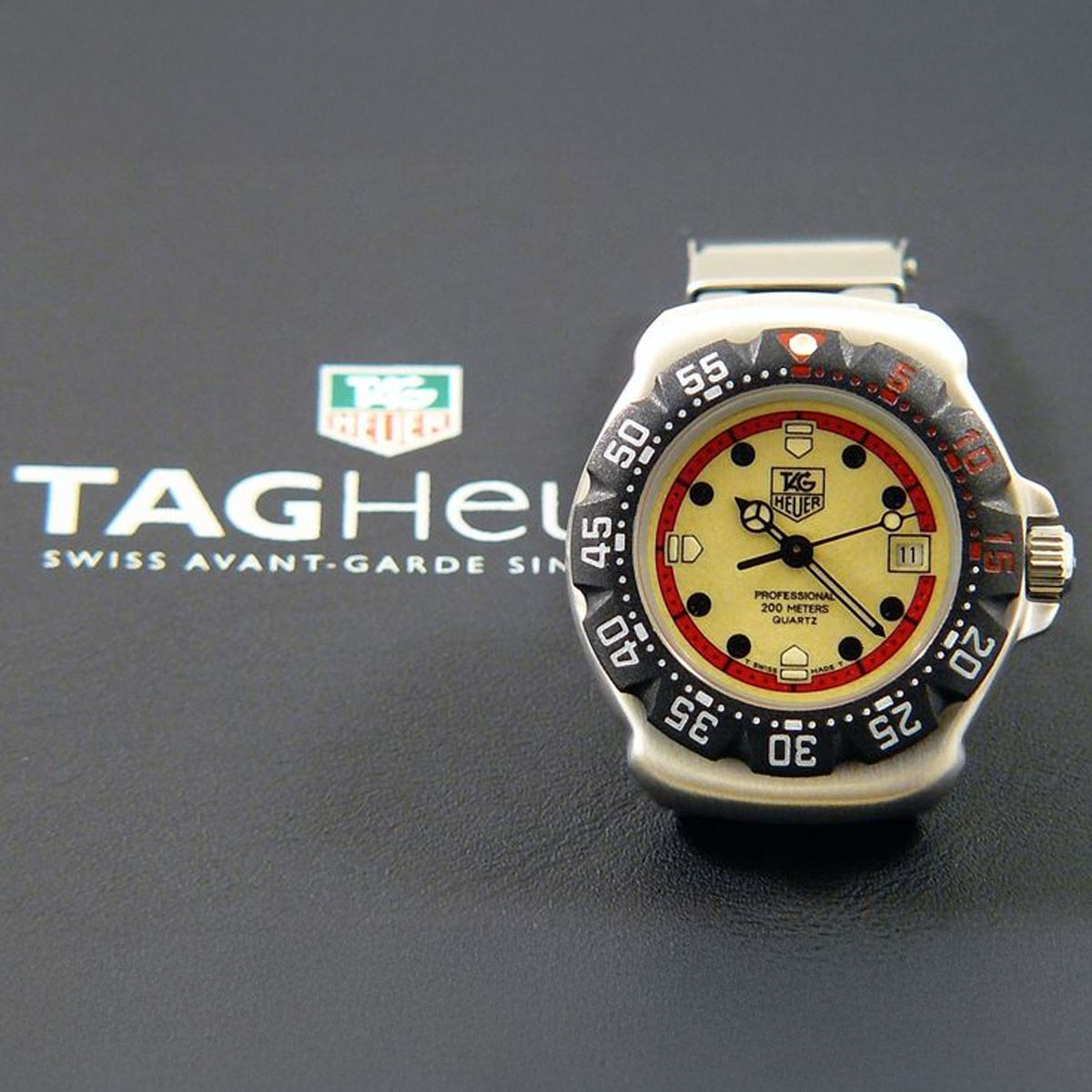
The mid-1980s were turbulent for Swiss horology. Quartz modules from Japan decimated mechanical production lines, and venerable marques toppled like dominoes. In 1986, TAG – Techniques d'Avant-Garde, supplier of turbocharged F1 engines to McLaren, rescued Heuer and launched a bold new watch to announce the union. The result was no timid dress piece. Designer Eddy Burgener produced a fibreglass-reinforced plastic case, a unidirectional bezel and primary colours unapologetically loud. Selling for well under £200, it targeted surfers in California as much as speed freaks in Monaco. Crucially, the name Formula 1 linked the product to the fastest show on Earth, borrowing credibility from paddock legends who trusted Heuer stopwatches decades earlier.
Within a year, the cases appeared in stainless steel, waterproof to 200 m and accompanied by TV spots starring Alain Prost. By 1992, TAG Heuer timed every official Grand Prix session, embedding the watchmaker deeper into the sport than any rival save Rolex today.
Fun Fact: When Ayrton Senna tested at Silverstone in '90, he wore a yellow-bezel Formula 1 on a plastic strap. That reference WA121C now commands three times its original price at vintage fairs from Portobello Road to Tokyo's Nakano Broadway.
Motorsport DNA in Every Case
TAG Heuer's marketing draws most headlines, yet the technical brief was quietly rigorous. A racing watch must tolerate vibration, temperature swings and sudden impacts without losing a second. Early Formula 1 models used ETA or Ronda quartz movements accurate to ±15 seconds a month and shrugging off G-forces that would wreck a traditional balance spring. Legibility was paramount: huge Arabic numerals, high-contrast dials and broad hands coated in Super-LumiNova. The bezel soon dropped dive markings and adopted a tachymeter scale for measuring average speed over a mile – a direct nod to circuit life.
As the line matured, designers experimented with carbon fibre, ceramic, and DLC coatings lifted straight from modern racing chassis. Yet two features remained non-negotiable: stadium-bright colours and pricing that welcomed newcomers to Swiss luxury.
Design Journey from Plastic Fun to Titanium Precision
Early Colour Revolution
Original models came in cherry red, canary yellow, ocean blue and traffic-cone orange – shades chosen to pop on television long before smartphones filtered the palette. The 28 mm ladies' pieces shared the same spectrum, ensuring partners could match trackside.
Steel and Sapphire Era
The late 1990s brought sapphire crystal, steel bracelets with wetsuit extensions and PVD bezels resistant to scratching. Case diameters crept above 40 mm, mirroring changing tastes for chunkier wrists.
LVMH Influence
After LVMH acquired TAG Heuer in 1999, the Formula 1 slowly moved upmarket. Ceramic inserts offered fade-proof gloss, while updated dials gained applied indices that caught showroom spotlights on Old Bond Street.
Today's High-Tech Flagships
Current automatic chronographs wear Grade-2 titanium cases for featherweight comfort and forged-carbon bezels flecked like brake dust. The look is purposeful yet refined, suiting a client who splits weekends between Goodwood Revival and Soho House.
Engines for Every Pace
Quartz Convenience
Most Formula 1 pieces still run quartz – a deliberate nod to the model's origin story. These watches are grab-and-go, need only a battery every three years and keep near-chronometer accuracy without fuss.
Solargraph Innovation
Released in 2024, the TH50-00 Solargraph movement absorbs energy from any light source. Two minutes under a café pendant fuels twenty-four hours of tick; two hours in sunlight charges ten months of reserve. The system suits commuters who spend winter mornings beneath grey skies yet demand reliability when a Eurostar meeting calls.
Automatic Calibre Family
For purists, TAG Heuer fits trusty mechanical units: Calibre 5 three-hand, Calibre 7 GMT and Calibre 16 chronograph. All derive from ETA or Sellita bases, ensuring parts supply and straightforward servicing at Hatton Garden workshops. The sweeping seconds hand and tactile rotor whirr deliver the romance that no circuit-board can match.
Special Editions Headlining the Grid
Oracle Red Bull Racing
Max Verstappen's charge to back-to-back championships inspired a 44 mm titanium chronograph splashed in midnight blue with red pointers. Powered by the automatic Calibre 16, it retails around £5,650 yet feels lighter than many steel rivals thanks to the case material. A quartz version at roughly £2,400 mirrors the livery, giving fans an affordable ticket to team colours.
Senna Tribute
Black DLC cases, yellow accents echoing the Brazilian helmet and the flowing S-link bracelet define each Senna Special Edition. Part of the sale supports the Ayrton Senna Institute, adding purpose to passion.
Gulf Livery
Sky-blue dial bisected by an orange racing stripe conjures the Porsche 917 roaring down the Mulsanne Straight. At about £2,650, the quartz chronograph lets collectors taste Gulf heritage without Monaco-level prices.
Solargraph Revival
Bright red or cobalt blue TH-Polylight cases resurrect '80s exuberance. Sized at 38 mm, they suit smaller wrists and urban wardrobes, proving fun need not fade with age.
How It Stacks Up Against the Competition
| Model | UK RRP (Approx.) | Movement | Water Resistance | Case Material | Best For |
| TAG Heuer Formula 1 Quartz Chronograph | £1,800-£2,450 | Swiss quartz | 200 m | Steel | Bold design, racing DNA, hassle-free ownership |
| Longines HydroConquest Auto | £1,500-£2,100 | Automatic | 300 m | Steel | Classic dive styling, higher depth rating |
| Tissot PRX Powermatic 80 | £640 | Automatic | 100 m | Steel | Retro integrated bracelet, standout value |
| TAG Heuer Formula 1 Titanium Chronograph | £4,150-£5,650 | Calibre 16 | 200 m | Titanium | Lightweight mechanical performance |
| Omega Seamaster Diver 300 M | £5,500+ | In-house Master Chronometer | 300 m | Steel | Superior finishing, magnetic resistance |
Longines wins on pure dive capability; Tissot offers exceptional pound-for-pound value. Omega owns the prestigious podium. Yet only TAG Heuer positions a watch that speaks fluently to motorsport while remaining within the financial reach of many London professionals.
Who Buys One and Why
First-Time Luxury Owners
Graduates landing a City role, graphic designers freelancing from Shoreditch lofts and medics finishing their registrar year often celebrate with TAG Heuer Formula 1. It provides Swiss cachet without a six-month salary sacrifice.
Racing Devotees
Silverstone regulars and Netflix Drive to Survive converts choose models aligned to teams or legends. Wearing a Senna edition to the Goodwood Festival of Speed sparks conversations faster than a pit-lane tyre change.
Seasoned Collectors
Even owners of Patek Philippe complications keep a Formula 1 in the watch box, appreciating its quartz reliability when kayaking on the Thames or chasing children around Richmond Park. Vintage fibreglass pieces add nostalgic colour to otherwise sober collections.
Investment and Resale Insights
Expect standard models bought new to shed roughly one-third of their retail value, mirroring most sports watches under £3,000. Purchase pre-owned from Watchfinder in Mayfair or via Chrono24, and depreciation has already been paid by someone else. Limited runs – Kith collaboration, Gulf livery, Senna tributes – hold value better and sometimes climb. However, they should still be chosen for love first, profit second.
Buying in London
- Authorised Dealers – Watches of Switzerland Regent Street, Goldsmiths Westfield, Mappin & Webb Canary Wharf.
- TAG Heuer Boutique – 367 Oxford Street for the fullest range and boutique-only straps.
- Pre-Owned Specialists – Watchfinder & Co. on Avery Row offers certified stock with a two-year warranty. Hatton Garden independents such as Austin Kaye provide competitive pricing, though they always request boxes and papers.
Prices span £1,500 for a Solargraph to just over £5,500 for a titanium Red Bull chronograph. Every new piece comes with a two-year international warranty. Servicing a mechanical example every six years at the brand's Manchester service centre costs around £350.
Final Lap
The TAG Heuer Formula 1 remains the people's champion of Swiss sports watch culture. It marries the roar of a V6 engine with colours lively enough for Camden Market and engineering tough enough for the Tube at rush hour. Whether you crave a quartz grab-and-go, a solar-charged eco hero or a titanium chronograph ready for Silverstone pit wall, the collection offers a pit-stop to match your budget. Like the best Grand Prix, it is fast, noisy, accessible and unforgettable.