A decade ago, most people chasing watch investment returns defaulted to the same shortlist: steel sports references from the established maisons, scarcity managed by marketing, and liquidity built on brand recognition. In 2026, the centre of gravity is shifting. The strongest price resilience is increasingly found in independent watchmakers, where production is genuinely constrained, the maker's identity is part of the asset, and demand is concentrated among informed collectors rather than trend buyers. The change is not just aesthetic. It is structural, and it is showing up in auction results, waitlist dynamics, and the way market indices describe the post-boom correction.
What Is Driving Independent Watchmakers To Outperform In 2026
Independent outperformance in 2026 is being driven by two forces that reinforce each other: supply discipline and buyer sophistication. The supply is capped by atelier capacity rather than corporate targets, while buyers are increasingly selecting watches for movement identity, finishing, and provenance. This reduces speculative churn and supports stronger value retention.
A key signal is how the wider secondary market has cooled into a slower, more selective phase. Watch market reporting in 2025 described modest index gains alongside brand divergence, including relative stability for some maisons and softness for others. In that environment, collectors tend to pay up for watches whose scarcity is mathematically verifiable, not merely culturally asserted.
That distinction matters because the "Big Three" dynamic, meaning Patek Philippe, Audemars Piguet, and Vacheron Constantin, is still anchored in higher output. Even if these brands manage allocation tightly, the market knows the pipeline exists. Independents, by contrast, often cannot increase supply quickly without changing the product, the team, or the finishing standard that makes the watch desirable in the first place.

What Counts As An Independent Watchmaker In Luxury Watches
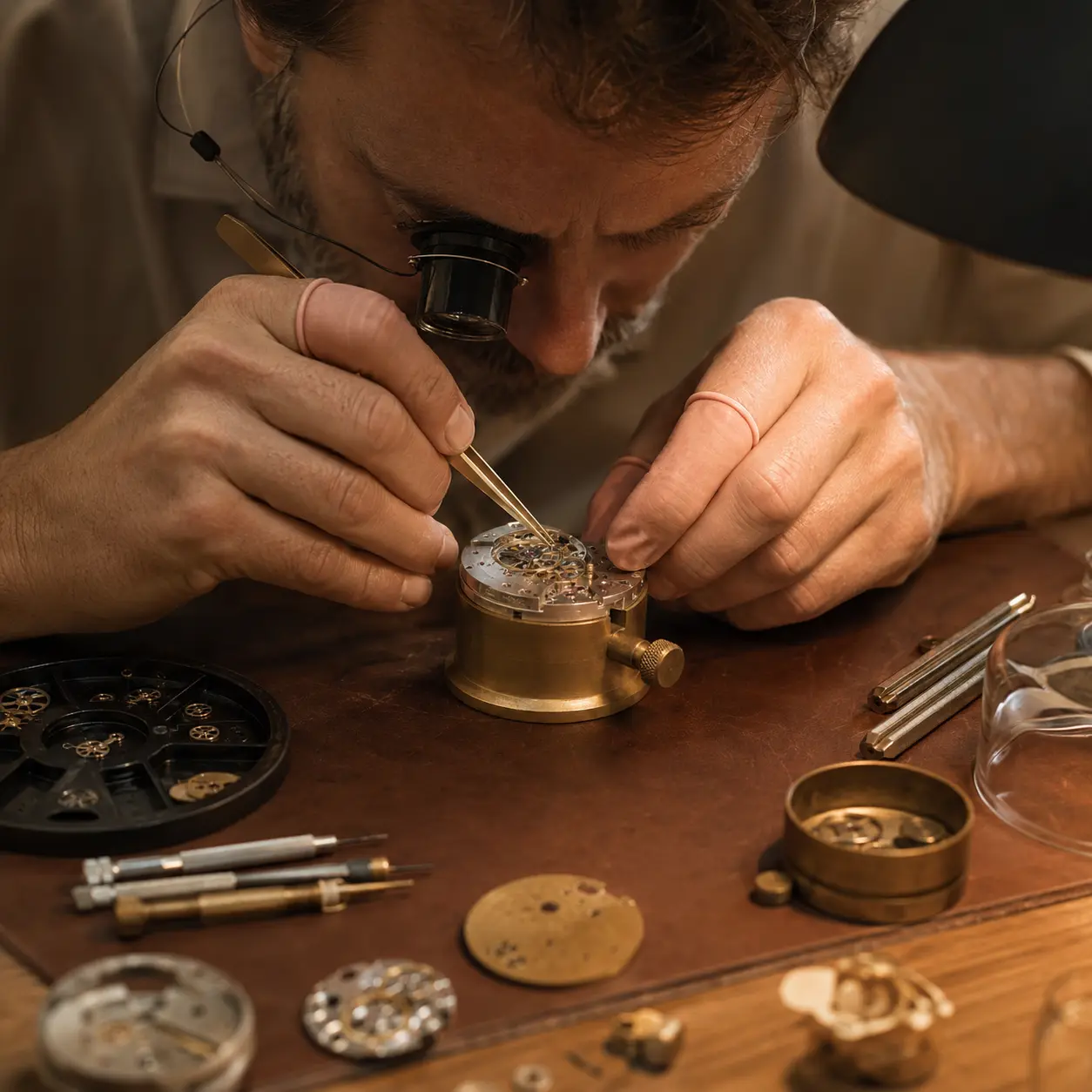
An independent watchmaker is a brand that is not controlled by a large luxury group and whose creative and technical direction is typically led by a founder or a small partnership. Independence often means smaller production, closer oversight of finishing, and stronger model continuity. Independence does not automatically mean in-house movements, but it usually means a distinctive calibre identity.
That definition matters because the term is used loosely in marketing. A brand can be privately held yet produce at scale, or be group-owned while operating with genuine autonomy. For buyers, the practical test is simpler. Does the watch have a clear design and movement signature that would still matter if the logo were removed, and is supply constrained by workmanship rather than strategy?
On the current independent shortlist, the most frequently cited names include F.P. Journe, H. Moser & Cie, and Akrivia. In each case, the collector proposition leans on a recognisable calibre language, a finishing code, and limited annual output that is difficult to scale without dilution.
How Scarcity Works Differently For Independents And The Big Three
Scarcity is the central pricing engine in modern collecting, but scarcity is not a single thing. For large maisons, scarcity is usually allocation-based. The brand can produce more over time, but it chooses not to release supply in a way that destabilises positioning. For independents, scarcity is capacity-based. The atelier can only finish so many movements, cases, and dials to its standard in a year.
The difference shows up in how price corrections play out. When a speculative wave fades, allocation scarcity can unwind quickly because the same references exist in meaningful quantities and are traded frequently. Capacity scarcity unwinds more slowly because supply is limited, owners are more committed, and a watch can be difficult to replace.
There is also a second-order effect. When large brands increase retail pricing, secondary markets often adjust, sometimes temporarily, to reflect the new anchor price. Watch market analysis in 2025 noted significant retail price increases for some major brands and described how secondary prices did not always follow at the same pace. That gap tends to compress speculative premiums. Independents are less exposed to this reset mechanism because the retail pipeline is narrower and retail prices are often less frequently revised.
Finally, scarcity interacts with serviceability. A watch that can be maintained for decades with predictable parts and brand continuity tends to feel less risky. Independents can score highly here when the founder builds a long-term servicing structure, but they can also score poorly if the operation is too small to guarantee future parts and expertise. That is where value analysis becomes nuanced rather than celebratory.
What 2025 Auction Results Reveal About Independent Value
Auction performance is not the whole market, but it is the clearest public price discovery mechanism for rare contemporary horology. In 2025, one of the most widely reported signals was the sale of an F.P. Journe prototype, described in coverage as achieving an eight-figure result and reframing how the market values contemporary independent work.
The useful insight is not that every independent will do this. The insight is that buyers are willing to value modern independent watchmaking on a similar cultural plane to mid-century rarities when the watch is mechanically singular and meaningfully scarce. That willingness matters in a cooling market because it suggests collector demand is not purely a function of economic exuberance. It is also a function of connoisseurship.
Auction dynamics also highlight a liquidity asymmetry. A high-volume icon can trade frequently with narrow spreads because there are many buyers and sellers. A rare independent can command a premium, but only if the right buyer is present at the right moment. That increases variance. The upside can be strong, but the exit route is more dependent on specialist auction houses, private dealers, and collector networks.
A practical way to read this is to treat auction results as a proxy for cultural capital. If a watchmaker's work is consistently discussed by knowledgeable bidders and specialists, future demand is more likely to persist. If auction excitement appears to be a one-off story, the value signal is weaker.
Fun fact: The watch auction industry's modern centre of gravity was shaped in part by the 1990s revival of interest in complicated wristwatches, which helped establish today's specialist sale calendars in Geneva and Hong Kong.
Why Collectors Are Paying For Intellectual Luxury In 2026
The collector psychology in 2026 is shifting from outward status to inward understanding. That does not mean status has disappeared. It means the status signal is increasingly coded. The highest signal now often comes from owning something that only informed collectors recognise, and that is difficult to obtain without patience and relationships.
A defining characteristic of this shift is founder proximity. Buyers like the idea that the person shaping the calibre architecture and finishing decisions is not a distant brand committee. It can be direct, as with Rexhep Rexhepi, or more conceptual, as with Max Büsser and the way his projects foreground collaboration and narrative.
This "intellectual luxury" is also about technical legibility. Collectors pay for movements where the logic is visible, free-sprung balances, careful geometry, hand finishing that is easy to read under a loupe, and deliberate restraint rather than maximal complication. The market is increasingly treating those qualities as durable value drivers, especially after the correction in hype-driven steel sports premiums.
There is also a macro-pricing context. Watch market commentary in 2025 described how retail price increases at major brands could outpace secondary gains, changing the perceived fairness of some mainstream buying propositions. Independents, when priced with clearer alignment to finishing labour and production limits, can look comparatively rational to a buyer who is tired of paying primarily for allocation privilege.
What Risks Come With Investing In Independent Watchmakers
Independent watches can be excellent stores of value, but they are not automatically safer. The two biggest risks are liquidity and continuity, and both are structural.
Liquidity risk means the buyer pool is narrower. If you need to sell quickly, a watch from a mainstream brand is typically easier to move because there are more market makers and more predictable reference pricing. With an independent, the spread between a rushed sale and a patient sale can be material. A realistic owner should assume more time is needed to achieve a fair price.
Continuity risk is about the long horizon of mechanical ownership. A well-made automatic watch is a multi-decade object, but only if servicing remains available. In an independent atelier, the founder's health, succession plan, and parts strategy are value variables. That is not theoretical. Buyers should ask whether the brand has documented servicing pathways, whether key components are proprietary, and whether there is trained bench capacity beyond the founder.
Production opacity is a subtler risk. Independents often quote limited output, but definitions vary. Limited can refer to one reference, one dial variant, or total production. Where credible figures are public, they should be treated as more valuable than anecdotes. Reporting has repeatedly cited very low annual outputs for some top independents. Where such data is not public, it is better to treat scarcity as probable, not proven.
A final risk is taste risk. Some independents are celebrated for unconventional aesthetics. That can be part of the appeal, but it also means secondary demand can change with fashion cycles. In a quieter market, the safest independent pieces tend to be those that combine a distinctive movement identity with a design that is wearable and not overly dependent on novelty.
How To Build A Balanced Watch Portfolio In 2026
A balanced 2026 strategy is to treat independents as high-conviction positions rather than default substitutes for mainstream icons. The goal is not to abandon the Big Three. The goal is to understand what each segment offers under today's conditions.
First, set the objective. If you want quick liquidity and stable reference pricing, a mainstream icon is often still the simplest tool. If you want long-term scarcity with a higher knowledge premium, independents can offer better asymmetry, but only if you accept slower exits.
Second, buy the movement, not the story. Look for calibre identity, finishing, and technical coherence. If a brand uses a sourced base movement, that can still be a good watch, but the investment logic changes. The market tends to pay the strongest premiums for watches where the movement architecture is proprietary and visible.
Third, treat retail access as part of the asset. If a watch has a multiyear waitlist, the ability to buy at retail can be a form of embedded value. However, retail price dynamics can shift. Market coverage in 2025 discussed significant retail price increases at major brands and the way secondary markets responded unevenly. In 2026, a disciplined buyer should stress test whether the watch still feels fairly priced if secondary premiums compress.
Fourth, plan ownership properly. For mechanical watches, servicing every 5 to 10 years is a common industry expectation, but costs and turnaround times vary. A buyer should ask in advance about warranty duration, who services the watch, and what happens if the founder is not available. This is not romantic, but it protects value.
In practical buying terms, the safest routes are authorised dealers when available, or well-established specialist dealers with documented provenance, service history, and transparent condition reports. Check for papers, correct serial matching where applicable, and ensure a careful bracelet fit. A badly sized or heavily polished case can erase a meaningful part of value, particularly for independents where condition sensitivity is high.
what to check when buying a pre-owned luxury watch independent watch brands explained for buyers
Conclusion
Independent watchmakers are outperforming on value in 2026 because their scarcity is capacity-bound, their movement identity is clearer, and their buyer base is more committed to connoisseurship than hype. The Big Three remain powerful anchors for heritage and recognisable liquidity, but the strongest marginal gains are increasingly found where supply cannot be scaled without changing the product. Auction signals from 2025, alongside broader market commentary on brand divergence, support the idea that collectors are paying for craft, not just logos.
For buyers, the practical takeaway is disciplined selection. Buy the watch you would still want if resale were impossible, verify servicing pathways, and treat independent watchmakers as long-term holdings rather than quick trades. In a market that has sobered up, the best watches behave less like lottery tickets and more like well-made instruments: precise, durable, and quietly revealing of the hand behind them.