


A decade ago, the conversation in luxury watches still began with weight. Gold felt serious. Platinum felt final. Steel was respected, but it was rarely treated as the main act in a six-figure purchase. In 2026, the collector’s ear has shifted. Increasingly, value is being attached to what a case is made from, where that material came from, and whether the brand can prove it, not just polish it. Bio-materials and recycled titanium have become shorthand for a new kind of status: technical legitimacy with a paper trail.
This is not a rejection of traditional precious metals. It is a recalibration of prestige. A watch that signals discretion can still look expensive, but it now earns credibility through decisions that sit behind the dial, such as recycled content, traceable supply chains, and low-impact composites that are engineered rather than merely sourced. When Chopard states it reached 80% recycled steel across its steel references by the end of 2023, it is not simply making a sustainability claim. It is marketing metallurgy as a differentiator.
The practical question for buyers is straightforward. Are these materials genuinely better to live with and to own, or are they a clever new vocabulary for an old luxury habit?
Why Panerai Makes Recycled Titanium A Serious Luxury Upgrade
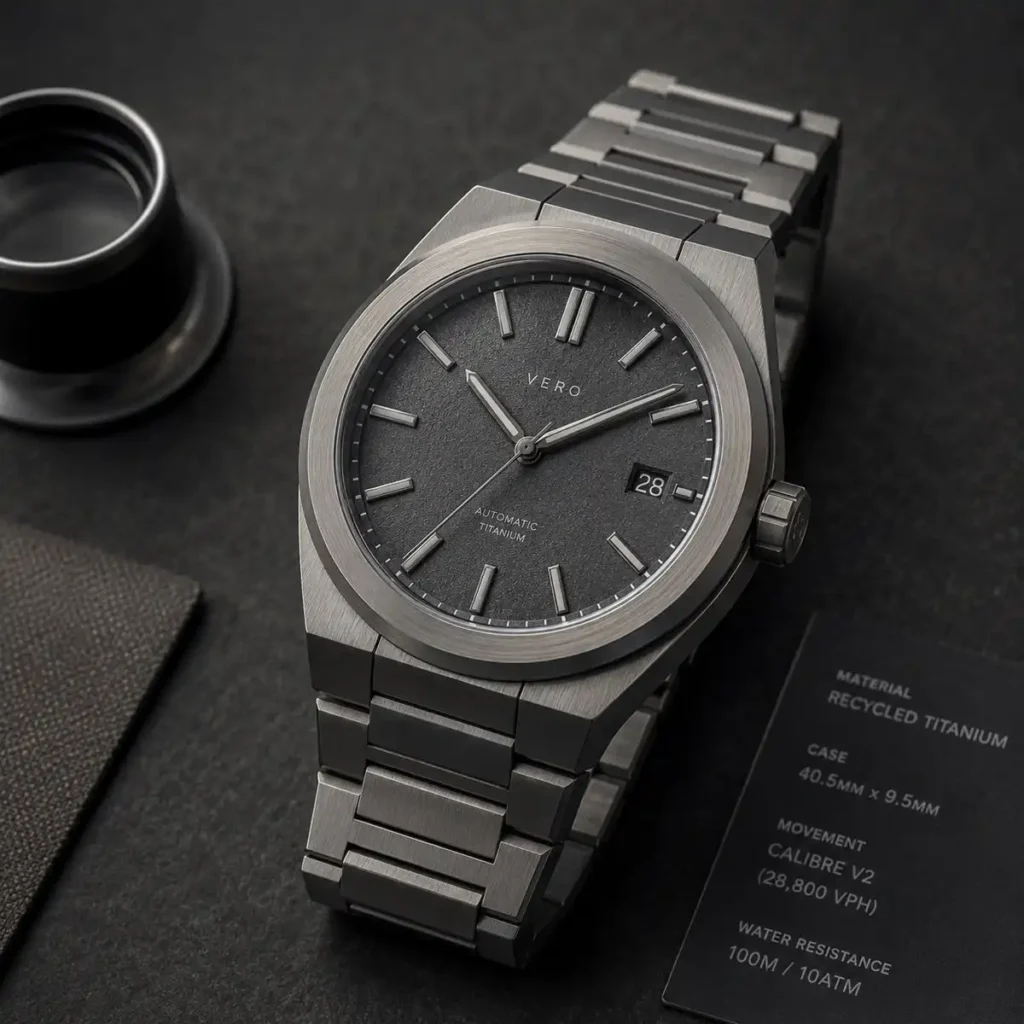
Recycled titanium is attractive in high-end watchmaking because it preserves titanium’s key advantages, low weight, high strength, and corrosion resistance, while reducing the environmental burden linked to extraction and primary processing. The strongest examples treat recycled titanium as a technical choice, not a marketing finish, and tie it to demonstrable design decisions.
Titanium’s appeal on the wrist is immediate. The first-time mechanical buyer often expects a large sports watch to feel heavy, then realises weight is not the same as quality. Titanium flips that instinct. A well-made titanium case can feel substantial through crisp edges, tight tolerances, and a bracelet that sits flat, while remaining comfortable during long wear, especially for travel or daily commuting.
The nuance is in the execution. Titanium is notoriously unforgiving in finishing. Sharp transitions can look soft if the brushing is lazy, and polished titanium can appear grey rather than radiant. That is why recycled titanium matters most when a brand demonstrates control over surface treatment and consistency across batches. In coverage of Panerai’s Submersible eLAB-ID, the core idea was not simply “recycled”, but that the watch was positioned as a material experiment pushed towards mainstream expectations of robustness and legibility.
For buyers thinking in terms of watch investment, titanium also introduces a psychological trade-off. Gold communicates value instantly across cultures. Titanium requires the watch to speak through design language, finishing, and brand credibility. In 2026, that trade increasingly looks worthwhile to collectors who want discretion without sacrificing engineering.
What Are Bio-Materials In Luxury Watchmaking For 2026 Buyers
Bio-materials in luxury watches are materials derived from renewable biological sources, or engineered composites that reduce reliance on fossil-based plastics and high-impact animal products. In practice, this often means plant-based strap materials, natural-rubber composites, or polymers made from recovered waste streams, used where durability and comfort still have to meet tool-watch expectations.
The strap is where this shift becomes tangible fastest. A case can be recycled and still feel abstract. A strap is worn against the skin, flexed daily, and replaced more often than a movement is serviced. That makes it the perfect testing ground for materials that want to be both ethical and premium.
IWC Schaffhausen has publicly discussed MiraTex as a plastic-free alternative concept for straps, built from natural rubber and cork. The point is not novelty. The point is performance that can sit alongside modern sports cases without the tell-tale stiffness, shine, or cracking that plagued earlier “eco” materials.
There is also a quieter benefit: bio-based strap materials can change the ownership experience. They can reduce the hot-weather stickiness that some rubber straps develop, and they can avoid the tanning and dye processes associated with traditional leather that many buyers now question. Not every alternative is equal, though. Some “vegan leather” offerings still contain significant petrochemical content. In 2026, the intelligent question is not whether a strap is “vegan”, but what it is actually made from, and whether the brand will disclose the composition.
How Recycled Steel Became A Prestige Material In Swiss Watches
Recycled steel has moved from “responsible sourcing” to a prestige cue because leading brands have framed it as engineered, proprietary, and auditable. When a house can state a defined recycled share across its production and keep the finishing standards intact, the result is a metal that signals modernity without looking like a compromise.
In 2023, Chopard said it reached 80% recycled steel across its steel references, and has since described ambitions to push further as its supply chain matures. The specific target year has not always been communicated consistently in public coverage, which is precisely why steel has become such a useful test of credibility. The buyer who cares can ask for the underlying methodology, not the slogan.
Recycled steel also fits the 2026 mood because it pairs naturally with “quiet” design. Steel reads as understated. It photographs honestly. It does not rely on the visual drama of precious metal to justify the price. That, in turn, puts pressure on brands to deliver value through case architecture, dial execution, bracelet quality, and movement choices.
For collectors comparing options, the more meaningful distinction is not recycled versus non-recycled. It is whether the brand can show chain-of-custody discipline, and whether the watch feels finished to the standard implied by its retail positioning. A brushed lug that catches light cleanly will do more to persuade a sceptical buyer than any sustainability language.
Can Ulysse Nardin Prove Upcycled Composites Belong In Serious Sports Watches? Upcycled composites belong in serious sports watches when they are used as structural materials with known performance properties, not as decorative inserts. The most credible examples disclose what the composite is, what waste stream it comes from, and how it is integrated into a case designed for real use, including water resistance and impact resilience.

Ulysse Nardin’s Diver Net OPS is a useful case study because it attaches specifics to the narrative. The model has been described as using a case with 95% recycled stainless steel, alongside materials derived from upcycled fishing nets and a carbon composite associated with aerospace offcuts. It is also positioned as a true sports watch with 300m water resistance, rather than an “eco concept” that never needs to be worn.
The movement details matter because they signal seriousness. In reporting on the Diver Net OPS, the calibre UN-118 is described as an automatic movement with a silicon escapement and approximately 60 hours of power reserve, running at 4Hz. Those are not gimmick specifications. They sit in the modern sweet spot for reliability and wearability.
Fun fact: Carbonium is commonly produced from aerospace offcuts, which is why its layered pattern can vary from case to case, even when the dimensions are identical.
Collectors should still treat composites with clear eyes. Composites can be extremely tough, but their surface behaviour differs from that of steel or ceramic. Scratches and scuffs can look different. Refinishing options may be limited. If a brand cannot explain how a case will age over 10 years of wear, it is not offering a luxury product; it is offering an experiment.
What The EU Digital Product Passport Push Could Change For Luxury Watches
The EU Digital Product Passport is a framework direction rather than a single universal label applied overnight. Under the Ecodesign for Sustainable Products Regulation, the EU has set out a pathway for product-specific requirements that can include a digital passport containing accurate, up-to-date data about a product’s sustainability and circularity attributes, delivered through mechanisms such as data carriers.
For watches, the immediate relevance is trust. The luxury secondary market runs on documentation, service history, and authenticity checks. A standardised, regulated data approach could reduce friction for buyers who want proof of material origin or repairability, especially for brands leaning into sustainable luxury narratives.
There is also an industry infrastructure dimension. Reporting in The Business of Fashion has highlighted efforts around a Digital Product Passport registry initiative, aimed at making DPP data more searchable and interoperable across systems. That matters because the value of any “passport” is limited if it lives inside one brand’s private app.
The buyer takeaway is practical. In the coming years, expect more QR-linked provenance information, more explicit recycled-content claims tied to verifiable standards, and more pressure on brands to support repair, not just warranty. If a brand talks about traceability but cannot explain how parts and servicing will be handled over decades, the narrative is incomplete.
How To Buy A Sustainable Luxury Watch Without Being Sold A Story
A sustainable luxury watch purchase is safest when you treat sustainability claims like technical specifications: confirm the definition, ask for evidence, and judge the ownership implications. The best approach is to look for disclosed recycled percentages, recognised chain-of-custody frameworks, and clear servicing pathways, then decide if the design still earns its place on your wrist.
First, ask what “recycled” means in that specific watch. Some brands mean recycled case metal only, while other components remain conventional. Second, look for the standards language behind the claim, such as alignment with ISO-style recycled content definitions or recognised jewellery supply frameworks, especially if precious metal is involved. Third, ask what happens in year 8, not week 8. Mechanical watches often need servicing on multi-year cycles, and the long-term cost and parts availability should be part of any serious buying decision.
This is where the wearing experience becomes a credibility test. A strap material can be ethical and still fail if it squeaks, traps sweat, or looks tired after a season. A recycled metal case can be responsible and still disappoint if the bracelet feels sharp at the edges or the clasp lacks refinement. The most convincing sustainable watches in 2026 are the ones that perform like premium objects first, and then justify their material choices with evidence.
Conclusion
The most important change in 2026 is not that watchmaking has become virtuous. It is that the definition of value is being contested in public, with materials at the centre of the argument. Recycled steel and recycled titanium can now be framed as performance choices. Bio-materials can now be framed as luxury choices. The brands that win will be the ones that can prove what they claim, finish what they make, and support what they sell over a long ownership horizon. In the end, a great watch still has to feel right on the wrist. The difference now is that buyers increasingly want the story of that feeling to start long before the watch ever meets the skin, like a movement that only becomes impressive once you understand what is happening beneath the dial.


