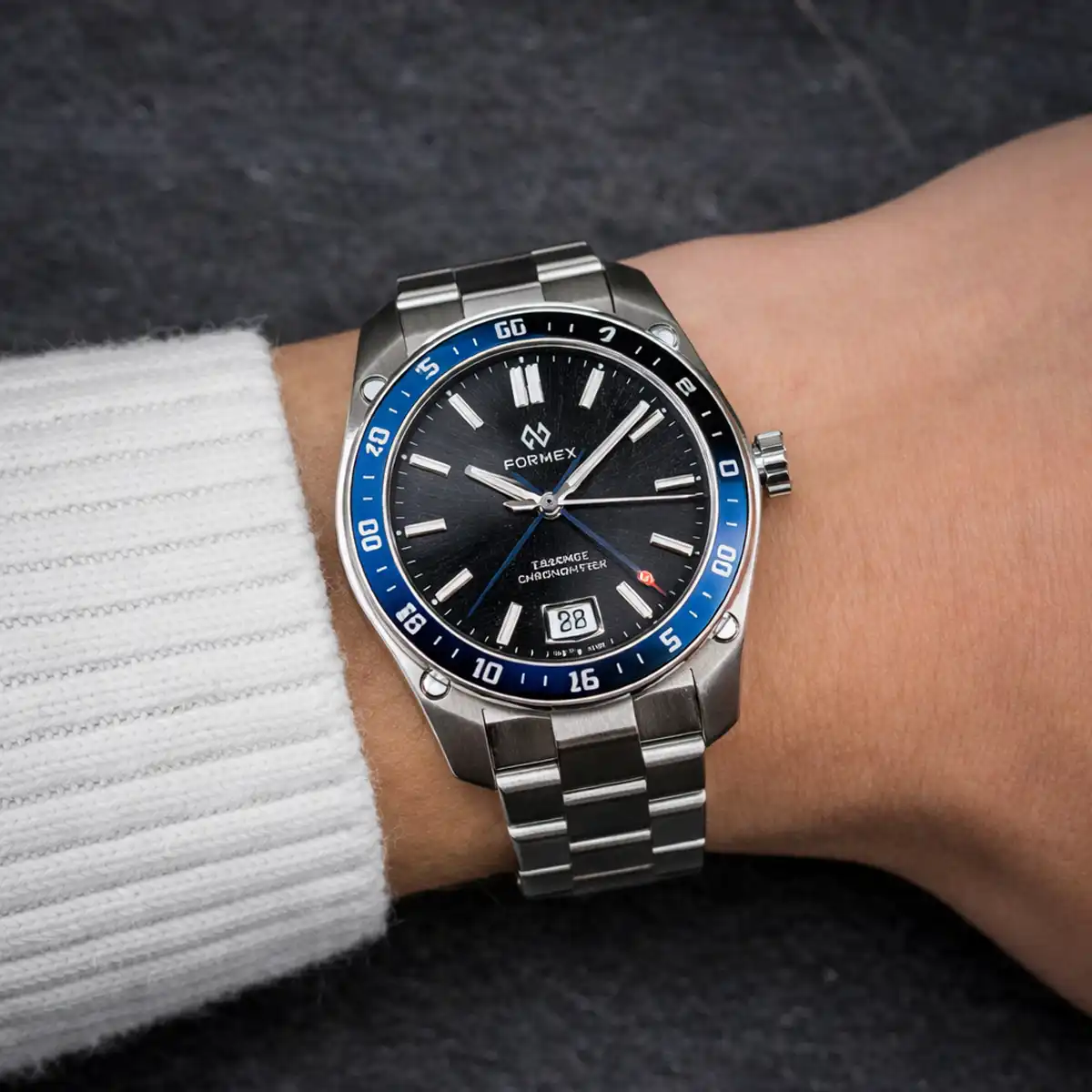
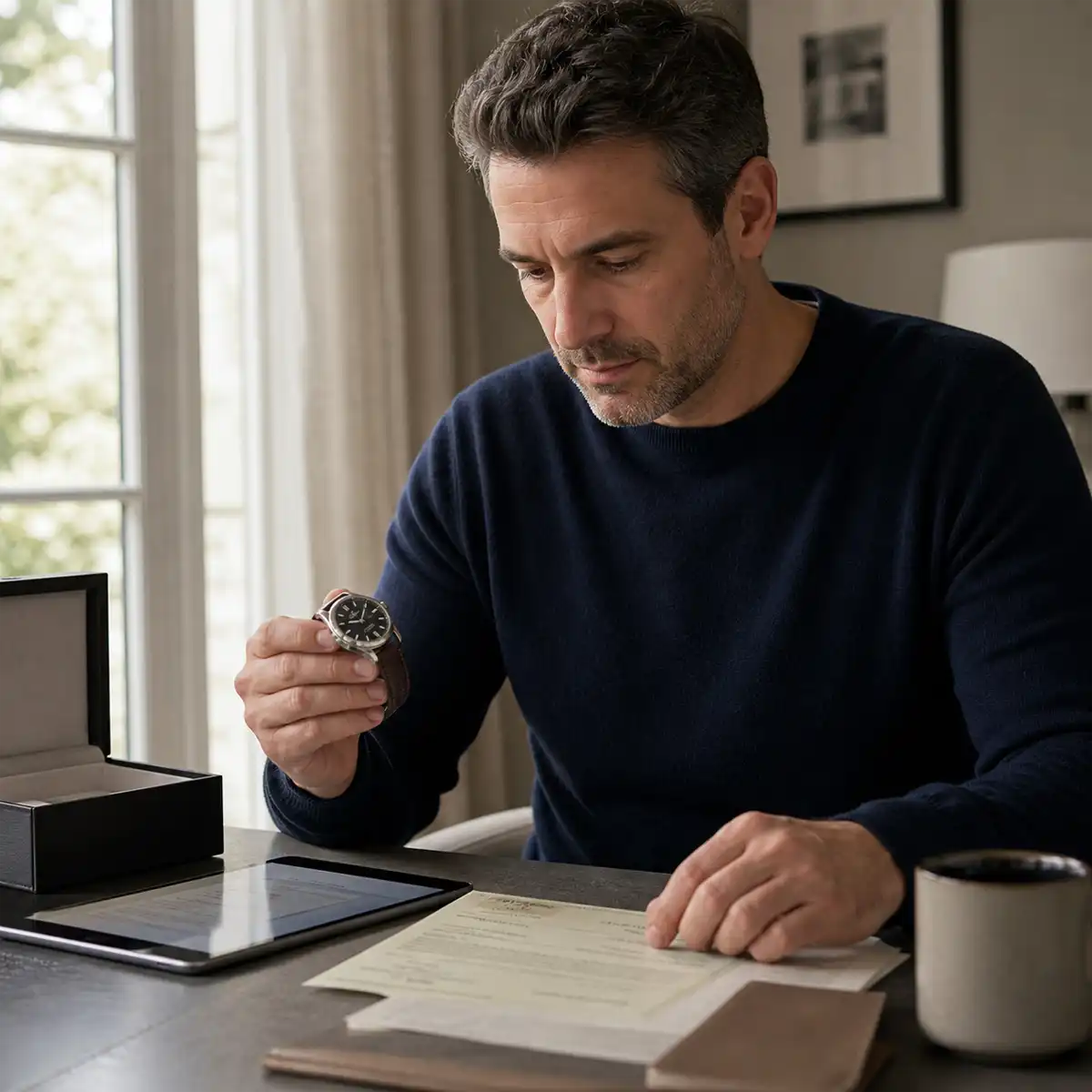
Start with what you like, not with what appreciates. This is the advice that experienced collectors give beginners and almost nobody follows, because the investment narrative around vintage watches is loud enough to make purely aesthetic starting points feel naive. The data over 20 years says otherwise. The collectors who have done best financially in vintage watches are, almost without exception, the ones who built genuine knowledge around a specific area rather than buying references because someone told them the numbers were going up.
Vintage watch collecting rewards curiosity and penalises speculation. This guide establishes the foundational knowledge a first-time collector needs before spending anything — what vintage means in horological terms, how to choose a starting reference, what authenticity criteria actually matter, and how the UK auction and dealer market works.
What Vintage Means and Why the Definition Matters
The watch industry uses “vintage” loosely, and the loose usage costs buyer’s money. A common industry threshold places vintage at 30 years or older, which in 2025 means anything produced before 1995. The more meaningful distinction for collectors is between watches produced before the modern era of CNC machining and computer-aided design — broadly, watches made before the late 1980s — and watches produced after it. Pre-CNC vintage watches were made with tolerances and finishing approaches that differ fundamentally from modern production, giving them a visual and mechanical character that modern re-editions cannot fully replicate.
For most first-time collectors, the practical entry point is the period from 1950 to 1985: the era that produced the references most actively collected today — vintage Rolex Submariner, vintage Omega Speedmaster, vintage Patek Philippe Calatrava, vintage Seiko 62MAS. These watches are old enough to have genuine historical character, young enough that movement parts and service expertise remain accessible, and produced in sufficient numbers that the market has liquidity.
Watches from before 1950 require specialist knowledge and specialist servicing that exceeds the scope of a first collection.
Choosing Your Starting Reference
The instinct of most beginners is to start with the most iconic reference they can afford. This is usually the wrong approach. The most iconic references — vintage Rolex Daytona with exotic dial, vintage Patek Philippe Nautilus 3700, vintage Audemars Piguet Royal Oak reference 5402 — are also the most heavily faked, the most extensively researched by experienced collectors, and the most punishing to first-time buyers who make authentication errors.
A better starting strategy is to choose a reference where your specific interest creates a natural knowledge advantage, and where the collecting community is active enough to provide reference points but not so competitive that condition premiums are extreme.
Credible starting references for UK collectors in 2025:
Omega Seamaster 300, references 2913, 2914, 14755: A professional diver’s watch produced from 1957. The broad arrow hands, the Mercedes hands variant, and the relationship to military-issue versions create a layered reference history that rewards research. Prices in honest worn condition start at approximately £2,000 to £5,000 depending on dial configuration and bracelet presence. Authentication is well-documented in collector resources.
Longines Conquest, 1950s references: Longines produced exceptional thin automatic calibres throughout the 1950s and 1960s. The Conquest family represents the brand’s technical ambition at its peak, before the quartz crisis reduced it to a volume manufacturer. Prices remain accessible — under £1,000 for honest examples — and the collecting community is knowledgeable without being hostile to beginners.
Seiko 62MAS and early professional divers: The 62MAS, produced from 1966, is Japan’s first professional diver’s watch and a direct ancestor of the modern Seiko Prospex line. Original examples in honest condition trade between £800 and £3,000 depending on dial and case condition. The Seiko collecting community in the UK is active, knowledgeable, and genuinely helpful to beginners.
Tudor Oyster Prince Submariner, references 7928, 7016: Tudor produced Submariner references from 1958, and these watches occupy a sweet spot for UK collectors: genuine Rolex-adjacent provenance, manufacture Calibre 390 or 2484 movements, and a price point significantly below equivalent Rolex references. Honest examples start at approximately £3,000 to £6,000. Authentication is well-documented.
Fun fact: The term “tropical dial” in vintage watch collecting refers to a dial that has undergone chemical changes from UV exposure, shifting from black to brown or chocolate colouration. Far from reducing value, tropical dials on certain Rolex references command premiums of 50% to 300% over equivalent standard dials — a case where what appears to be damage is precisely what collectors are seeking.
The Four Authenticity Criteria That Determine Value
Across all vintage references, four criteria determine the difference between a watch worth collecting and one that is not.
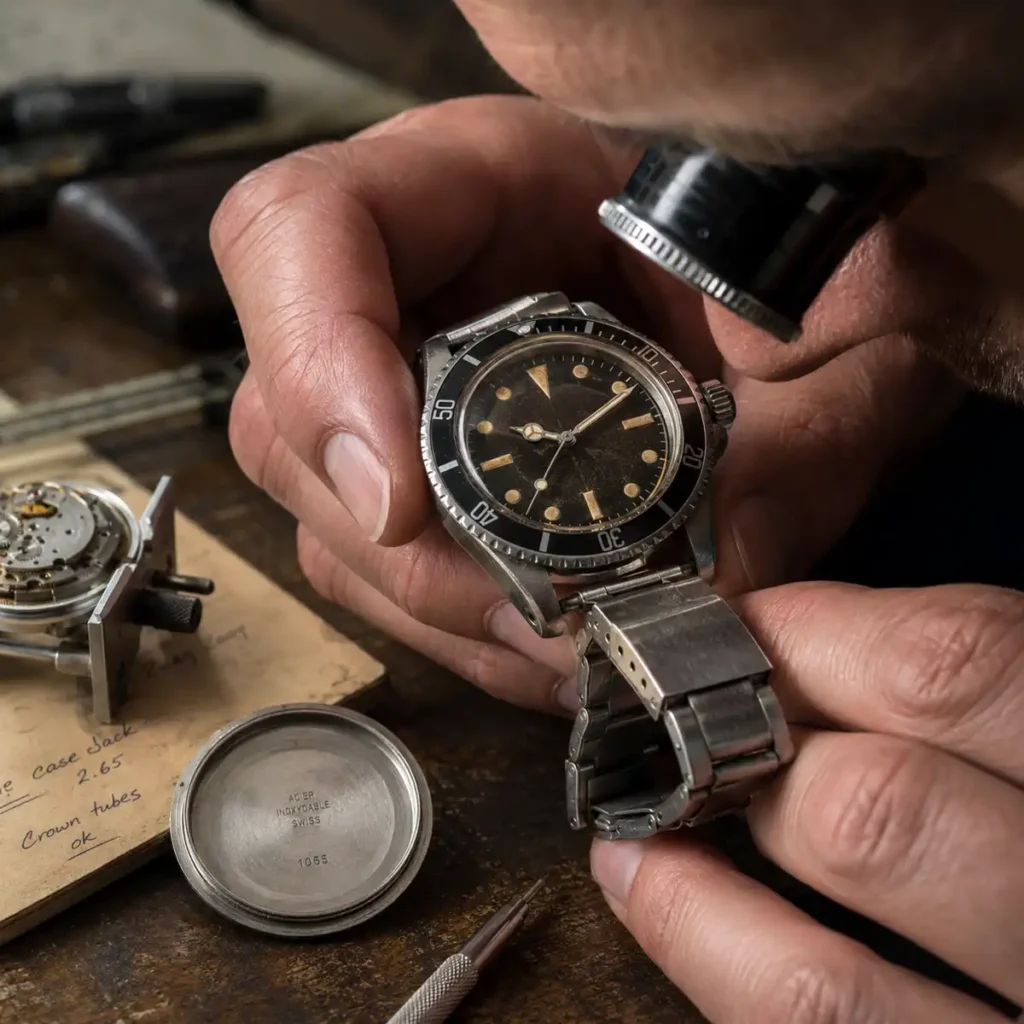
Dial originality. As discussed above: an original dial with honest patina is worth more than a refinished dial in better cosmetic condition. For vintage watches specifically, look for: consistent lume aging on all plots and hands (freshly replaced hands on an aged dial is a significant red flag); printing that shows age-consistent fading rather than sharp modern reproduction; indices that are seated correctly rather than recently repositioned.
Case sharpness. Unpolished cases with original surface textures intact are the standard for serious collecting. On a vintage Submariner, the lugs should show defined brushed surfaces and sharp chamfers; on a vintage Omega Seamaster 300, the asymmetric case should retain its original geometry. Any evidence of polishing — rounded transitions, blurred surface textures, reflective lug surfaces on a watch specified with brushed lugs — reduces collector value significantly.
Service history and movement originality. A movement that has been correctly serviced is more desirable than one that has not, provided the service was performed with period-correct parts or manufacturer-grade replacements. A movement with non-original replacement parts — a replacement balance wheel of the wrong specification, a non-original mainspring — is less desirable than one with original components in honest worn condition. Ask specifically about parts replaced during service.
Bracelet and clasp originality. For many vintage references, the original bracelet and clasp add 20% to 40% to the secondary market price. A vintage Omega Seamaster 300 on its original riveted Fixoflex bracelet with the original clasp is worth considerably more than the same watch on a later replacement bracelet. Original bracelets are identifiable by reference numbers stamped on the clasp and, in many cases, by specific link construction methods that were discontinued.
How to Buy: Auction, Dealer, or Private Sale
The UK vintage watch market operates through three primary channels, each with different risk and reward profiles.
Auction: Phillips, Sotheby’s, and Christie’s hold dedicated watch sales in Geneva twice a year; their London and New York equivalents operate on varying schedules. Bonhams in London is the most accessible UK-based auction house for mid-range vintage watches. Auction is the most transparent pricing mechanism in the market — hammer prices are published and searchable, creating a genuine price discovery function. The risks are: buyer’s premium (typically 25% to 30% above hammer price at major houses), no right of return, and the requirement to conduct due diligence from auction house condition reports and pre-sale viewings rather than hands-on inspection at your leisure.
For first-time buyers, attending a pre-sale viewing at Bonhams or a regional auction house before buying is more valuable than any amount of online research. Handling watches under auction house lighting, with catalogue condition reports to hand, calibrates your eye faster than anything else.
Specialist dealer: UK specialist vintage dealers — operating in London, Manchester, and online — offer the protection of a return policy, authentication guarantees, and the ability to inspect watches at your own pace. The price premium over auction reflects these advantages. For a first purchase, a reputable specialist dealer is the lower-risk route; for a collector with growing expertise, auction offers better value.
Private sale: Watchforum.co.uk, forums on Reddit’s r/Watchexchange, and collector networks offer private sale opportunities at prices between dealer and auction. Risk is entirely on the buyer; there is no authentication guarantee and no right of return. Private sale is appropriate for collectors who can authenticate independently, not for beginners.
Starting Small and Building Knowledge
The most common and most expensive beginner mistake is spending the maximum of your budget on your first purchase. A first vintage watch bought at the top of your budget before your eye is calibrated is almost always a worse investment than several lower-priced purchases through which you build authentication judgment.
A practical first-year collecting approach: spend no more than £1,000 to £1,500 on a first reference in a category that genuinely interests you. Use it to develop your authentication eye — examine the case condition, study the dial under different light, read the service history, compare it against auction records for the same reference. The knowledge gained from one honestly evaluated purchase is worth more than the watch itself.
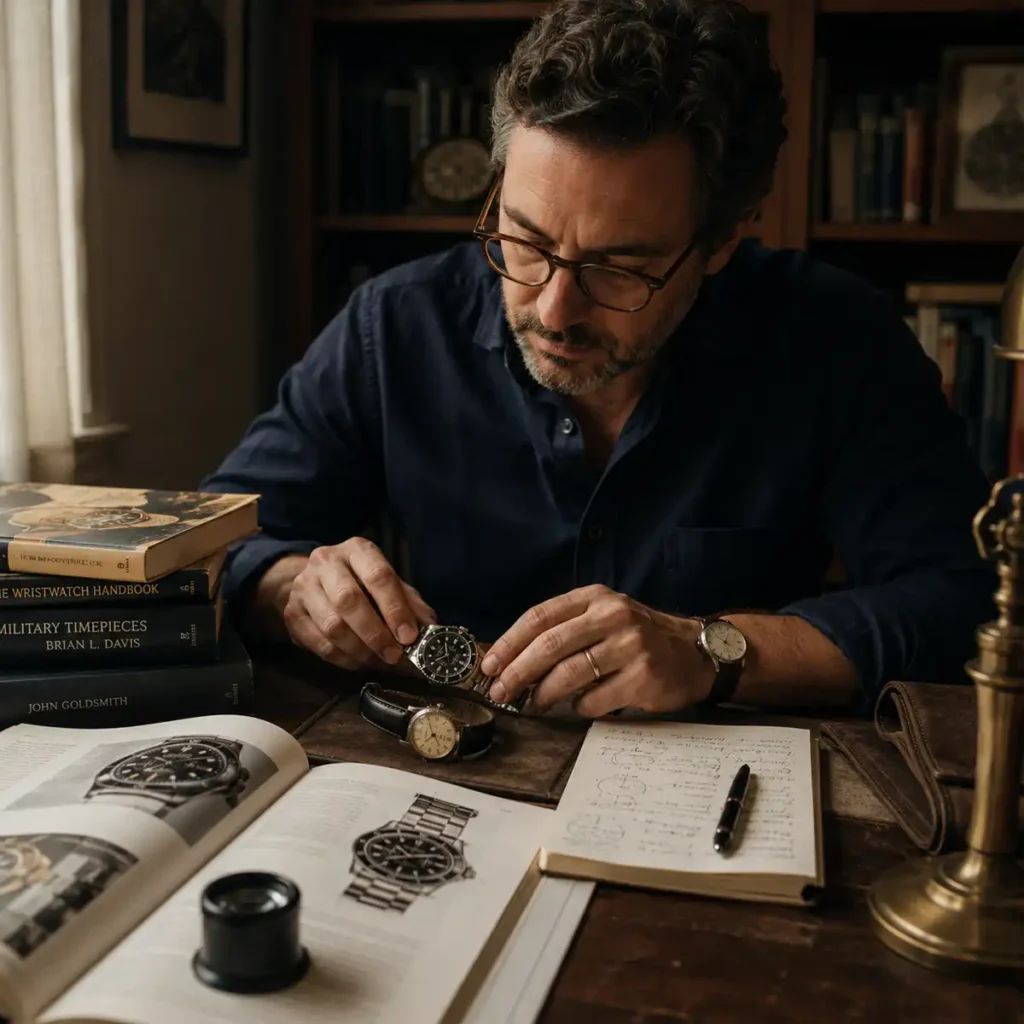
Vintage collecting compounds. The collector who understands a specific reference deeply — its production history, its dial variants, its movement evolution — will consistently make better purchases than the one who buys on reputation alone. Start narrow. Build knowledge. The watches will follow.