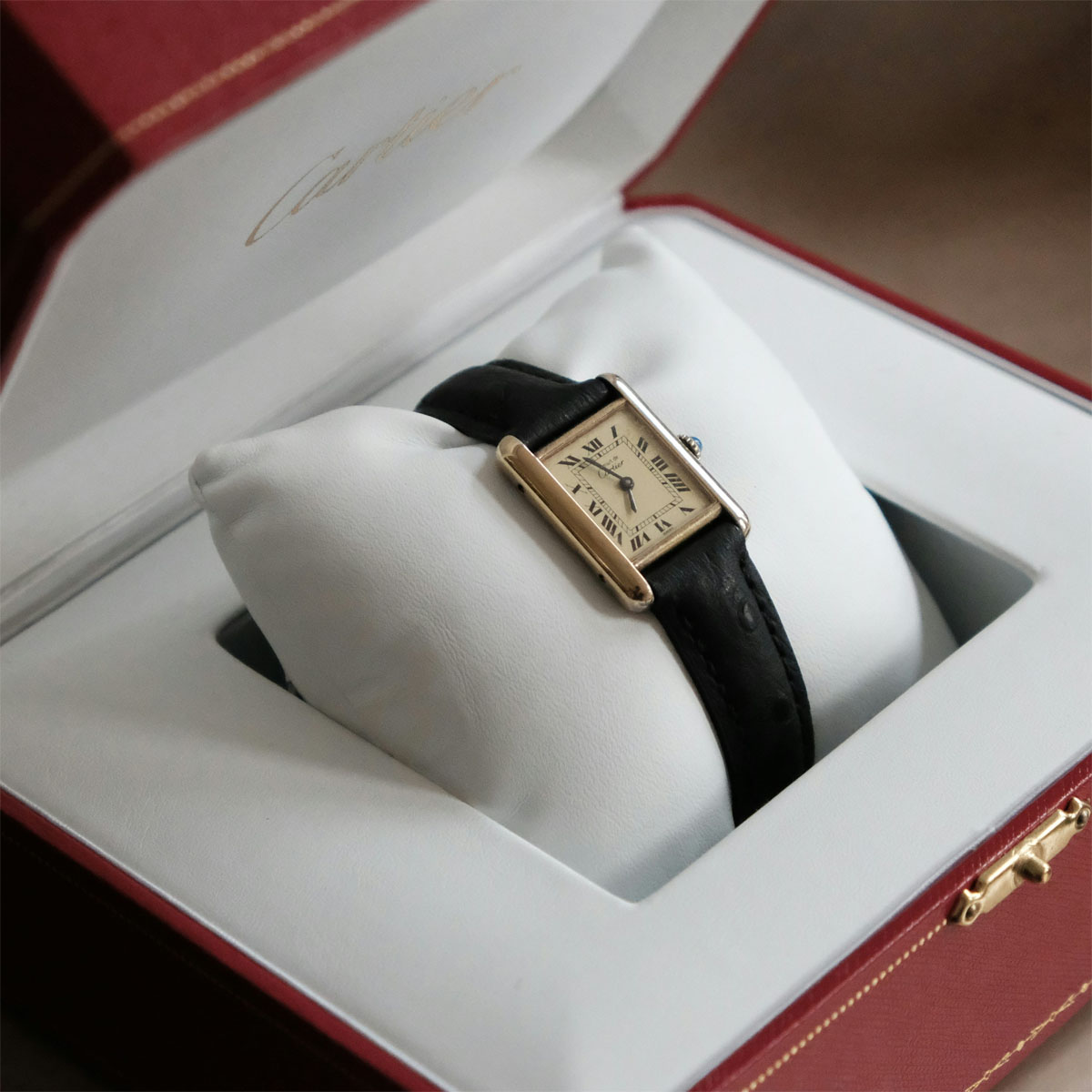
If you spot a slim rectangular Cartier Tank under a cuff in a London lounge, you’re seeing more than just a watch. This piece has influenced luxury watch design for over a century and has been part of British life since the Edwardian era. Not many brands have created both coronation tiaras and iconic Swiss watches worn daily in Britain. Even fewer can say their London branch once worked almost independently, producing designs that now fetch six-figure sums at auction.
For UK buyers, Cartier stands out. It’s both a jeweller to royalty and a leader in modern design, while also becoming a respected watchmaker. The company that set diamonds for Queen Alexandra also made the first well-known men’s wristwatch and helped shape the pilot’s watch. This blend of prestige, design history, and solid engineering makes Cartier especially appealing to British collectors in 2025, whether they’re looking for their first automatic watch or a vintage Crash.
This article explores how Cartier built its reputation in Britain, why some London-linked models are now top investments, what the SolarBeat Tank says about innovation, and how buyers can choose between boutiques, pre-owned options, and vintage dealers. The goal is clear: by the end, UK readers will know what a Cartier watch stands for, how it’s made and priced, how it performs over time, and which models suit their needs, whether for daily use or investment.
The connection between Britain and France is strong. In 1902, King Edward VII ordered 27 tiaras from Cartier for his coronation, which led the brand to open in London and start a close relationship with the royal family. This history still shapes how British buyers see Cartier—as both a royal supplier and a creator of iconic watch designs.
In 1902, King Edward VII famously called Cartier “the jeweller of kings and the king of jewellers.” This phrase still appears in the brand’s literature over a century later.
Iconic Cartier Watch Designs And Signature Case Shapes
While most Swiss watches begin with a round movement and case, Cartier became known for its focus on shape. The brand has always seen the wrist as part of the design, creating square, rectangular, tonneau, and asymmetric cases first, then adapting the mechanics. This approach is most obvious in the main collections that remain popular in Britain.
The Tank is still the main reference. Designed in 1917 and released in 1919, it was inspired by Renault FT-17 tanks from the Western Front. The long vertical sides look like caterpillar tracks, and the central case resembles a turret. Its big innovation was blending the lugs into the sides, making the strap and case look like one line, unlike older pocket watches. The first Tank Normale was compact and sharp. Later, the Tank Louis Cartier had softer corners and a longer case, becoming the classic dress watch. The Tank Cintrée added more curve, making it fit the wrist better and appealing to those who value comfort and style.
The Tank à Guichet is the most unusual version of the Tank. First introduced in 1928 and reintroduced in 2025, it has no hands or a traditional dial. Instead, time is displayed through small horizontal windows in a brushed-metal plate, with jumping hours and a moving minute disc beneath. Its design is more akin to Art Deco architecture than to a typical watch, which is why collectors who prefer subtle luxury value it so highly.
While the Tank is suited to the drawing room, the Santos de Cartier was made for the cockpit. In 1904, aviator Alberto Santos-Dumont told Louis Cartier that checking a pocket watch while flying was difficult. Cartier responded with a square watch on a leather strap that could be read without having to let go of the controls. At the time, its bold shape and visible screws were very modern and became a signature look. Today’s Santos models for UK buyers combine that industrial style with features like the QuickSwitch strap system and SmartLink bracelet sizing, so owners can easily switch between a steel bracelet and a leather strap at home.
The Cartier Crash shows the brand’s more daring side and is closely linked to London. Created in 1967 during the Swinging London era, it twists the classic oval case into a shape that looks partly melted, but still features stretched Roman numerals and the Cartier signature. Made in very small numbers by the London branch and later in limited runs in Paris, it’s now a top choice for insiders. Original London versions often sell for over six figures, thanks to their rarity and a story that attracts both art lovers and hip-hop collectors.
Cartier’s success isn’t just about history. The Ballon Bleu de Cartier, launched in 2007, has become a modern favourite in Britain. Its rounded, pebble-like case fits comfortably on many wrists. The recessed crown, set with a blue cabochon and protected by an arched guard, cuts into the Roman numeral track and gives the dial a unique curve. Well-known wearers like the Princess of Wales have made it a contemporary classic that works with both formal and casual outfits. For many British buyers, especially women moving up from fashion watches, the Ballon Bleu is often their first serious luxury watch.
Cartier Movements, Complications And Modern Innovation
For much of the 20th century, detractors dismissed Cartier as a design house that relied on outsourced movements. There is some truth in that history. The maison often collaborated with high-grade suppliers such as Jaeger-LeCoultre and Piaget rather than manufacturing its own calibres. Over the past 2 decades, however, Cartier has invested heavily in its manufacture at La Chaux-de-Fonds and reconfirmed its technical ambitions.
A pivotal development for mainstream UK buyers arrived with the Tank Must SolarBeat. Introduced in 2021, the SolarBeat movement marries the convenience of quartz with photovoltaic charging. Instead of fitting a traditional solar panel and accepting a compromise in dial appearance, Cartier chose a subtler solution. Light reaches the cells through micro-perforations in the Roman numerals and, in the latest generation, across the entire dial surface. On paper, the system targets a total life of around 16 years without a battery swap.
The first generation, retrospectively called V1, proved less robust in the real world. Owners reported charging issues and colour shifts, with some dials taking on a pinkish cast after prolonged UV exposure. Production was quietly curtailed. The subsequent V2, which reached wider distribution in 2024 and 2025, uses a fully micro-perforated dial, increased light intake, and a more realistic specification that promises roughly 2 years of autonomy from a full charge while maintaining a longer-term lifespan. For the British owner who wants a daily wear Tank that behaves like a high-grade quartz but avoids repeated battery changes, the SolarBeat V2 is an appealing proposition, particularly when combined with Cartier’s move into non-animal straps.
At the high-end of horology, Cartier’s long-running fascination with visual magic continues in its mystery complications. Early 20th-century mystery clocks used clear discs to carry the hands, driven by hidden gearing so that the hands appeared to float in glass. Today, models such as the Rotonde de Cartier Mystery and the Masse Mystérieuse translate that concept to the wrist. They are not mass-market pieces for Bond Street footfall, but they play an important role in signalling that Cartier can execute technically demanding movements rather than relying solely on suppliers.
The Cartier Privé collection is central to that message. As the spiritual successor to the 1990s Collection Privée Cartier Paris, it reissues classic case shapes with carefully selected movements in small runs. Recent years have focused on the Tortue, a tonneau case that sits between round and rectangular. The Tortue Monopoussoir Chronograph, one of the stars of 2024 and 2025, features the calibre 1928 MC, a shaped manual-wind movement designed specifically for that case. In an industry where many non-round watches hide a small circular movement surrounded by spacers, a formed movement demonstrates real technical commitment and speaks directly to serious enthusiasts who care about what lies behind the dial.
Cartier Watch Investment Guide For The UK Market
From an investment perspective, Cartier is no longer dismissed as a fashion name. Over the last decade, particularly through the market corrections of 2023 and 2024, it has behaved more like a blue-chip design house, with its strongest references holding or increasing value even as speculative sports watches soften. That said, British buyers should recognise that not all Cartier references behave in the same way.
At the apex sit the London-born grail pieces. Vintage Crashes, Maxi Ovals and Pebbles from Cartier London were produced in extremely small numbers, often measured in dozens. For these, price is driven by provenance, originality and the presence of a London signature on the dial. Auction hammer prices above £100,000 for a Crash are now routine, and best-in-class examples can stretch to £200,000 or more. These are watches that move in a global market and should be treated as long-term art assets rather than short-term trades.
Just below that tier sit the watches most often targeted by collectors building focused Cartier portfolios. Pieces from the original Collection Privée Cartier Paris and the current Privé range offer a balance of rarity, design purity and relative affordability compared with the Crash. References such as the Tank Cintrée CPCP, early Tortue Monopoussoir models, and certain limited Tortue or Cintrée reissues have seen sustained demand. They appeal to collectors who value formed movements, traditional guilloché dials and classical proportions, and who are prepared to accept less name recognition than a steel sports Rolex in exchange for more distinctive design.
For most UK buyers walking into Bond Street or Selfridges, however, the decision is not about speculative returns. Standard production Tanks, steel Santos models and Ballon Bleu references sit firmly in what might be called the utility or commodity tier. These watches will usually see an initial drop on the secondary market, often retaining around 60–80% of retail in the first few years, yet they remain highly liquid. A clean steel Tank Must on bracelet, with box and papers, can be sold rapidly in London, Hong Kong or New York because demand for recognisable Cartier icons is both global and constant. For many, that combination of wearability, status and predictable resale potential is more important than the possibility of dramatic gains.
Crucially, Cartier’s reputation as a design-led brand means that buyers are increasingly experiencing a “flight to design”. As the supply of similar-looking sports watches has increased, collectors have sought pieces with a stronger identity. That trend supports the long-term prospects of the Tank, Santos and Tortue lines, especially in historically significant or low-production variants. For a British collector weighing watch investment against enjoyment, the sensible approach is to view Cartier as a stable, design-focused holding rather than a vehicle for fast speculation.


Where To Buy Cartier Watches In London And Across The UK
London is one of the best places in the world to explore Cartier luxury watches in person, from flagship boutiques to carefully curated vintage windows. Understanding the differences between channels helps buyers align their expectations with price, warranty, and rarity.
At the top of the tree stands the Bond Street flagship, created by combining the Old and New Bond Street boutiques into a single multi-storey townhouse at 175–177 New Bond Street. This is one of Cartier’s global “temples” and the centre of gravity for high jewellery, complications and special orders in the UK. Here, clients can see rare pieces such as mystery complications, limited Privé releases and high jewellery watches that rarely appear elsewhere. The building itself, with its grand staircase and private salons, is designed to support discreet, high-value transactions, whether in watches or bespoke jewellery.
Cartier’s Sloane Street boutique offers a contrasting atmosphere. Smaller and more residential in feel, it attracts a local Chelsea clientele who prefer a quieter environment. The mix of watches is generally more focused on core ranges such as Tank, Santos, Ballon Bleu and Panthère, making it a comfortable place for a first-time buyer to discuss sizes, metals and bracelet options without the bustle of Bond Street.
Department store concessions at Harrods and Selfridges are another important route into the brand. For many international visitors, especially from the Middle East and Asia, Harrods remains the natural first stop for Swiss watches. Cartier’s presence there and in the Selfridges Wonder Room ensures broad exposure, supported by the stores’ own loyalty schemes and, where applicable, tax arrangements for eligible travellers.
On the pre-owned side, Cartier’s partnership with Watchfinder & Co has materially changed the risk profile for buyers who want value or discontinued references but still crave reassurance. Watchfinder is an official pre-owned partner, which means eligible Cartier watches bought there are inspected by Cartier-trained watchmakers and come with a 24-month Cartier international pre-owned warranty. For UK customers trading in another brand to fund a new Tank or Santos, the ability to handle part-exchange within the Cartier ecosystem is particularly attractive.
For truly rare vintage pieces, specialist dealers remain essential. Somlo in Burlington Arcade is widely regarded as one of the strongest sources of early Cartier in London, with stock that can include 1920s platinum cocktail watches, 1970s jumbo Tanks and occasional London Crash examples. Dealers such as Regal Time cater to buyers seeking discontinued modern classics like the Roadster or Tank Anglaise, while high-end traders on Regent Street and in Mayfair provide liquidity at the top of the Crash and Cintrée market. In all cases, condition, documentation,n and, for London pieces, the presence of the correct dial signature are key to long-term value.
Ownership, Servicing And Sustainability For Cartier Watches
Buying a Cartier watch in the UK is not only about initial specifications. Long-term ownership costs, servicing options and sustainability credentials increasingly shape decisions, particularly for younger buyers and those building multi-watch collections.
Cartier Care plays a central role in this calculus. A new watch purchased from an authorised boutique or dealer comes with a standard 2-year warranty. By registering the watch online through Cartier Care, owners can extend coverage to 8 years. The extension is tied to the watch rather than the purchaser, so if an owner sells after a few years, the remaining warranty passes to the next custodian. For British buyers who value predictable costs and stronger resale appeal, that transferability is significant.
Servicing intervals reflect the broader industry move towards less frequent but more comprehensive interventions. Cartier typically recommends functional checks every 6 years for mechanical movements, with water-resistance tests at shorter intervals for watches regularly exposed to water. In a London context, where many Tanks and Ballon Bleus will never see a swimming pool, pressure testing may be less urgent, yet magnetism is a real concern. Everyday items such as laptop covers, phone cases and handbag clasps contain magnets that can disrupt traditional hairsprings. Fortunately, Cartier boutiques offer quick demagnetisation, often as a complimentary service, which can restore proper timekeeping without a full overhaul.
Quartz models, including many Panthère references and older Tank Must pieces, usually need battery changes every 3–5 years. SolarBeat models change the equation, particularly for environmentally conscious buyers. With a projected 16-year lifespan and vegan strap options, they speak directly to those who want a near “fit and forget” watch that aligns with modern sustainability expectations. Owners of early V1 SolarBeat watches, however, should monitor performance and be aware of the movement differences if buying pre-owned.
Sustainability extends beyond movements. As part of the Richemont group, Cartier has co-founded the Watch & Jewellery Initiative 2030, which aims to improve environmental and social standards across the supply chain. The brand has invested in responsibly sourced gold and in partnerships with mines that commit to lower-impact extraction and reforestation. While such initiatives may feel abstract at the point of purchase, they increasingly matter to clients who want assurance that their luxury timepieces align with their values and taste.
Cartier In Popular Culture And Why It Matters To Collectors
One reason Cartier has remained so visible on British and global wrists is its understanding of culture. Where some traditional Swiss watches rely primarily on technical stories or motorsport heritage, Cartier has tapped into film, music and fashion to maintain relevance with younger audiences without alienating long-standing clients.
Recent ambassador choices illustrate this dual strategy. Irish actor Paul Mescal, widely praised for his understated style, has become a face of Cartier Privé, aligning shaped dress watches with intelligent, modern masculinity rather than old-fashioned formality. At the same time, the appointment of V from BTS and Jisoo from Blackpink as faces of the Panthère line has connected Cartier to global K-pop fandoms with immense buying power. These figures present the panther motif as a symbol of charisma and confidence that resonates strongly with Asian markets and with younger UK clients who closely follow South Korean culture.
Artists such as Troye Sivan and Willow Smith have fronted the relaunch of the Pasha de Cartier, positioning it as a watch for those comfortable with fluid style and creative careers. In parallel, sightings of the Cartier Crash on the wrists of Jay-Z, Tyler, the Creator and various fashion executives have pushed that once-obscure London oddity into the wider cultural spotlight. For British collectors, the effect is twofold. On the one hand, cultural visibility drives demand and supports secondary values. On theother handr, it confirms that Cartier continues to feel relevant in creative industries, which helps explain why Tank and Santos models are so commonly seen on journalists, designers and architects across London.
How To Choose The Right Cartier Watch For Long Term Value
For a UK buyer in 2025, the practical question is not whether Cartier is credible. Which Cartier to pick? The answer depends on budget, taste, wrist size and the balance between emotional and financial return.
Those seeking a first serious watch that can handle daily office wear and occasional evening use will typically begin with steel. A medium Tank Must on bracelet or leather, a Santos de Cartier in medium size or a Ballon Bleu around 33–36 mm will fit most wrists and dress codes. These watches are designed to be worn regularly, hold a familiar level of value and offer straightforward servicing. When combined with Cartier Care, they provide a relatively low-risk entry into the world of luxury watches.
Buyers with a stronger interest in design history and potential upside may gravitate towards manual-wind Tanks, Santos-Dumont models, or carefully chosen Privé releases. These pieces usually demand a little more from the wearer in terms of winding and care, yet they offer a closer connection to the original shapes and proportions that made Cartier famous. For those willing to research, there are still under-the-radar references, particularly in gold or platinum from the 1990s and early 2000s, that offer substantial charm and technical quality without the premiums that surround headline-grabbing Crashes.
At the highest level, London-signed vintage pieces and early Crash watches remain the preserve of seasoned collectors working with specialist dealers and auction houses. Anyone entering that segment should be prepared to invest in expert advice, documentation checks and long-term holding periods. The rewards can be significant, both financially and in terms of owning a genuine piece of design history, but the stakes are correspondingly high.
Whichever segment a British buyer chooses, the core considerations remain consistent. Understand the movement and service expectations. Check warranty status and Cartier Care eligibility. Verify originality and documentation for vintage pieces. Above all, choose a watch whose design and wearing experience genuinely resonate. In a market where fashions change but true icons endure, Cartier luxury watches continue to offer a compelling combination of heritage, engineering, status and long-term enjoyment on the wrist.