A certain kind of restraint is winning again in 2026. In a decade defined by loud logos and inflated waiting lists, the most persuasive design cue in luxury watches is often the simplest one: a dial you can read instantly, a case that refuses to sparkle, and a watch that looks as though it was built to work. That is why British military watches have returned to the centre of collector conversation, not as costume nostalgia, but as a blueprint for modern taste.
The story starts in mud and urgency, then ends in boardrooms and long-term ownership logic. Ministry of Defence requirements did not set out to create icons. They set out to reduce failure rates, improve legibility, and standardise procurement. The unintended result is a design language that still governs the best field and dive watches, including pieces now positioned as serious watch investment candidates because provenance and function age better than fashion.
What Is a British Military Watch and Why Buyers Still Want One
A British military watch is a timepiece designed to meet operational requirements set by the Ministry of Defence, with a focus on legibility, durability, and reliable timekeeping in harsh conditions. The category matters to modern buyers because those constraints created a lasting aesthetic and a predictable ownership experience, with fewer gimmicks and clearer provenance signals.
A defining point is intent. These watches were procured as equipment, not jewellery. That difference shows in the choices that endure: matte surfaces that reduce glare, high-contrast dials, and layouts built around minutes rather than decorative symmetry. A buyer considering a military-derived watch in 2026 is often seeking credibility, not spectacle.
Another defining point is traceability. Markings such as the Broad Arrow pheon and service codes can turn a watch into a document you can read, which is valuable in a market where “military style” is easy to imitate.
How Did Trench Watches Create the First Wrist Tool Watches
Trench watches emerged in the Somme era because pocket watches were too slow and awkward for battlefield timing. Officers needed immediate access to the time for coordination, so existing small pocket watch movements were adapted with wire lugs and leather straps. That improvisation established the core logic of the modern tool watch.
The early solutions still echo today. Protective metal guards helped shield fragile crystals from damage. Luminous paint improved night readability, setting expectations that modern buyers now take for granted in field watches. Early dust and moisture resistance experiments created the desire for sealed cases, long before today’s water-resistant standards became routine.
A subtle but important shift happened at the same time. Wearing a watch on the wrist made time a continuous reference rather than an occasional check. That behavioural change is one reason wristwatches never went back into pockets once military use made them feel normal.
Why the Dirty Dozen Still Defines Modern Field Watch Design
The “Dirty Dozen” refers to 12 manufacturers commissioned in the 1940s to produce watches to the “Wrist Watch Waterproof” specification. The significance for 2026 buyers is that this programme standardised the military aesthetic that dominates contemporary field watches: black dials, white Arabic numerals, railroad minute tracks, and an emphasis on fast, accurate reading.
Among the makers were Omega, IWC, and the British-founded Vertex. The point was not variety. The point was consistency at scale, so that issued watches behaved and read in a predictable way across units and contexts.
Collectors often describe these watches as the foundation of modern “field watch correctness”. That is not a romantic claim. It is a design argument. When a dial is reduced to what you genuinely need, it becomes difficult to improve without adding noise.
Fun fact: The Dirty Dozen name is a collector invention, but the 12-maker procurement structure was real, and it still shapes how buyers judge authenticity today.
What the Broad Arrow and Service Codes Really Prove
The Broad Arrow pheon is a property mark used on issued equipment, and on watches, it functions as a provenance anchor. A dial or case back bearing the pheon suggests Crown property and procurement discipline, which is exactly why the symbol has become so prized in the vintage market. The appeal is not decoration but verification.
Service codes add another layer of meaning. Codes such as 0552 for the Royal Navy, W10 for the British Army, and 6BB for the Royal Air Force turn a case back into a record. In a market crowded with reissues and “inspired by” pieces, readable records matter.
Buyers should also understand what these marks do not do. A marking does not guarantee condition, originality, or correct components. A watch can be genuine and still be poorly restored. Provenance is a starting point, not a finish line.
From MilSub to CWC, the Cold War Made Tool Watches Serious
The Cold War era refined British military watch requirements for new environments, particularly naval operations and the realities of equipment loss. Issued dive watches such as the Rolex Military Submariner and the Omega Seamaster 300 introduced practical features that still define modern professional watches, including fixed strap bars and tritium markings indicated by a “T”.
Fixed bars sound like a small detail, but they speak to operational priorities. Spring bars are convenient. Fixed bars are secure. That single design decision explains why many modern tool watches still treat strap security as a primary feature, even when the audience is no longer military.
A second shift was organisational. In 1972, the Cabot Watch Company was founded specifically to supply the MoD, and over time, it produced hundreds of thousands of pieces across branches of service. Scale matters here because it shows that military watch design is not only romantic scarcity. It is also industrial standardisation, built to survive rough use and replacement cycles.
Why Neo Military Design Signals Quiet Luxury in 2026
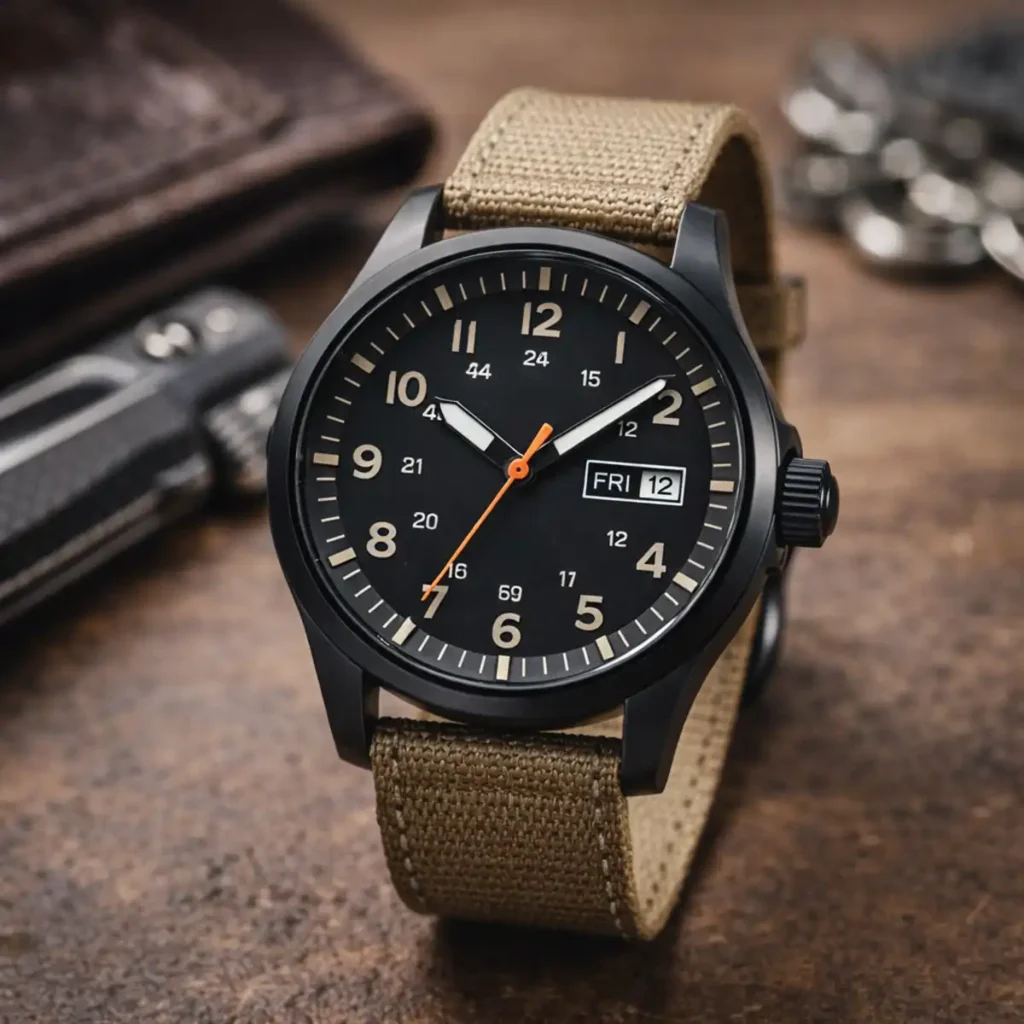
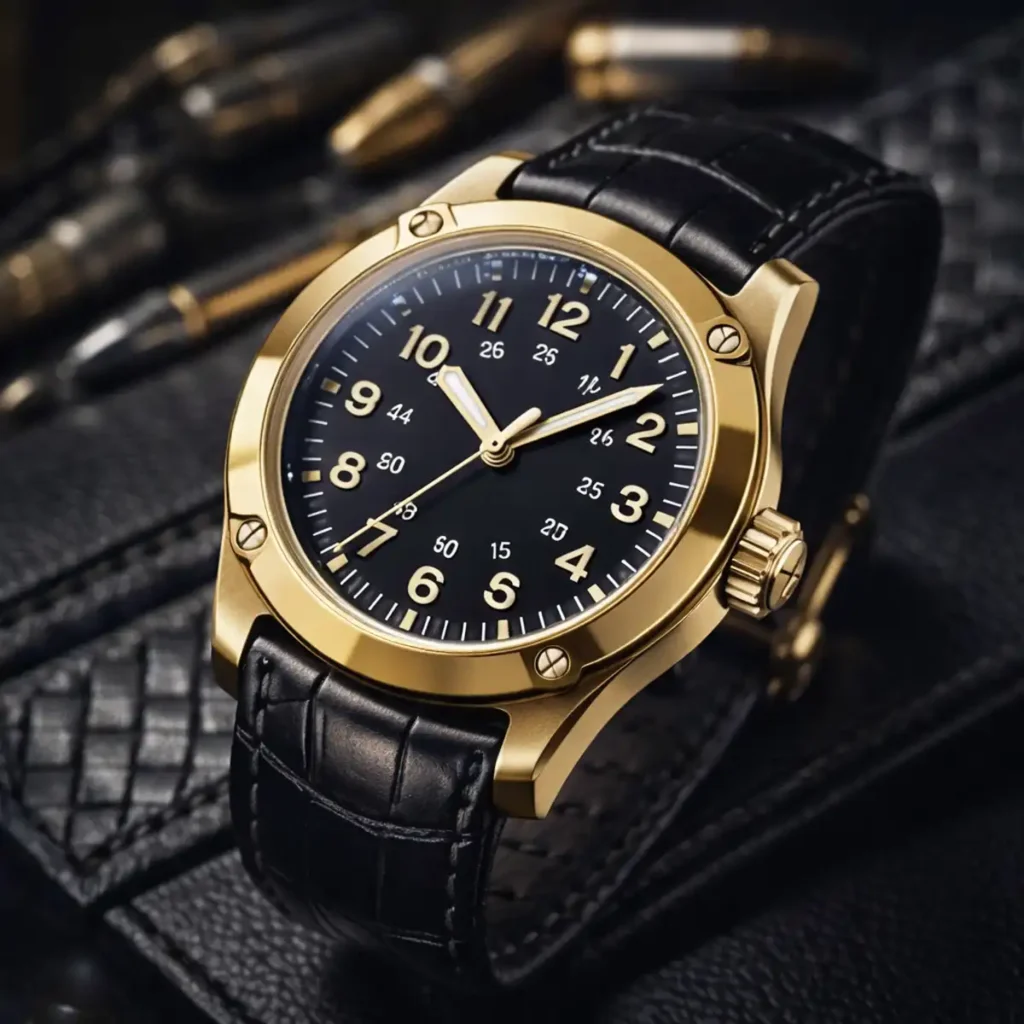
Neo-military watch design is succeeding in 2026 because it aligns with a broader shift toward quiet, competence-led luxury. A clean dial, a matte case, and restrained proportions feel deliberate in a world where many watches try too hard. The modern buyer often wants a watch that looks serious in a meeting and still feels appropriate on a weekend walk.
Contemporary British brands are using heritage as a design discipline rather than a costume. Bremont has positioned military association as part of its identity, including an Armed Forces collection that emphasises service-linked storytelling. The revived Vertex story is also instructive. The brand’s modern return in 2016, driven by family lineage, shows how provenance can be renewed without abandoning utility-led design, including the use of modern materials such as Grade 5 titanium on certain interpretations.
Timor has also leaned into heritage proportions while incorporating contemporary engineering language, including references to silicon escapements in modern field models. The attraction is partly technical and partly emotional, but the emotional component is grounded in something practical: these watches look as if they were designed to do a job.
A final point is cultural. In London, particularly in the City of London, the modern status signal is often the ability to choose restraint confidently. Military design offers that restraint without looking minimal for its own sake.
A British military watch can be a sensible watch investment in 2026 when the buyer focuses on verifiable provenance and condition rather than hype. Issued pieces with clear markings and consistent components tend to maintain demand because their story is anchored in procurement and use, not short-term trends. The stability comes from credibility rather than celebrity.
Investment logic differs between vintage-issued watches and modern military-inspired pieces. Vintage value often depends on originality, readable case engravings, and correct dial and hand sets. Modern value tends to depend on brand seriousness, manufacturing quality, and whether the watch feels like a genuine tool rather than a styling exercise.
Liquidity should also be judged honestly. A well-known military-derived model may sell faster than a niche reissue, but vintage military watches are not as instantly liquid as mass-market luxury sports watches. A realistic buyer treats these as long-term holdings, where satisfaction and narrative integrity matter as much as resale.
How to Buy a Military-Inspired Watch Without Paying for Myth
Buying well in this category means balancing emotion with inspection. First, decide whether the goal is an issued vintage piece, a modern re-interpretation, or a contemporary tool watch that simply follows military logic. Each path has different risks and different ownership rewards.
For vintage, start with markings and documentation, then move to condition. Case backs should be readable and consistent with the claimed service origin. Fixed bars, correct dial layouts, and period-appropriate finishes are practical clues, but restoration history can complicate everything. A watch can look excellent and still be wrong in parts.
For modern watches, focus on build quality and support. Warranty and servicing capacity matter because tool watches are worn hard. Many mechanical watches are serviced on multi-year cycles, commonly framed around 5 to 10 years depending on use and the manufacturer’s guidance, so ownership should include the expectation of maintenance rather than treating the watch like a sealed gadget.
A final practical check is comfort. Military-derived watches often sit flatter and read cleaner than ornate pieces. The best examples feel purposeful on the wrist, with a strap that settles quickly, a crown that is easy to grip, and a dial that does not require concentration. Those mundane qualities are what make them valuable day after day.
The evolution from trenches to boardrooms is not a marketing slogan. It is a design outcome. When a watch is shaped by operational need, the result is clarity, restraint, and confidence that carries into civilian life without effort. In 2026, British military watches are shaping modern taste because they offer a form of luxury built on usefulness, not noise, and that is exactly why collectors keep returning to them.