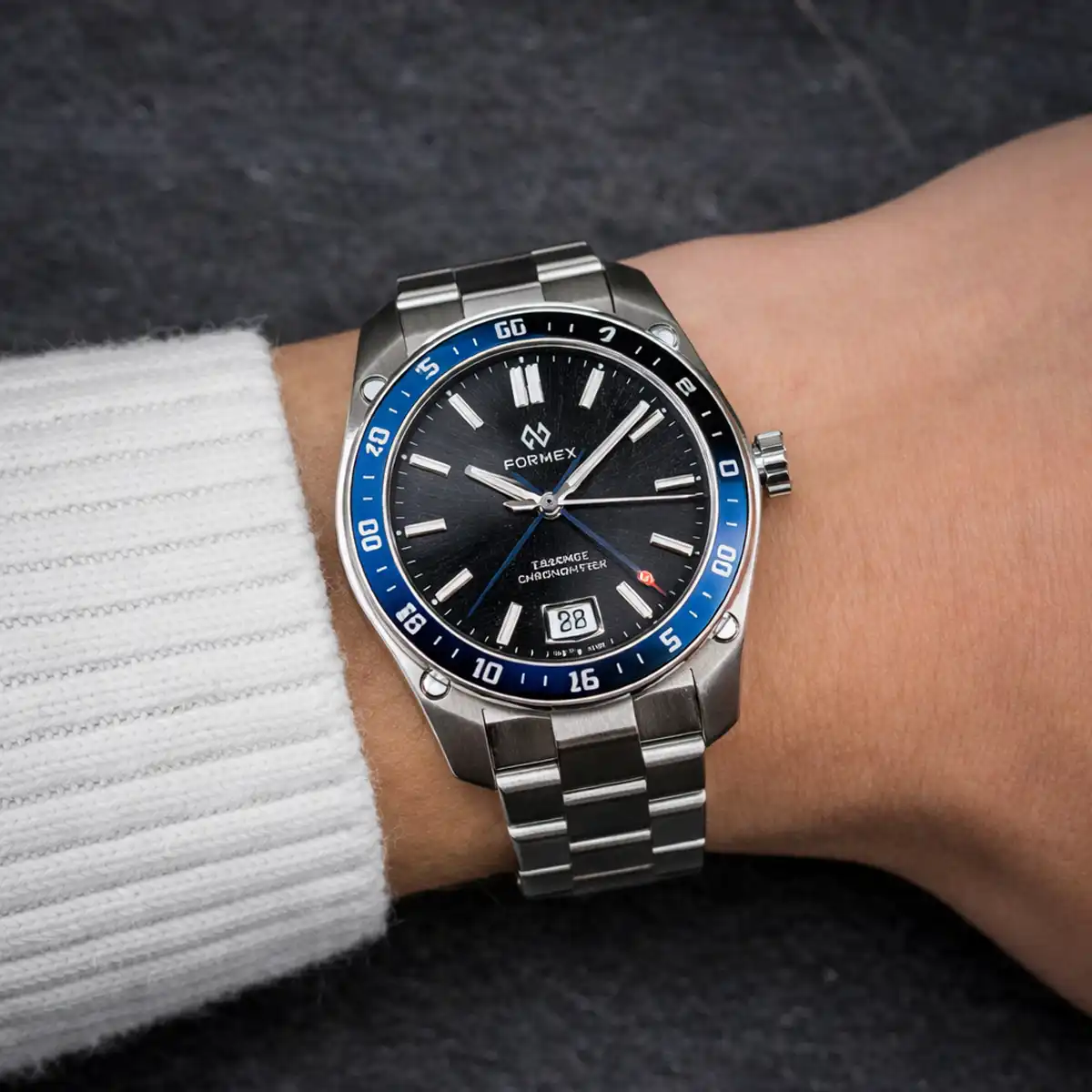
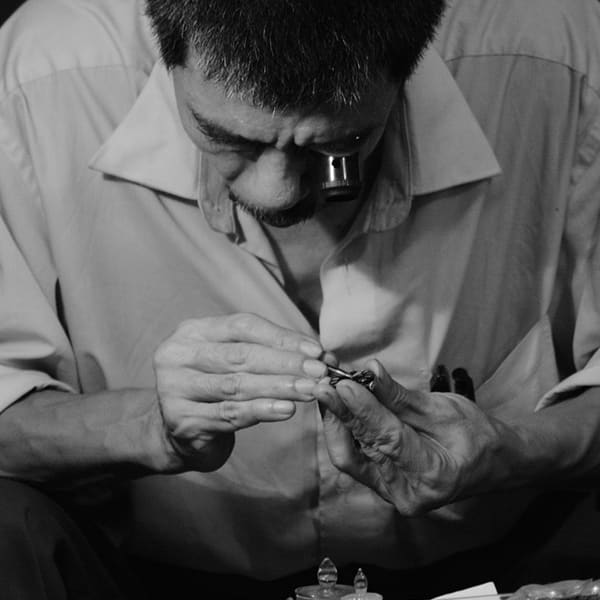
In London, provenance is integral to the watch itself, not a separate document. Collectors expect a lasting record that endures through servicing, ownership changes, and time. By 2026, this record is increasingly secured by a digital twin NFT that remains with the watch.
Paper still matters, but paper alone now feels incomplete. A hand-signed certificate dated 1954 or a stamped warranty booklet from 1998 can be reassuring, yet both are fragile and easy to separate from the watch. The rise of more professional resale has made that weakness obvious, because the buyer in the City of London of pre-owned luxury watches must often decide quickly while still demanding proof. [INTERNAL LINK: how to check authenticity when buying pre-owned watches | pre-owned watch authentication checks].
The modern solution is not a promise of price appreciation. The practical value lies in verification and after-sales continuity. A credible digital passport can help confirm identity, log authorised work, and enable a clean transfer of ownership without relying on a single booklet that can be misplaced. The outcome is simple, because less uncertainty usually means a smoother purchase, a cleaner insurance file, and fewer disputes later.
By Answering What Are Digital Twin NFTs For Luxury Watches
Digital twin NFTs for luxury watches are unique digital certificates that represent specific physical watches on a blockchain and can be transferred alongside the watches. A digital twin refers to a 1:1 record of identity and after-sales history, designed to be verified even when paper documents are missing or suspect.
A digital twin works best when it behaves like an ownership credential rather than a marketing collectable. The certificate should be issued by the brand or a trusted infrastructure partner, then transferred as part of the sale. A buyer can then verify the watch without relying on a seller’s narrative alone.
Shared infrastructure is part of the appeal. The Aura Blockchain Consortium was created by luxury groups to support product authentication and traceability, and has been publicly associated with founding members including LVMH, Prada Group, and Richemont, whose maisons include Cartier. The point of a consortium model is interoperability, because collectors rarely buy only 1 brand over a lifetime.
By Showing Why Paper Provenance Still Fails Luxury Watch Buyers
Paper provenance fails because it is easy to forge, easy to lose, and hard to authenticate at speed. A stamped warranty can confirm that a watch was sold, but a stamped warranty cannot reliably prove that a watch has not been rebuilt with mixed parts over time. A brand-issued blockchain record cannot stop fraud alone, but it can make verification repeatable.
The grey market makes the problem sharper. Sellers and buyers moving quickly across borders often rely on shorthand signals, such as a box, a booklet, and a plausible date of sale. A serious collector knows that paper can be manufactured, and that high-end replicas are engineered to satisfy casual checks rather than specialist scrutiny.
Legal labels do not close the gap. Swiss Made rules tightened in 2017 require that 60% of the manufacturing cost be generated in Switzerland and that the movement be Swiss, but Swiss Made does not explain what happened after the watch left the brand. That blind spot is where digital passports attempt to add value.
By Explaining What A Digital Product Passport Stores For Watch Provenance
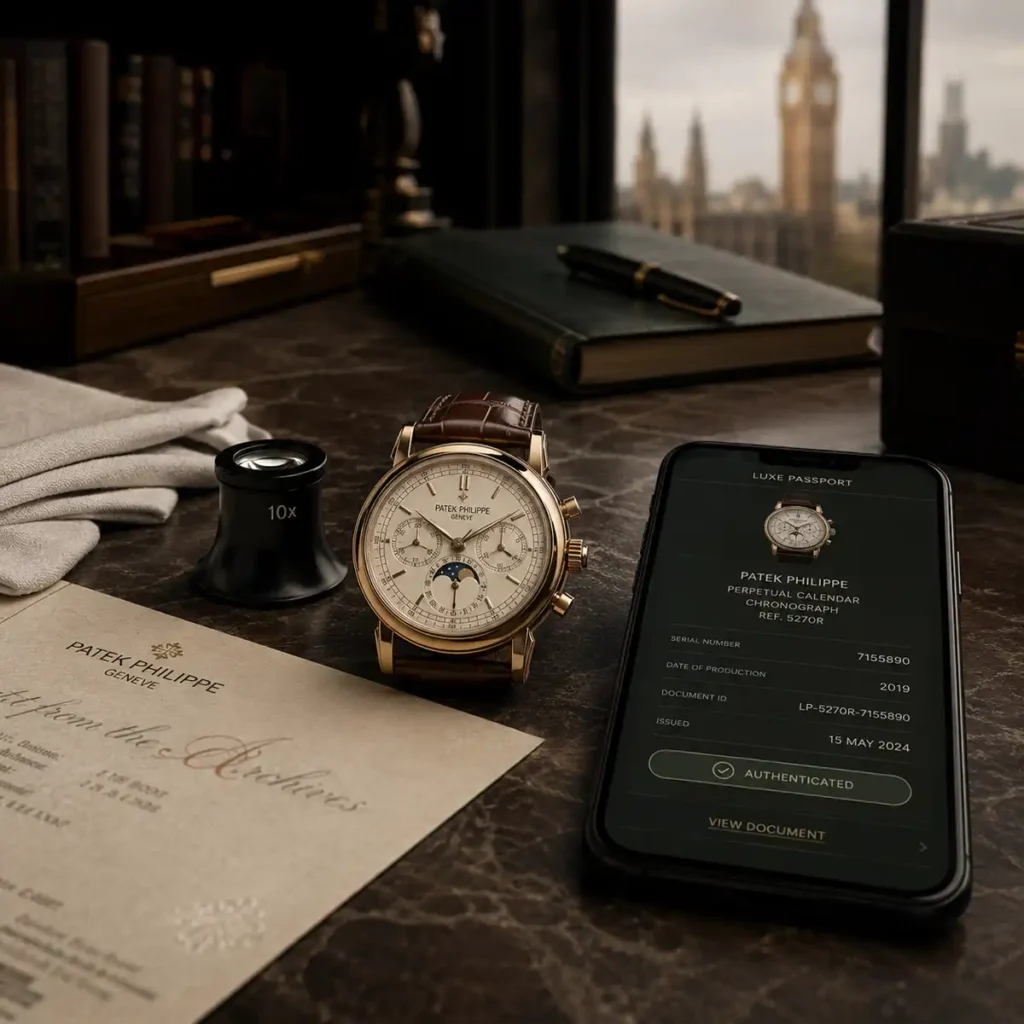
A digital product passport stores identity data and after-sales history in a format that can be verified without opening the case. The most helpful passports link the watch to reference imagery and manufacturing information, then add service entries from authorised workshops so that condition claims can be tested against recorded work.
The strongest passports treat identity as more than a serial number. Microscopic imagery of the dial printing, bridges, or other surfaces can function as a forensic fingerprint when captured under controlled conditions. The goal is not to reveal personal data. The goal is to make a watch difficult to clone convincingly because the reference images are tied to the certificate.
After-sales is where the system becomes genuinely useful. A card can say a watch was serviced, but it rarely records continuity of care in a way a buyer can validate. A digital record can log dates, authorised service channels, and warranty status, which supports more accurate insurance valuations and more confident resale decisions.
Fun fact: Vacheron Constantin introduced a blockchain-based digital certificate in 2019 that can be transferred between owners, turning provenance into a portable asset rather than a fragile folder.
By Detailing How Brands Link The Physical Watch To The Digital Twin
Linking the physical watch to its digital record is the hard part, because a certificate is only useful if it stays connected to the object. Brands have experimented with secure cards and tap-to-verify technologies so a buyer can confirm authenticity with a smartphone while keeping private identity off the public record.
Breitling’s partnership with Arianee is often cited because it frames the certificate as a passport rather than a speculative token. Arianee describes the system as a blockchain-based product passport that can support a digital warranty and after-sales services, and Breitling introduced a blockchain-based watch passport in 2020.
Privacy matters in London for obvious reasons. A credible design separates proof of authenticity from personal data, enabling ownership transfer while still allowing authorised service logging. A buyer comparing authorised dealer UK routes with grey market offers should treat post-sale support and certificate transferability as part of the value, not a footnote.
By Assessing Whether NFT Passports Can Reduce High-End Counterfeits
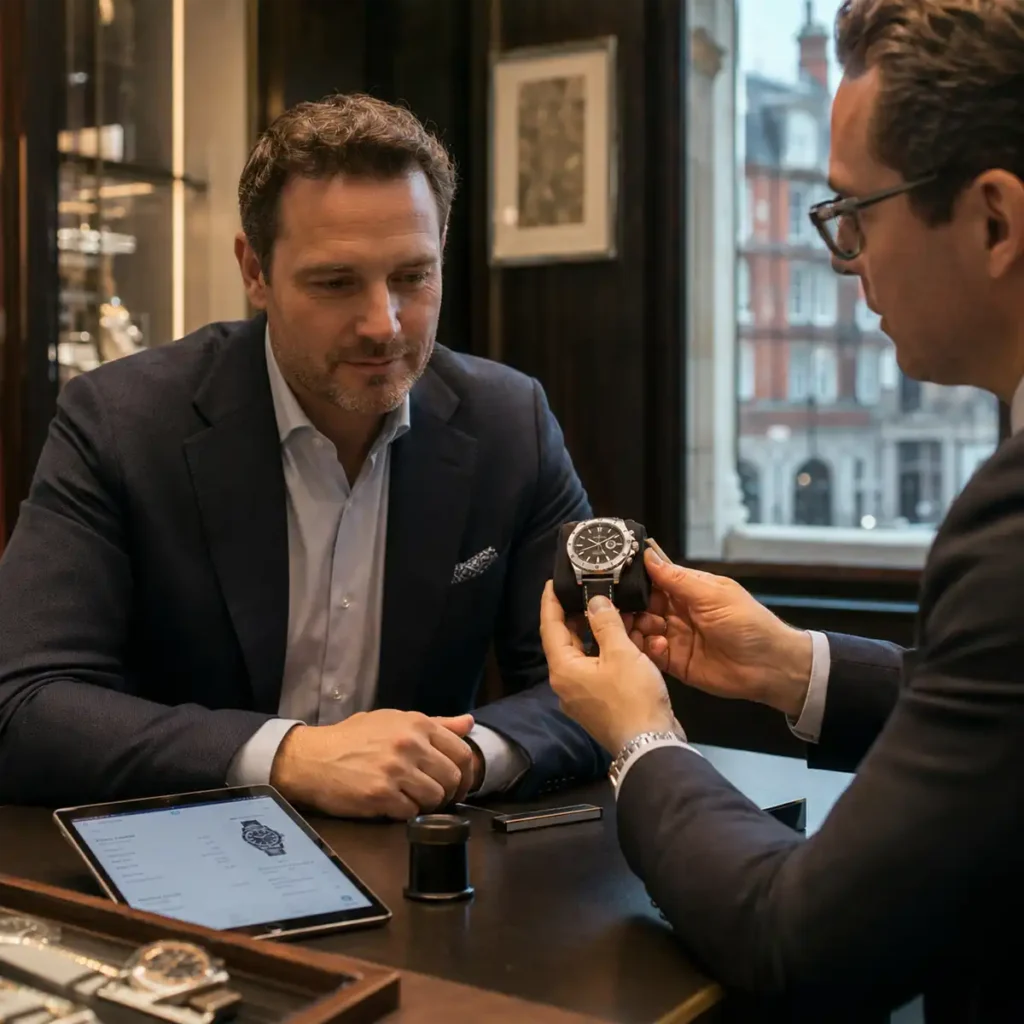
NFT passports do not eliminate counterfeits, but they can reduce the liquidity of convincing replicas in legitimate channels. A high-quality fake can still deceive an untrained eye, and even trained eyes without tools. A brand-issued digital twin adds a second verification gate that is harder to replicate at scale.
Counterfeiters can copy a dial layout, imitate a bracelet, and engrave a serial number, but counterfeiters cannot mint a valid certificate signed by the brand’s infrastructure. That difference matters most when a watch is sold through dealers, auctions, or certified programmes that demand a clean chain of custody.
The effect is not uniform across price bands. Collectors searching for the best automatic watches under £3,000 will rarely see blockchain passports, so traditional inspection and paperwork checks still dominate at that level. Higher tiers are where digital certification is becoming part of the purchase logic, especially where watch investment conversations have increased the demand for proof, not promises.
By Explaining How Digital Twins Are Reshaping Vintage Watch Value
Digital certification can be most transformative in vintage, because provenance gaps are common and the price penalty for uncertainty can be severe. Programmes that digitise archives and issue modern certificates can bridge the gap between a 70-year-old watch and modern buyer expectations for verification, while keeping the watch’s history intact.
Vacheron Constantin has linked blockchain certification to its heritage initiatives, including its Les Collectionneurs programme, which offers authenticated vintage pieces backed by documentation from the maison. The logic is straightforward. An archive extract tells you what a watch should be, and a digital certificate helps confirm that the watch in front of you matches that record.
Certified pre-owned is another pressure point. Vacheron Constantin’s certified pre-owned initiative, launched with Watchfinder & Co., uses digital certification and inspection standards to reduce uncertainty for buyers who want heritage without gambling on condition claims. [INTERNAL LINK: What certified pre-owned means in luxury watches | certified pre-owned explained].
By Giving A London Buyer Checklist For Digital Twin Ownership And Service
A buyer should treat the digital passport as part of the watch and confirm that the certificate is issued by the brand or a recognised partner, then transferred correctly at purchase. The buyer should also confirm that authorised service channels can update the record, because an unmaintained passport becomes a static badge rather than a living history.
Ownership after purchase is where value is either protected or diluted. Mechanical watches still need servicing, often every 5 to 10 years depending on use, and a good passport system turns service into a transparent record rather than a private note. A buyer asking how often a luxury watch needs servicing should also ask where authorised servicing is performed in the United Kingdom and what warranty terms apply.
Digital security is now part of watch security. Owners should store recovery details safely, avoid transferring certificates through informal messages, and ensure the watch is insured with documentation that matches the current ownership state. A buyer planning to resell later should keep the certificate transfer trail clean, because the digital record is only convincing when it is continuous.
By Summarising Who Digital Twin NFTs Suit In 2026
Digital twin NFTs suit buyers who value verifiable records, smoother resale, and cleaner after-sales history more than showroom theatre. In Mayfair and the City, the strongest appeal is practical, because a brand-issued passport can support authentication, authorised servicing, and insurance documentation without exposing personal data. A blockchain passport will not replace careful inspection, but a digital twin NFT for luxury watches can reduce uncertainty when buying, servicing, insuring, and reselling. Buyers should confirm certificate transfer at purchase, keep security credentials protected, and prefer channels that can update the record over time. The goal is a watch that carries its own proof, long after paper has faded