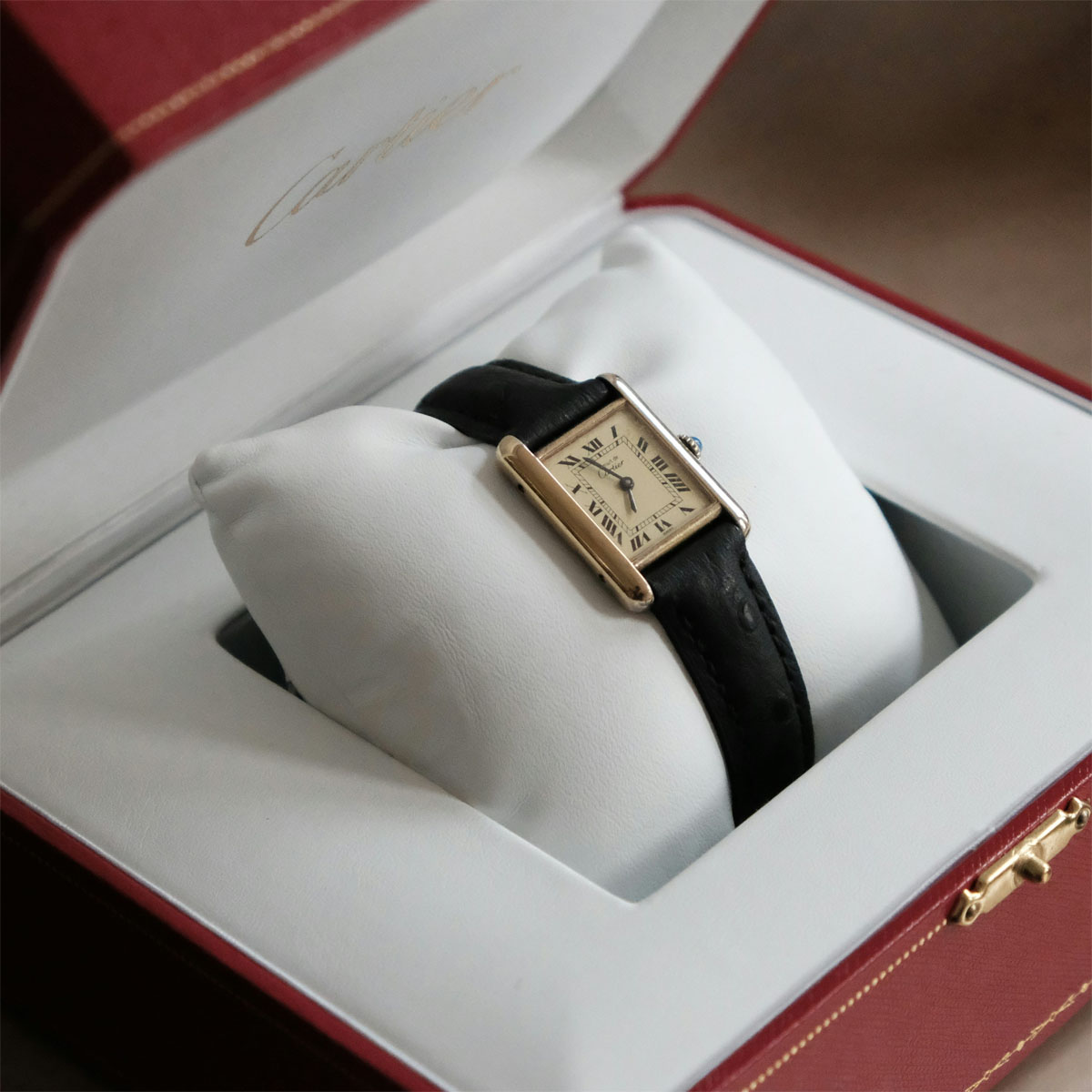
You have found the watch you want. Now someone is offering it to you through a certified pre-owned programme at one price, and a grey market dealer is offering it for less. Before you decide which route to take, you need to understand what each channel is actually selling you — and what it is not.
The certified pre-owned vs grey market question is the most consequential decision a pre-owned watch buyer makes. It determines your warranty coverage, your recourse if something goes wrong, and in some cases your ability to get a manufacturer service. Retail platforms operating in one channel or the other will emphasise the advantages of their own model. This article has no stake in either.
What Certified Pre-Owned Actually Means
Certified pre-owned (CPO) has two distinct meanings in the UK watch market, and conflating them is an expensive mistake.
The first is manufacturer CPO: Rolex Certified Pre-Owned, launched in 2022, is the clearest example. A Rolex CPO watch has been inspected, authenticated, and, where necessary, restored at a Rolex service centre or authorised partner. It comes with a two-year Rolex guarantee that is equivalent to the new watch warranty in scope. It includes a new Rolex CPO certificate and can only be purchased through an authorised Rolex dealer. The watch’s provenance is traceable through Rolex’s own records.
The second is retailer CPO: Watchfinder’s “certified pre-owned” designation, for instance, means the watch has passed Watchfinder’s own inspection process and comes with Watchfinder’s guarantee — typically 24 months. This is a retailer guarantee, not a manufacturer guarantee. It provides meaningful protection, but it is not the same thing as a manufacturer’s warranty and does not restore any lapsed manufacturer coverage.
When a retailer describes a watch as “certified,” ask specifically: certified by whom, against which standard, and what the guarantee actually covers.
What Grey Market Means
Grey market watches are genuine, authentic watches sold outside the authorised dealer network. They are not counterfeit. The term refers to the channel, not the product.
Grey market watches reach the UK through several routes: tourist purchases in markets where retail prices are lower (Switzerland, Japan, Hong Kong); authorised dealer staff sales; collector disposals through non-AD dealers; and in some cases, watches that were never sold at retail and moved directly from distribution into the secondary market. A reputable grey market dealer authenticates every watch before sale and typically offers their own guarantee of 12 to 24 months.
What grey market does not provide: manufacturer warranty coverage. If a movement fault appears after purchase, you are covered by the dealer’s own guarantee rather than the manufacturer’s terms. For most watches, this is a practical rather than a theoretical difference — a reputable grey market dealer will honour a valid warranty claim. For Rolex specifically, it matters more: Rolex’s CPO programme and new watch warranty are available only through the AD network, and grey market purchases sit outside that structure.
The Price Difference and What Drives It
Grey market watches are priced below the equivalent CPO watch, typically for the same reference and condition. The gap varies considerably by brand and model.
For a pre-owned Rolex Submariner in unworn condition with full box and papers: a Rolex CPO example through a Rolex AD will price at or above grey market retail, because the manufacturer’s guarantee and CPO certificate carry a premium. A Watchfinder CPO example in equivalent condition will typically sit between grey market retail and Rolex CPO pricing. A grey market specialist will offer the lowest price for the same reference and condition.
For less allocated brands — Omega, Tudor, Breitling, IWC — the CPO premium over grey market is smaller, because the grey market premium itself is smaller. The gap is most pronounced where demand most severely outstrips AD supply.
Box and Papers: What They Actually Add
Box and papers (sometimes abbreviated B&P) refer to the original box, warranty card, swing tags, and any accompanying documentation that shipped with the watch when new. Their effect on price is real and specific.
A full set of boxes and papers for a Rolex Submariner can add £500 to £1,500 to the secondary market price, depending on reference and condition. This premium has two sources: authentication confidence (papers confirm the watch’s original retail purchase and implicitly its provenance) and resale value (future buyers will pay the same premium, so you recover most of it when you sell).
Papers without a box add less premium than a full set. A box without papers adds the least. A watch sold with no documentation at all but in excellent, authenticated condition from a reputable dealer can still be a sound purchase — you simply pay less for it and will recover less when you sell.

Which Channel Suits Which Buyer
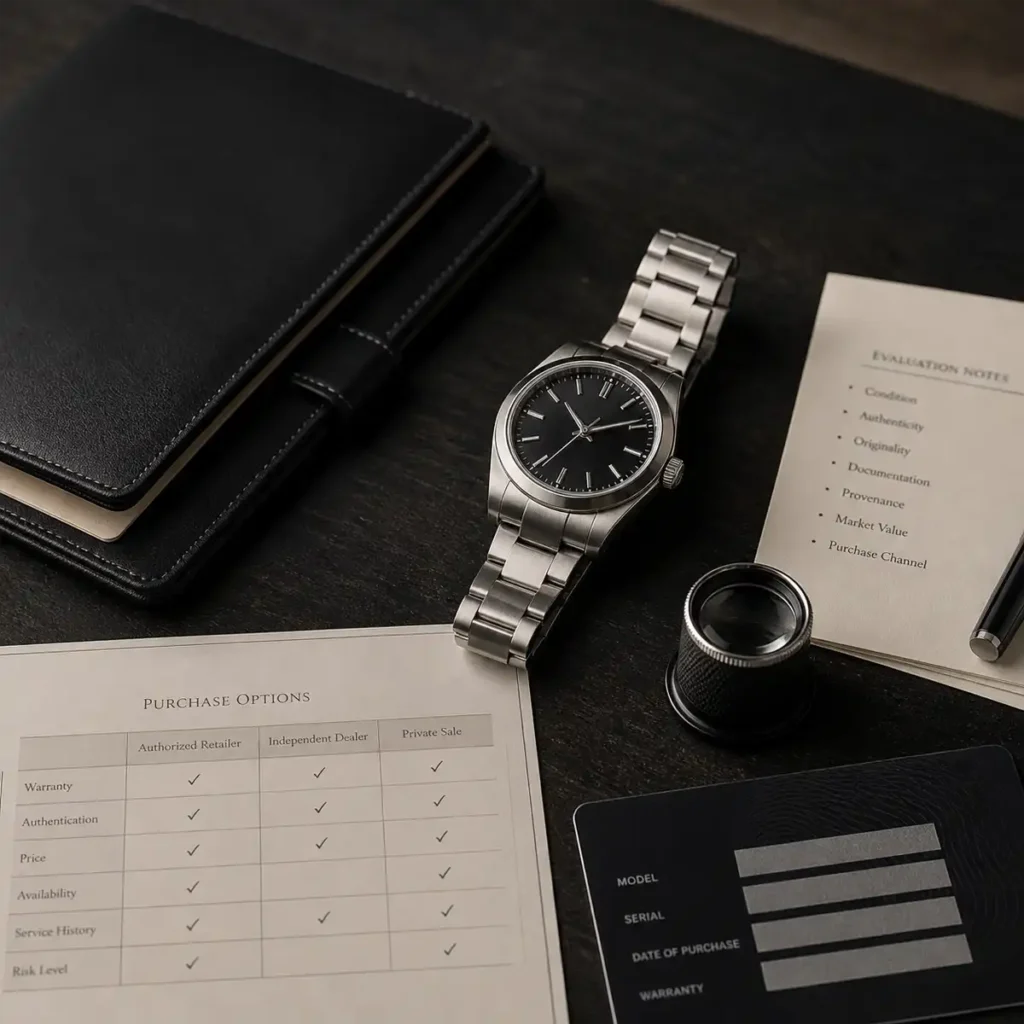
Manufacturer CPO suits you if: you want the closest possible equivalent to buying new, including manufacturer warranty and traceability; you are buying a Rolex and the CPO programme is available for your reference; you plan to hold the watch for several years and want guaranteed service coverage; you are buying at a price point where the CPO premium is a small fraction of the total outlay.
Retailer CPO suits you if: manufacturer CPO is not available for your brand or reference; you trust the retailer’s inspection standard and guarantee terms; you want the protection of a known entity’s guarantee without paying the manufacturer CPO premium; you are buying a brand with a strong independent service ecosystem where manufacturer authorisation is less critical.
Grey market suits you if: you understand exactly what you are buying; you have verified the dealer’s authentication process and guarantee terms; you are comfortable with retailer rather than manufacturer warranty coverage; and the price differential is meaningful enough relative to the watch’s value to justify accepting slightly less structured protection.
A grey market purchase from a reputable specialist is not a reckless decision. Most grey market dealers in the UK operate to a high standard because their business depends on it. The key is verification: check the dealer’s authentication process, their guarantee terms, their dispute resolution record, and their membership of the British Horological Institute or equivalent professional body.
Fun fact: The term “grey market” originates in economics to describe goods sold through unofficial but legal channels — as distinct from the “black market” (illegal) and “white market” (authorised retail). In watchmaking, the grey market has existed since at least the 1970s, when regional price differences between Switzerland, Hong Kong, and the US first made arbitrage commercially viable.
What to Check Before You Buy Through Either Channel
Regardless of the channel, these questions apply to every pre-owned purchase:
Service history: Has the movement been serviced? If so, when, by whom, and is documentation available? A watch last serviced by an independent watchmaker 3 years ago is generally in better condition than one never serviced but sold as unworn. Ask specifically.
Case condition: Has the case been polished? A polished case has lost the sharp bevel edges and brushed surface textures that leave the factory. Once polished, those surfaces cannot be restored. An unpolished case in collector condition commands a premium; a polished case in cosmetically good condition does not.
Movement function: Verify crown function, pusher operation on any chronograph or complications, and setting function in all positions. These take 5 minutes to check and reveal most movement issues before purchase.
Serial and reference number verification: The serial number on the case back and movement should match the paperwork. Reference numbers on the dial, case, and bracelet clasp should all be internally consistent.
Bracelet and clasp condition: Check for bracelet stretch by holding the bracelet loosely and observing lateral play between links. Significant stretch indicates heavy wear and is expensive to correct. Check clasp function and spring tension.
The Practical Decision
The certified pre-owned vs grey market question does not have a universal answer. It has a correct answer for your specific situation — your risk tolerance, your preferred brand, the reference you are buying, and the dealer you are buying from.
For a first pre-owned purchase, a reputable retailer CPO with a 24-month guarantee is the safest starting point. For a Rolex purchased in 2025, manufacturer CPO is worth the premium if you can access it. For a brand with a strong independent service ecosystem — Omega, IWC, Tudor — grey market from a verified specialist is a legitimate and financially sensible route.
The worst outcome in either channel is not paying the wrong price. It is buying from an unverified source without understanding what your guarantee actually covers. Clarify that before everything else.