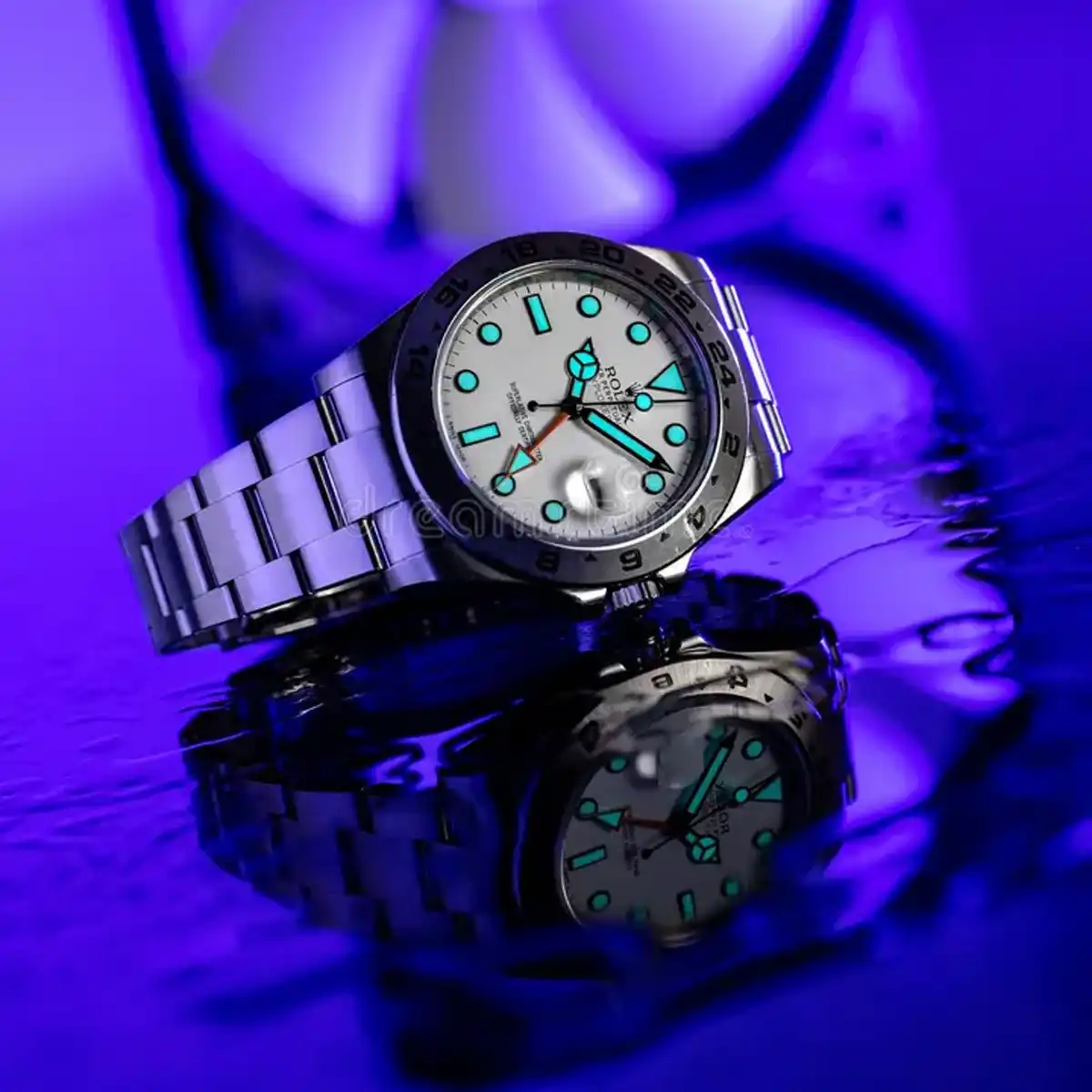
You have a budget of between £8,000 and £15,000. You want a pre-owned Rolex in the UK. You have three channels available: an authorised dealer waiting list that offers no reliable timeline; a grey market retailer with stock at a premium over retail; or a pre-owned specialist with variable stock quality, variable warranties, and prices that sometimes undercut and sometimes exceed the grey market. Getting this right means understanding what each channel actually delivers and what each one does not disclose upfront.
What watchfinder.co.uk, watches-of-switzerland.co.uk, and chrono24.co.uk cannot tell you from a position of editorial independence is how their own channel compares to the alternatives they are not offering. This overview is written without a commercial stake in where you buy: the authorised dealer route when service history matters most, the grey market when availability is the priority, and you understand the warranty implications, the certified pre-owned specialist when you want documentation at below-grey-market pricing, and private sales only if you can authenticate and have the inspection infrastructure.
Authorised dealer vs grey market vs certified pre-owned explained
An authorised dealer sells new Rolex at manufacturer retail pricing under a Rolex contractual agreement. They do not typically hold pre-owned stock. Access to popular references — Submariner Date, GMT-Master II, Daytona — requires a relationship with the AD built over time through previous purchases. There is no formal Rolex waiting list system; allocations are discretionary and relationship-dependent. For a new client with no purchase history at a given AD, a realistic timeline for a Submariner Date allocation in 2026 ranges from 18 months to 3 or more years.
A grey market retailer sources new and near-new Rolex from outside the authorised dealer network: parallel importation, clients selling their allocations, or overseas AD relationships. The watches are typically genuine. The warranty position is less clear: Rolex’s international warranty covers watches purchased from authorised dealers, and a grey market seller cannot provide that documentation. Some reputable grey market retailers offer their own warranty as a substitute. Stock quality on “new” grey market examples varies; some have served as display pieces or been transported through multiple intermediaries.
A certified pre-owned (CPO) specialist applies an inspection standard and offers a defined warranty on used examples. Rolex launched its own CPO programme through authorised dealers in 2022, covering watches up to a defined age, with a 2-year Rolex-backed warranty. Independent CPO specialists operate their own standards, which vary significantly between retailers. Pricing at the CPO level typically sits slightly above the open pre-owned market for comparable age and condition, reflecting the warranty and inspection documentation.
What do the box and papers mean for the price, and what to check
A complete-set pre-owned Rolex — original box, warranty card or chronometer certificate, additional paperwork where supplied — commands a premium of roughly 8% to 15% over an equivalent watch without documentation, based on observed UK secondary market pricing in 2026. For vintage references, the premium for original documentation can be substantially higher because authenticity verification is more complex and the market is smaller.
The warranty card or certificate carries the serial number that must match the number engraved on the watch case. On post-2007 Rolex references, the serial appears between the lugs at 6 o’clock; on earlier examples, it appears at 12 o’clock. Both positions use deep laser engraving that should be crisp and uniform. Confirm serial numbers match before any discussion of price. The papers should also show the purchasing AD name and date; UK-purchased examples from UK ADs provide the cleanest provenance trail.
Box without papers is more common than full-set examples and less valuable than complete documentation. A watch offered as “unworn, no papers” is a watch whose documentation has been separated from the object. Ask for the reason. The most common legitimate explanations are loss or gift purchase without transfer of documents; both are plausible, but neither can be verified, which is why the premium for documented examples exists.
The physical inspection checklist before you commit
Serial and model numbers. Confirm the engraving is sharp and consistent. On counterfeits, engraving depth is inconsistent, and characters show variation in stroke width. The model reference number (e.g. 126610LN for the black Submariner Date) at 12 o’clock should match the model as described.
Bracelet stretch. Hold the case between thumb and forefinger and push the case forward along the bracelet axis. More than 1.5mm of extension indicates worn link pins. Bracelet replacement at a Rolex service centre costs between £300 and £500. Factor this into any negotiation.
Lug sharpness. An unpolished Rolex shows clean right-angle transitions between the brushed upper lug surfaces and the polished case flanks. A watch that has been polished by a dealer shows rounded lug edges and flattened high points. A polished watch is not damaged, but it is not in its original condition, and the price should reflect this. Ask directly whether the case has been polished.
Crown thread and gasket. The Triplock winding crown threads smoothly to its fully locked position in three half-turns. Resistance, grinding, or thread slippage indicates crown or gasket wear. A damaged crown is the most likely first point of water resistance failure.
Crystal condition. Rolex sapphire crystals resist scratching under normal conditions. Surface marks are normal wear; chips, deep scratches, or crazing on the cyclops lens are not. The cyclops adhesive can separate over time, creating a fogged or distorted lens. Crystal replacement costs approximately £250 to £350 at a service centre.
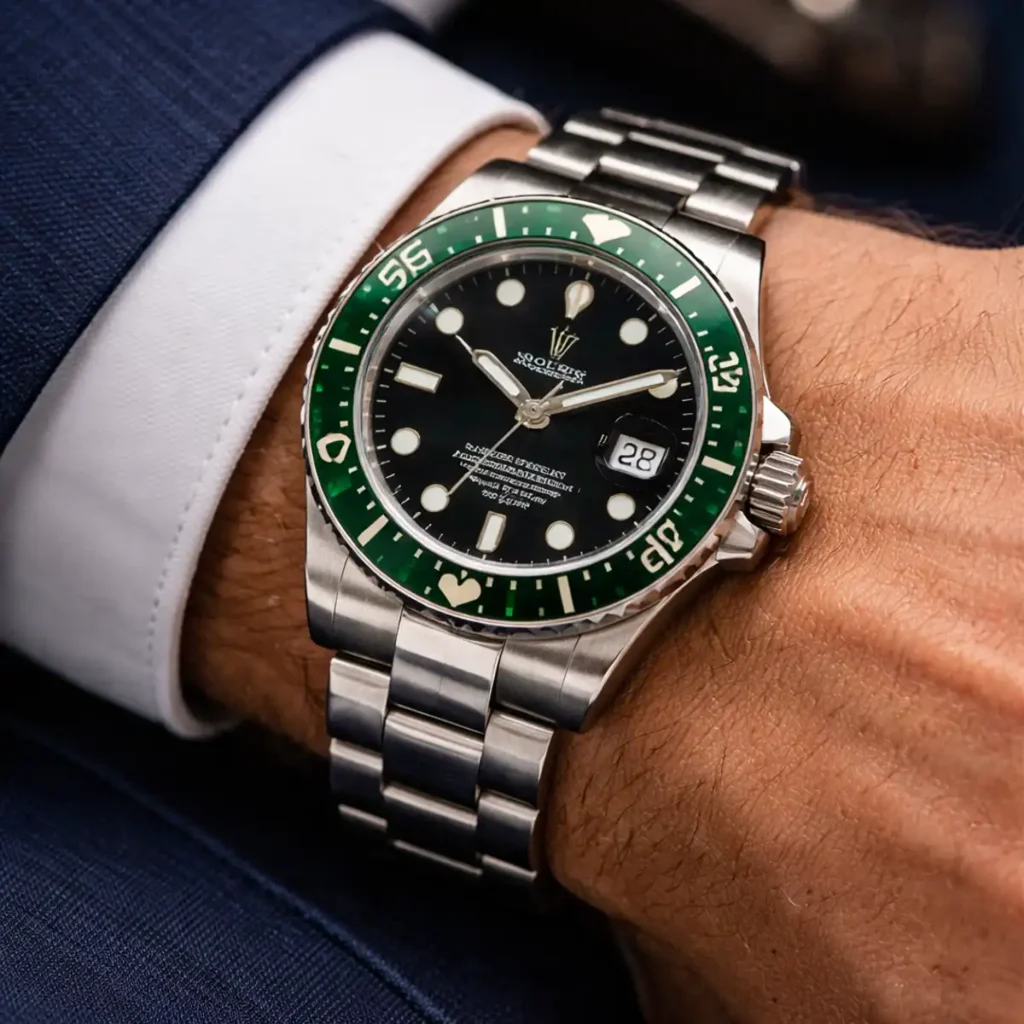
Fun fact: The reference 116610LV “Hulk” Submariner, discontinued by Rolex in 2020, traded at significant secondary market premiums immediately after discontinuation; by 2023, verified UK examples in full-set condition were reaching between £16,000 and £19,000 at specialist retailers, compared to a retail price of £8,900 at discontinuation.
Grey market pricing in the UK for 2026 and what it reflects
The grey market premiums that peaked in 2021 and 2022 have compressed but have not disappeared. The Submariner Date reference 126610LN carried a UK retail price of approximately £9,150 at authorised dealers in early 2026. Grey market pricing for new examples without original AD paperwork was observed at between £11,000 and £13,500, depending on retailer, market timing, and stock sourcing.
That premium represents the commercial cost of access: buying now rather than waiting. Whether this is justified depends entirely on how you intend to use the watch. A Submariner Date worn daily for 15 years amortises the premium into the cost of avoiding an 18-month wait. A purchase made primarily as a financial position is a different calculation entirely, and one this publication is not qualified to make on your behalf.
One grey market consideration that is consistently underreported: “new” in a grey market context means unregistered. It does not mean unused. Ask whether box stickers are intact. Ask whether the chronometer certificate is unstamped. If either answer is uncertain, treat the example as near-new rather than new, and price accordingly.
The Rolex CPO programme and what it offers UK buyers
Rolex’s Certified Pre-Owned programme, available through authorised dealers since 2022, offers pre-owned examples with a 2-year manufacturer-backed warranty and CPO certification card. The programme covers watches up to 5 years old at the time of CPO certification, meaning current-generation references from 2020 onwards are eligible. CPO examples have been inspected, serviced where required, and tested by Rolex-trained technicians.
CPO pricing at authorised dealers generally matches or modestly exceeds grey market pricing for the same generation and condition level. The additional cost buys a warranty resolution route through the manufacturer’s service network rather than a retailer policy. For buyers who are unable to physically inspect before purchasing, or who have limited access to independent authentication resources, CPO reduces counterparty risk materially.
Conclusion
Pre-owned Rolex buying in the UK is a decision about risk management before it is a decision about watches. Authorised dealer CPO offers the lowest risk and moderate pricing premium. Reputable grey market retailers offer near-immediate access and a higher premium. Independent pre-owned specialists offer the widest price range and the widest condition range. Private purchases offer the best potential pricing and the highest verification burden.
The first step is to settle on the specific reference, generation, and configuration you want before approaching any seller. The second step is to establish the current retail price and grey market pricing for that specific reference. The third step is to inspect physically wherever possible, or commission independent authentication above £5,000. The Rolex pre-owned market consistently rewards buyers who are specific about what they want and unhurried about when they acquire it.