Picture a late spring afternoon on England's longest river. Three entrepreneurs, newly freed from the demands of their previous ventures, idle past Richmond's boat clubs in a small cabin cruiser. A casual chat drifts toward wristwatches. Within minutes the topic veers into hard figures: who makes the parts, how much those parts cost, and the eye-watering retail prices attached to the finished products. One statistic in particular sears itself into their memories: a celebrated Swiss marque is charging thirty-four times the build cost of its flagship automatic. Mike France, Peter Ellis and Chris Ward feel a jolt of indignation so strong it sets the course of their next two decades.
That boat trip seeds Christopher Ward watches, a company determined to tear away the velvet curtain around fine time-pieces and put ownership within reach of ordinary enthusiasts. The trio chooses the most British-sounding name among them, locks in a business plan on a single sheet of paper, and heads back upriver, convinced that affordable excellence is not a contradiction.
Fun fact: Early sketches for the brand's debut models placed sub-dials where no off-the-shelf movement could support them. A Swiss supplier, half amused and half exasperated, replied that they might have to make a calibre of their own. Nine years later, the company did exactly that.
Money where the movement is
Launching from a converted chicken shed in Berkshire on 2 June 2005, the firm embraces a three-point manifesto:
- Direct to consumer sales only, cutting out distributors and jewellers.
- A hard ceiling of three times the manufacturing cost for the retail price.
- Zero budget for celebrity endorsements, every spare pound going into design, materials and after-sales service.
In a phrase, their aim is to sell the cheapest expensive watches in the world. The first pair of models, C5 Malvern Automatic and C3 Malvern Chronograph, land online at prices so low that sceptics assume a scam. Yet each piece contains the same Swiss ETA workmanship found in far costlier rivals.
The web-only launch is years ahead of the industry. Luxury, the consensus claims, cannot be trusted to a checkout button. France, Ellis and Ward disagree. They bank on high-resolution photography, honest specifications and the 60|60 returns promise to mimic the feel of a boutique. Within weeks sales tick up; within months international orders appear from addresses they have never visited.
Crowd power before social media
Validation arrives courtesy of Dave Malone, a Tasmanian academic who buys a C5 to expose the company as fraudsters on TimeZone, then the internet's largest watch forum. Opening the parcel, Malone finds brushed steel, flawless finishing and a genuine ETA 2824-2 beating inside. His planned takedown morphs into a glowing, forensic review calling the watch "the best value mechanical on earth".
Traffic surges overnight. Christmas 2005 ends with Christopher Ward threads outranking Rolex chat on the same forum. Suspicious moderators start deleting posts and banning members, prompting Dutch fan Hans van Hoogstraten to start an independent hub, the Christopher Ward Forum. That space, still active, lets customers feed ideas straight to the design office and gives the business an always-on focus group that global conglomerates would kill for.
A logo looks for its voice
For years the dial carries a trim "Chr. Ward LONDON" signature aimed at reassuring buyers that the newcomer is steeped in tradition. Success, however, brings confidence. In 2016 the brand switches to a stark sans serif "Christopher Ward", sometimes at nine o'clock, sometimes at twelve. Outrage follows. Loyalists complain that the new mark appears unfinished and is off-balance. Defenders praise its modern swagger.
Out of the debate emerges the twin-flags emblem, an artful marriage of St George's Cross and the Helvetica white-on-red of the Swiss canton. By 2022 the symbol stands alone on several models, the wordmark quietly retired. Creating that tiny badge proves harder than designing a case: five micro-components, four of which are under a millimetre wide, must align under a microscope before a supplier can guarantee quality. The finished icon now joins the Rolex crown and Omega horseshoe on lists of instantly recognised dial motifs.
Two nations, one workshop
Today the corporate map has two epicentres. Concept and customer service are based in Maidenhead, Berkshire, where a small design team sketches every bezel, handset, and clasp. Meanwhile final assembly takes place in Biel/Bienne, the Swiss town that also hosts Rolex, Omega and ETA. The marriage is formalised in 2014 when the founders merge with Synergies Horlogères, forming Christopher Ward SA and gaining direct control over production.
The timing is perfect. Swatch Group begins restricting ETA deliveries to outsiders, a squeeze that paralyses smaller brands. Christopher Ward sidesteps the crisis by having its own assembly line and, crucially, the freedom to develop a proprietary engine.
Calibre SH21, independence in steel
Master watchmaker Johannes Jahnke leads the four-year project. The brief is blunt: create an in-house movement that runs longer, hits chronometer accuracy and survives daily life. The result, Calibre SH21, debuts in 2014 with twin barrels delivering a confident five day power reserve. Every unit is COSC certified in La Chaux-de-Fonds before shipping, placing it among the elite six per cent of Swiss chronometers.
Modular architecture means the base can host small seconds, GMT hands, power indicators or skeleton bridges without redesign. Service data gathered over the last decade shows lower failure rates than many higher-priced calibres. For a watch community tired of "movement marketing", SH21 is tangible proof that the British-Swiss startup is playing a long game.
Why it matters beyond Britain
Christopher Ward did not invent the idea of value, yet few modern firms have pursued it with such stubborn precision. By offering a ceramic-bezel diver watch with three-hundred-metre sealing for under a thousand pounds, or a skeletonised tourbillon under four, the company forces legacy names to justify price tags built on heritage alone.
At the same time it demonstrates that consumers will back unfamiliar makers if the numbers and the narrative add up. Transparent costs, authentic charity pledges and an after-sales policy that lets owners road-test a piece at home for two months without risk have become unofficial industry targets.
With part one complete, we have travelled from a boat on the Thames to the birth of a chronometer that carries British ambition into Swiss workshops. The next section will explore how these foundations support a full portfolio, from everyday sports models to an hourly chiming masterpiece that stunned Geneva's jury and rewrote the rules of affordable luxury.
A catalogue built for every wrist
The present-day Christopher Ward line-up is a lesson in clarity. Four anchor families cover most tastes while leaving space for experiments that grab headlines.
C1 Grand Malvern
The spiritual successor to the launch-day Malvern offers slim dress profiles wrapped in the sculpted Light-catcher™ case. Dials remain business-like, while movements range from reliable Sellita automatics to powerhouse SH21 variants that tick for five full days. A moonphase trimmed in aventurine even earned a nod from Geneva's judges.
C60 Trident
If one watch defines the brand, it is the C60. Each reference features a scratch-proof ceramic bezel, 300- or 600-metre water resistance, and a bracelet clasp that adjusts on the fly. The titanium Elite 1000 pushes depth to a kilometre without surrendering an exhibition back. Owners call it the finest luxury dive watch under £ 1,000.
C63 Sealander
Released in 2020, the Sealander fills the "go anywhere" slot. Split across 36 mm and 39 mm cases, it transitions smoothly from a commuter train to a coastal trail. The range includes a traveller-friendly GMT watch and the feather-light Elite, whose flush crown sits level with the case until needed.
C65 Aquitaine
Vintage curves, box sapphire and a glowing sapphire bezel homage to early dive icons give the Aquitaine its charm. Bronze editions patinate within weeks, turning each piece into a one-off.

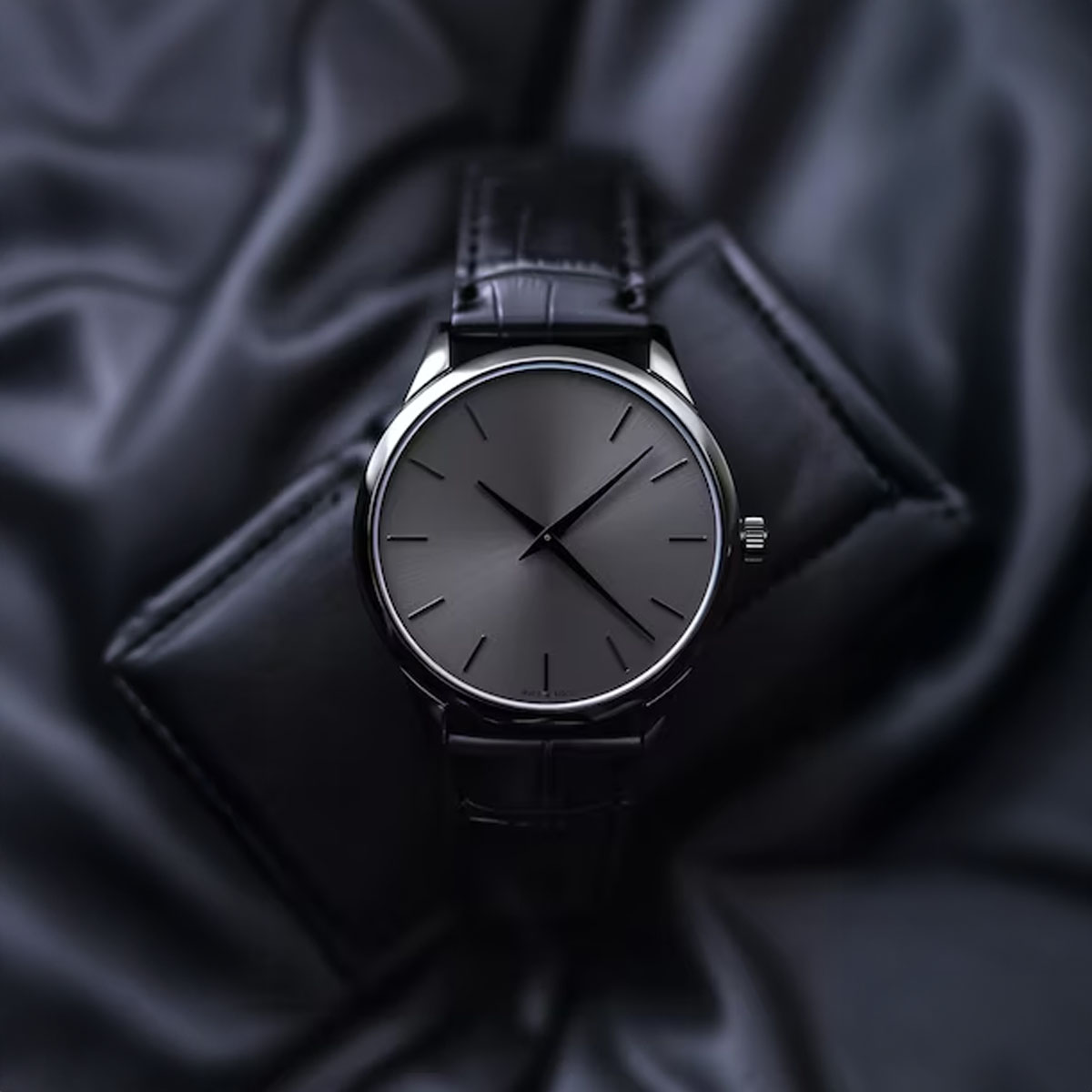
When a British chime stunned Geneva
Late in 2022 the firm unleashed the C1 Bel Canto, a sonnerie au passage that rings on the hour. The complication, normally the preserve of six-figure haute horlogerie, was priced under four. Over fifty fresh components form the visible strike-train that dances each time the minute hand reaches twelve. Collectors emptied the first batch in hours. The watch then walked away with the 2023 GPHG Challenge Prize, marking the first time a British watch brand had received this award.
Limited runs with a purpose
Special editions do more than inflate scarcity. They serve as rolling laboratories. A Trident Lumière proved that solid Globolight markers could out-shine painted lume. The "Revival" series allows long-standing clients to relive earlier dial signatures, while community collaborations, such as a 30-piece Twelve designed in collaboration with forum members, strengthen two-way loyalty.
Value, quality and trust
Enthusiasts measure worth in millimetres, lumens and service policy rather than billboard faces. By those yardsticks Christopher Ward scores heavily.
- Swiss Made sourcing and final assembly anchor every model's credibility.
- Standard features include a scratch-resistant sapphire crystal, a minimum 150-metre water resistance, and bracelets with quick-release bars.
- Each watch ships with the 60 | 60 promise: two months to change your mind and a five-year movement warranty that carries to the next owner.
Forum chatter comparing a C60 Trident Pro 300 to a Black Bay or HydroConquest often ends with the same verdict: similar finishing, more features, far lower outlay. Resale still favours the heritage giants, yet many UK buyers gladly trade badge cachet for specification honesty.
Tech that serves the wearer
Engineering flourishes appear where they matter. Grade 5 titanium cases cut weight by a third without sacrificing strength. Bronze alloys respond to sea air, sweat and sunlight to chart a personal story across the case. Solid Globolight inserts now illuminate indices and even logos, doubling nighttime brightness over paint applications.
Inside, SH21's twin-barrel architecture delivers a steadier torque curve to the escapement, enabling each COSC-certified unit to stay within six seconds a day. For mainstream lines the company opts for the robust SW200 or SW300, proven designs that any competent watchmaker can service locally. Waterproofing tiers are clear: 150 m for a Sealander, 300 m or 600 m for a Trident, and full saturation at 1000 m with a helium-escape valve for the Elite.
The independent that outgrew "micro"
Revenue has climbed from 10 million to a projected 50 million pounds between 2020 and 2025. Private-equity backing finances marketing pushes yet the ownership structure keeps decision-making in Maidenhead. A pilot retail corner inside Time+Tide's London studio offers hands-on access without the overhead of a boutique, proving that clicks-and-mortar can coexist with keen pricing.
Life after checkout for UK owners
Purchases ship from Berkshire, avoiding import duties for domestic clients. Those wanting wrist time before buying can book an appointment in Maidenhead or drop by the Discovery Studio off Regent Street. Servicing remains in-house. Turnaround times occasionally stretch during peak periods, a side effect of demand outpacing the technicians, but reviews still lean positively. Importantly, missing a three-year oil change does not void the movement guarantee, a policy few competitors match.
Why a Sealander makes the perfect first step
The C63 Sealander Automatic distils the house recipe. It features the Flowing Light-catcher case, 150m resistance, a fully lumed dial, exhibition back, and tool-free strap swaps, all for under £ 900. Choose 36 mm for vintage charm or 39 mm for universal fit. Either way, you gain a daily companion who speaks fluently in both boardrooms and bridleways.
Final reflection
Christopher Ward began as three friends angry at mark-ups. Two decades on, it stands as proof that exacting build, open pricing and honest storytelling can thrive together. Like a canal lock easing vessels from one level to the next, the brand raises newcomers into mechanical watch ownership without shutting the gates on seasoned collectors. In the long race of horology it reminds us that slow and steady still wins.
As the English saying goes, the proof of the pudding is in the eating.