Among the many styles of engagement rings, few stand out with such confidence as the marquise diamond. Its elongated shape, pointed tips and striking symmetry create a sense of motion and elegance that no round or square cut can match. But this is not a modern innovation. The marquise carries a regal past, anchored in eighteenth-century France and preserved in jewellery design for more than two hundred years.
Unlike cuts developed for light return or mechanical symmetry, the marquise cut began as a love story. It is a shape worn not just for its appearance, but for its meaning. Choosing a marquise engagement ring is a declaration of individuality, sophistication and appreciation for the historical richness behind the stone.
The Marquise de Pompadour and a royal tribute
The legend is clear. King Louis XV of France commissioned a new diamond shape inspired by the lips of his mistress, the Marquise de Pompadour. The jewellers of the time created an elongated diamond with gentle curves and sharp ends to resemble her smile. The resulting cut was unlike anything seen before. It was dramatic yet refined, romantic yet precise.
The diamond was not only a tribute. It also bore the title of nobility. A marquise is a rank above a countess and just below a duchess in the French aristocracy. In adopting the name, the cut became a symbol of elegance and status. It entered high society not merely as a gemstone but as a cultural emblem.
Today, when one chooses a marquise cut diamond, it is not just a stylistic preference. It is a continuation of a centuries-old tradition rooted in love, rank and personal honour.
The navette shape and antique charm
The marquise diamond is sometimes referred to as a navette, meaning "little boat" in French. This name speaks to the cut's shape, which resembles the hull of a ship. The term is often used in antique jewellery circles to describe rings that use the marquise silhouette, even if they are not set with actual marquise-cut diamonds.
In the Victorian and Edwardian eras, navette-style rings were popular for their elongated form. These pieces often featured a central stone surrounded by smaller accent diamonds or coloured gems, creating a long, narrow design that sat proudly along the finger. Even when styles changed, the navette continued to reappear in different guises, from Art Deco to Retro jewellery.
Whether one refers to it as marquise or navette, the shape remains one of the most graceful in jewellery design. It adds length, structure and an old-world refinement that speaks to both tradition and creativity.
Through the centuries: how style evolved
The marquise diamond has survived centuries of shifting trends. In each period, it was reinterpreted through the lens of contemporary taste, proving its lasting relevance and unique ability to evolve without losing its essence.
In the Victorian era, marquise engagement rings were elaborate. Gold was dominant. Engravings, floral motifs and seed pearls often accompanied the centre stone. These rings were sentimental in spirit, reflecting the era's focus on romance and devotion.
The twentieth century brought change. Art Deco design reimagined the marquise as part of a geometric language. Platinum replaced gold. Rings became angular, symmetrical and bold. Marquise diamonds were often paired with baguette or trillion side stones, forming sharp outlines that played with light and shadow.
By the 1960s and 1970s, the marquise had entered the mainstream. It is featured in cocktail rings, engagement settings and even watches. Its dramatic form captured the glamour of the era, often set in white gold and surrounded by bold metalwork or pavé halos.
Why people choose marquise diamonds today
The modern appeal of the marquise diamond is grounded in both form and function. It remains a favourite among those who want something distinctive but timeless. Beyond its heritage, the cut offers several practical advantages.
Visual size advantage
The marquise shape maximises surface area. A one-carat marquise appears larger than a one-carat round diamond due to its stretched silhouette. This means buyers can achieve greater visual impact without increasing the budget. The stone also creates an elongated effect on the finger, making it look slender and graceful.
Design versatility
Marquise diamonds can be set in a variety of ways. They work well in solitaire settings, halo surrounds, vintage-inspired mountings or ultra-modern minimalist bands. The pointed tips allow jewellers to play with direction and symmetry, often enhancing the cut's movement with carefully placed prongs or side stones.
A bolder personal choice
While rounds and ovals dominate most engagement ring trends, the marquise remains a choice for those who wish to stand apart. It suggests confidence, a sense of style and an appreciation for elegance with character. It appeals to both vintage lovers and modern minimalists, depending on how it is styled.
Fun Fact: Marquise-cut diamonds have one of the largest surface areas per carat of any shape, giving the illusion of a bigger stone for the same weight.
How the marquise diamond is graded
Grading a marquise diamond follows the Four Cs: cut, colour, clarity and carat; but its shape introduces unique challenges. The elongated silhouette and pointed tips must be carefully proportioned to achieve symmetry and brilliance.
Cut quality
A well-cut marquise diamond shows a perfect balance between length and width. Stones with a ratio between 1.75 and 2.25 are generally the most flattering. Poorly proportioned stones may appear either too narrow or too wide, affecting the overall elegance of the ring.
A common issue with this shape is the bow tie effect, where a darkened shadow appears across the centre. This happens when light fails to reflect properly due to misaligned facets. Buyers should prioritise symmetry and polish when selecting their stone.
Colour and clarity
Because of its shape, the marquise can display colour more noticeably, especially near the tips. Those seeking a crisp white appearance should look for higher colour grades, particularly if the ring will be set in white gold or platinum.
Clarity is equally essential. Inclusions near the points can compromise durability. These areas are structurally weaker and require protection. Secure prongs, especially V-shaped claws, are essential for everyday wear.
Carat and visual spread
The marquise offers more visible surface area than most other cuts. A 0.90 carat stone can appear larger than a 1.00 carat round diamond due to its extended form. This makes it a strong choice for those seeking visual impact without moving into a higher price bracket.
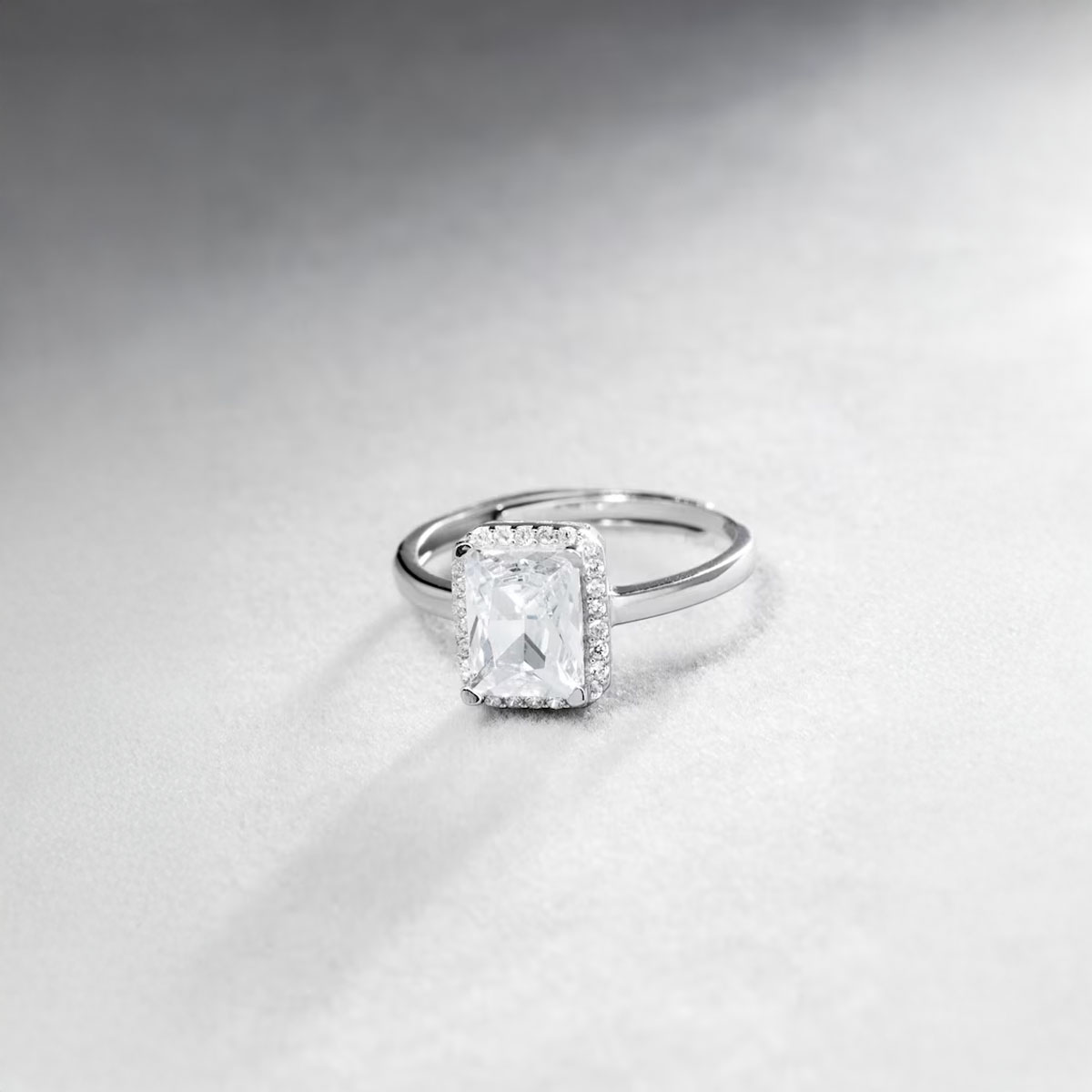
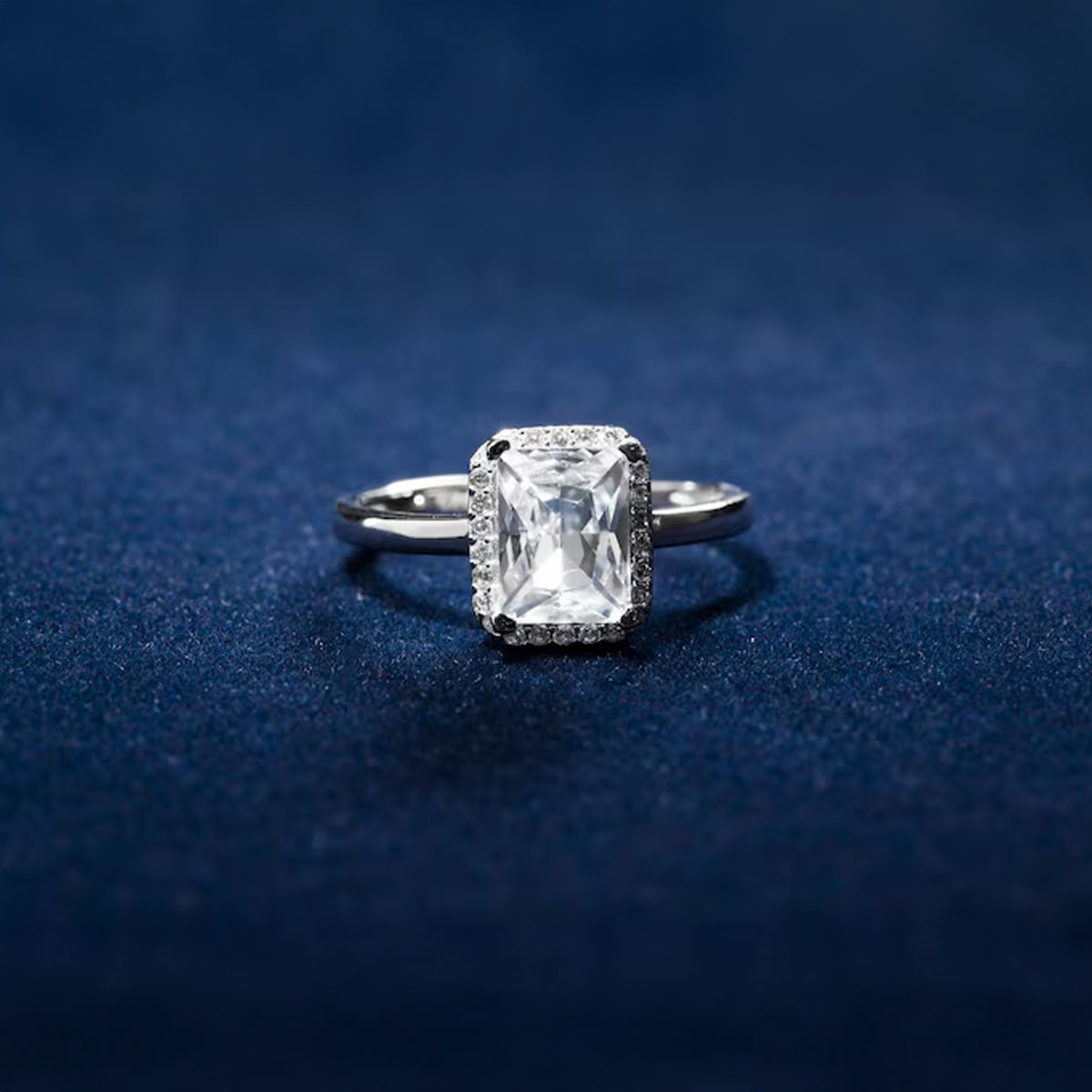
Marquise diamond ring settings
The shape of the marquise allows it to suit many design styles. Whether minimalist or decorative, the stone can be adapted to different settings while retaining its bold identity.
Solitaire
A single marquise cut diamond on a plain band delivers maximum effect. The clean lines draw focus to the stone's natural elegance. Vertical settings elongate the finger, while horizontal (east-to-west) layouts add a contemporary twist.
Halo
A halo adds brilliance and gives the illusion of greater size. Smaller pavé-set diamonds surround the central stone, enhancing its sparkle. This setting also provides visual protection for the tips and softens the sharpness of the overall look.
Three-stone
Side stones such as pear-shaped or tapered baguettes provide symmetry. They complement the marquise without distracting from it. This setting balances the elongated centre with refined accents, adding structure and width.
Vintage
Art Deco and Edwardian influences work especially well with marquise stones. Filigree details, milgrain edges and curved mounts highlight the historical appeal. These designs offer rich character and often incorporate mixed metals or coloured side stones.
Matching with wedding bands
Pairing a wedding band with a marquise engagement ring depends on the height and orientation of the setting. Many prefer a contoured or notched band that hugs the base of the stone. Others choose a small gap to let the engagement ring stand alone.
Stacking is also common. Thin bands with pavé diamonds or alternating patterns can create a layered effect that frames the marquise elegantly. Mixing metals such as yellow gold and platinum can add contrast and individuality.
Ethical sourcing and alternatives
Many couples now prioritise transparency and responsibility when purchasing diamonds. Ethical sourcing includes stones certified under the Kimberley Process or from mines with strong labour protections and environmental safeguards.
For those seeking greater assurance, lab grown marquise diamonds offer a compelling solution. These stones are chemically identical to natural diamonds and often score higher in clarity and colour. They are more affordable and avoid the environmental cost of mining.
Other alternatives include moissanite and white sapphire. While different in composition, these stones can be cut in the same elongated shape and deliver similar brilliance at lower price points. They are especially popular among buyers seeking non-traditional or vegan options.
Price of marquise diamond rings in the UK
A natural marquise diamond of one carat with good colour and clarity typically ranges between £2,800 and £5,200 depending on cut grade and certification. Prices vary widely based on source, polish, and symmetry.
Lab grown marquise diamonds of the same size usually range from £950 to £2,000. These represent excellent value, especially for buyers prioritising ethical and environmental factors.
Settings can add significantly to the cost. A simple solitaire may increase the total by £700 to £1,200. More elaborate designs with halo accents or vintage detailing may add £1,500 or more.
Always request a grading report from a recognised laboratory such as GIA or IGI. Certification ensures transparency and gives you clarity about what you are paying for.
Fun Fact: In 1980, Elvis Presley's estate auctioned off a marquise diamond ring gifted to Ginger Alden, believed to be one of the last pieces he ever gave before his passing.
A legacy of grace and distinction
The marquise diamond remains one of the most distinctive choices in engagement jewellery. Its historical links to European royalty, combined with its unique visual length and presence, make it ideal for those who favour individuality over repetition.
Whether set in a sleek solitaire or an ornate vintage frame, this cut endures. It is chosen by people who know exactly what they want: elegance, symbolism and a touch of noble flair.